




Designing for Compressive Sensing: Compressive Art, Camouflage, Fonts, and Quick Response Codes
Achieving optimal CS performance requires a balance between object sparsity and distortion.
Compressive sensing (CS) is a relatively new field that has caused a lot of excitement in the signal processing community. It has superseded Shannon's time-honored sampling theorem, which states that the sampling rate of a signal must be at least twice its highest frequency. In CS, the necessary sampling rate depends on the sparsity of signal, not its highest frequency, reducing sampling requirements for many signals that exhibit natural sparsity. This compression happens on the hardware level, allowing systems to be designed with benefits ranging from increased resolution and frame rates to decreased power consumption and memory usage. Despite this enthusiasm for CS and the large quantity of research being performed, the number of commercial systems that use CS is relatively few. The problem of designing a CS strategy that increases functionality while actually reducing overall system cost has not been solved in many areas. This is a developing field where not only are new applications for CS still being developed, but also fundamental aspects of CS theory are still evolving.
Even though CS has not become ubiquitous at this early date, one can look forward to a time in which it plays an important role in many sensing systems. Considering this possible future, it is important not only to properly design the CS sensor, but to also consider how the objects being sensed can be designed to increase overall system performance.
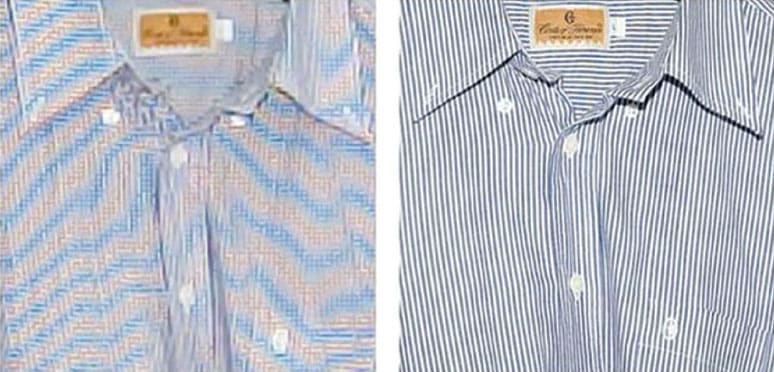
This idea is not unique to CS; examples of designing objects to improve the performance of specific technologies can be found in other areas as well. The image on the left of Figure 1 shows a moire pattern caused by interference between the shirt's stripes and the pattern of the imaging array. When television (TV) newscasters are told to avoid clothes that could cause these patterns, the objects being sensed (the newscasters) are effectively being designed to increase the performance of the sensing system (the TV cameras). Another example is the magnetic ink character recognition (MICR) font shown in Figure 2. This font is used on checks and was designed not only to be readable by humans but also to increase the character recognition performance of MICR readers.

Before exploring how objects can be designed for CS, a short review of CS theory is presented and simple examples are shown demonstrating the advantage of modifying an object's sparsity to increase or decrease CS performance. In more complex object recognition applications, an object's sparsity must be balanced against other factors. Increasing an object's sparsity improves CS performance, resulting in higher reconstruction quality and improved object recognition. But the very act of increasing sparsity distorts the object, which can impair recognition. Simulation results show that by balancing these competing factors, an optimal design can be achieved.
This work was done by Michael L Don for the Army Research Laboratory. ARL-0209
This Brief includes a Technical Support Package (TSP).
Designing for Compressive Sensing: Compressive Art, Camouflage, Fonts, and Quick Response Codes
(reference ARL-0209) is currently available for download from the TSP library.
Don't have an account?
More From SAE Media Group
Aerospace & Defense Tech Briefs
Co-Prime Frequency and Aperture Design for HF Surveillance, Wideband Radar Imaging, and Nonstationary Array Processing
Tech Briefs
Wireless, Wearable Transmitter
Aerospace & Defense Tech Briefs
Persistent Systems Auto-Tracking Antenna Adds Aircraft to Network, Enhances Data Sharing
Aerospace & Defense Tech Briefs
Low-Cost Ground Sensor Network for Intrusion Detection
Automotive Engineering
MEMS Drive Wants to Shake up Automotive Sensor
Photonics & Imaging Technology
Testing 800G Direct Modulated Optical Signaling
Photonics & Imaging Technology
Detecting Threats Beyond the Limits of Human, Sensor Sight

Aerospace & Defense Tech Briefs
SAE International Extends Call for Abstracts, Seeks Submissions for AeroTech Conference

Tech Briefs
Wearable Liquid Unit Harvests Energy
Aerospace & Defense Tech Briefs
Industry Invited to Participate in AeroTech Aerospace and Defense Technical Program
Tech Briefs
Vote for Tech Briefs Product of the Year 2021
Off-Highway Engineering
CES 2024: Aeva Launches 4D Lidar for SAE Level 4 Trucks
Tech Briefs
Processor Power and Energy Efficiency
Tech Briefs
Enabling High-Capacity Space Communication
Aerospace & Defense Tech Briefs
A Focal Plane Array and Electronics Model for CMOS and CCD Sensors in the AFIT Sensor and Scene Emulation Tool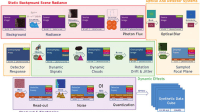

Tech Briefs
RFID-Based System Enables Internet of Things

Photonics & Imaging Technology
Using CoaXPress-over-Fiber for High-Speed Machine Vision
Aerospace & Defense Tech Briefs
Pathfinder Radar ISR and SAR Systems: Tactical Eyes for the Warfighter

Tech Briefs
Quantum Radio Aids Communications and Mapping

Aerospace & Defense Tech Briefs
Applying Reconfigurable Computing to Acoustic Sensors Using FPGAs
Tech Briefs
Pseudo-Random Coding Technique for 3D Imaging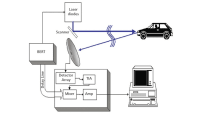
Sensor Technology
Energy Harvesting for Smart Home Sensing
Off-Highway Engineering
Addressing Electromagnetic Compatibility in the Context of Aircraft Electrification
Autonomous Vehicle Engineering
MIPI Phone Alliance Standard Aims at Automotive Sensors
Overview
The document is a technical report titled "Designing for Compressive Sensing: Compressive Art, Camouflage, Fonts, and Quick Response Codes," authored by Michael L. Don and published by the US Army Research Laboratory in January 2018. It covers the innovative applications of compressive sensing, a signal processing technique that reconstructs a signal from a small number of measurements, in various domains.
The report spans the period from November 2016 to March 2017 and aims to explore how compressive sensing can be utilized to enhance visual communication and data representation. It discusses the principles of compressive sensing and its potential to transform traditional approaches in fields such as art, camouflage, typography, and QR codes.
In the realm of art, the report examines how compressive sensing can be employed to create visually appealing and efficient representations that convey information in a compact form. This approach can lead to new artistic expressions and methods of visual storytelling.
In camouflage, the report highlights the potential of compressive sensing to develop advanced techniques for concealing objects in various environments. By leveraging the principles of compressive sensing, it is possible to design patterns and textures that effectively blend with surroundings, enhancing stealth capabilities.
The report also delves into the application of compressive sensing in typography. It discusses how this technique can be used to create fonts that are not only aesthetically pleasing but also optimized for readability and efficiency in data transmission. This could have significant implications for digital communication and user interface design.
Additionally, the report addresses the use of compressive sensing in Quick Response (QR) codes. It explores how this technology can improve the encoding and decoding processes, making QR codes more efficient and versatile for various applications, including marketing and information dissemination.
Overall, the document emphasizes the interdisciplinary nature of compressive sensing and its ability to bridge the gap between technology and design. It encourages further exploration and research into these applications, suggesting that compressive sensing could lead to innovative solutions and advancements in multiple fields. The report is approved for public release, indicating its accessibility for broader audiences interested in the intersection of technology, art, and communication.
Top Stories
INSIDERManufacturing & Prototyping
 How Airbus is Using w-DED to 3D Print Larger Titanium Airplane Parts
INSIDERManned Systems
 FAA to Replace Aging Network of Ground-Based Radars
NewsTransportation
 CES 2026: Bosch is Ready to Bring AI to Your (Likely ICE-powered) Vehicle
NewsSoftware
 Accelerating Down the Road to Autonomy
EditorialDesign
 DarkSky One Wants to Make the World a Darker Place
INSIDERMaterials
 Can This Self-Healing Composite Make Airplane and Spacecraft Components Last...
Webcasts
Defense
 How Sift's Unified Observability Platform Accelerates Drone Innovation
Automotive
 E/E Architecture Redefined: Building Smarter, Safer, and Scalable...
Power
 Hydrogen Engines Are Heating Up for Heavy Duty
Electronics & Computers
 Advantages of Smart Power Distribution Unit Design for Automotive...
Unmanned Systems
 Quiet, Please: NVH Improvement Opportunities in the Early Design...
