




Imaging Detonations of Explosives
Using high-speed camera pyrometers to measure and map fireball/shock expansion velocities.
An effort has been made within the US Army Research Laboratory (ARL) to extract quantitative information on explosive performance from high-speed imaging of explosions. Explosive fireball surface temperatures are measured using imaging pyrometry (2-color 2-camera imaging pyrometer; full-color single-camera imaging pyrometer). Framing cameras are synchronized with pulsed laser illumination to measure fireball/shock expansion velocities, enabling calculation of peak air-shock pressures. Multicamera filtering at different wavelengths enables visualization of light emission by some reactant species participating in energy release during an explosion. Measurement of incident and reflected shock velocities is used to calculate shock energy on a target.
Results of these measurements are used to construct maps of temperature, pressure, reactant species, and shock energy on a target. This information is valuable to evaluate explosive performance, models of performance, and barriers designed to enhance protection and survivability. These techniques and instruments were developed, in part, to improve productivity by lowering testing costs, allowing a single event to yield temperature, pressure, chemical species, and performance data.
Pyrometry is the method of estimating temperature of incandescent bodies from standoff, or noncontact methods. In this project, time-resolved temperature maps of detonations of explosives are made using a full-color single-camera pyrometer where wavelength resolution is achieved using the Bayer-type mask covering the sensor chip and a 2-color imaging pyrometer employing 2 monochrome cameras filtered at wavelengths of 700 and 900 nm, respectively, (wavelength regions adjustable). Each rig operates on the assumption of gray body behavior, but each is specific to the type of explosive being investigated.
For many CHNO-based explosives (e.g., TNT [C7H5N3O6], the formulation C-4 [92% RDX, C3H6N6O6]), hot detonation products are mainly soot and permanent gases, presenting an approximation of a gray body emitter. For these systems, the single-camera rig may be appropriate. For metalized explosives, narrow-band light emission from gas phase molecular and atomic species (e.g., AlO near 484 nm, BO 2 near 560 nm, and K near 760 nm) necessitates the use of the 2-camera rig to make measurements in spectral regions free of discrete features.
Additionally, strong C2 or CH emission from nonsooting explosive fireballs may present a significant source of error. For each measurement approach, it is mandatory to measure a time-resolved emission spectrum during the event to ensure the absence of discrete emission in the spectral window used for temperature measurement.
For each pyrometer rig, framing speeds are 20,000–40,000 frames per second (fps) at a resolution of approximately 400 × 500 pixels with an exposure per frame of one to tens of microseconds. Each system is temperature calibrated using a standard blackbody source (Omega Engineering), and checked for accuracy using an air/acetylene diffusion flame.
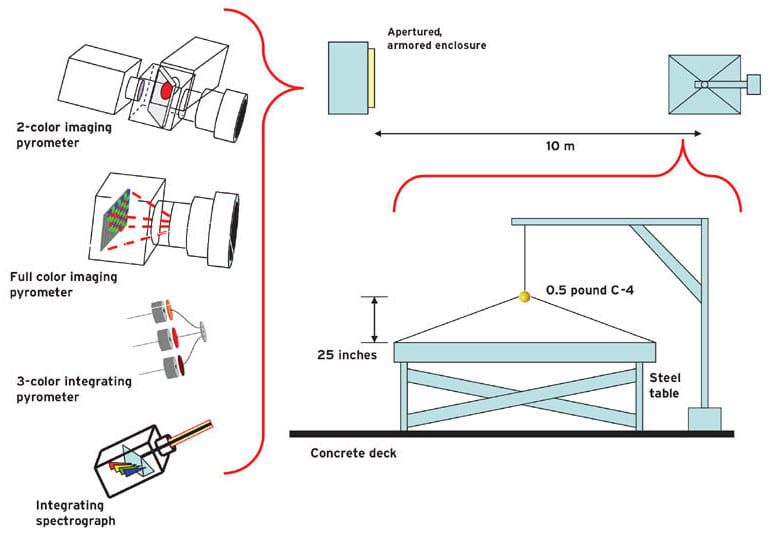
A schematic of the ARL imaging pyrometer rig (showing the 2-camera rig and the full-color rig as described) is shown, as employed for temperature measurements of exploding 227-gram (g) spheres of the explosive formulation C-4. Also shown in this figure are a spectrograph capable of measuring time-resolved emission spectra and a 3- color spatially integrating pyrometer used as a check of the imaging devices. The 3-color spatially integrating pyrometer (700, 850, and 1,000 nm; 10-nm bandpass) can provide submicrosecond time resolution but is biased toward measuring the hottest portion of an emitting medium because of the T4 dependence of intensity.
This work was done by Kevin L. McNesby, Matthew M. Biss, Barrie E. Homan, Richard A. Benjamin, Vincent M. Boyle Sr, and John M. Densmore of the Army Research Laboratory. ARL-0199
This Brief includes a Technical Support Package (TSP).
Imaging Detonations of Explosives
(reference ARL-0199) is currently available for download from the TSP library.
Don't have an account?
More From SAE Media Group
Aerospace & Defense Tech Briefs
Development of Photoacoustic Sensing Platforms
Tech Briefs
Plenoptic Camera
Tech Briefs
Niobium Titanium Nitride Thin Film Coating
Aerospace & Defense Tech Briefs
Detecting Trace Levels of Explosives Using Vibrational Sum Frequency Spectroscopy
Aerospace & Defense Tech Briefs
On the Pulsed Laser Ablation of Metals and Semiconductors
Tech Briefs
High-Power, Portable Terahertz Laser
Tech Briefs
Multi-Spectral Imaging Pyrometer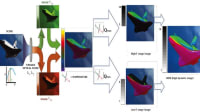
Photonics & Imaging Technology
Need for Larger Space Telescope Inspires Lightweight Flexible Holographic Lens
Photonics & Imaging Technology
Space-Based Hyperspectral Imaging
Tech Briefs
4 NASA Breakthroughs in Photonics and Optics

Photonics & Imaging Technology
Essential Principles for Designing and Specifying Laser Optics

Tech Briefs
LEDs Can Detect Spoiled Food and Lethal Gases
Aerospace & Defense Tech Briefs
MOVPE Growth of LWIR AlInAs/GaInAs/InP Quantum Cascade Lasers: Impact of Growth and Material Quality on Laser Performance
Aerospace & Defense Tech Briefs
Calibrated Long-Wave Infrared (LWIR) Thermal and Polarimetric Imagery of Small Unmanned Aerial Vehicles (UAVs) and Birds
Aerospace & Defense Tech Briefs
Directed-Energy System to Defeat Small Unmanned Aircraft System Swarms
Tech Briefs
Nuclear Radiation-Detecting Device
Aerospace & Defense Tech Briefs
Streamlined Microcomb Design Provides Control With The Flip of a Switch

Photonics & Imaging Technology
Researchers Generate Terahertz Laser with Laughing Gas

Photonics & Imaging Technology
Spectroscopy Using an Optical Microscope
Photonics & Imaging Technology
Hyperspectral Cameras and Data Quality
Tech Briefs
Products of Tomorrow
Tech Briefs
Nanoimaging of Perovskite Solar Cell Materials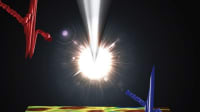
Overview
The document titled "Imaging Detonations of Explosives" presents a comprehensive study conducted by experts from the US Army Research Laboratory and Lawrence Livermore National Laboratory. It focuses on advanced imaging techniques used to analyze and understand the dynamics of explosive detonations. The report spans the period from October 2012 to October 2015 and is categorized as a final report, indicating the culmination of extensive research efforts.
The primary objective of the study is to enhance the understanding of explosive behavior through innovative imaging methods. These techniques allow researchers to visualize the rapid processes occurring during detonations, which are critical for improving safety measures and operational effectiveness in military applications. The findings aim to contribute to the development of better predictive models for explosive performance, which can be vital for both defense and civilian applications.
The report details various methodologies employed in the imaging process, including high-speed photography and advanced sensor technologies. These methods enable the capture of high-resolution images and data during explosive events, providing insights into the physical phenomena involved, such as shock wave propagation, fragmentation, and energy release.
In addition to the technical aspects, the document discusses the implications of the research findings for military operations. By understanding the mechanics of detonations more thoroughly, military personnel can make informed decisions regarding the use of explosives in various scenarios, enhancing both effectiveness and safety.
The report also includes a summary of results, conclusions drawn from the research, and a list of references for further reading. It emphasizes the importance of collaboration between different research institutions and the sharing of knowledge to advance the field of explosive research.
Overall, the document serves as a valuable resource for researchers, military personnel, and policymakers interested in the science of explosives and their applications. It is approved for public release, ensuring that the information is accessible to a broader audience, thereby fostering further research and development in this critical area. The findings underscore the ongoing commitment to improving safety and effectiveness in explosive-related operations.
Top Stories
NewsSensors/Data Acquisition
 Microvision Aquires Luminar, Plans Relationship Restoration, Multi-industry Push
INSIDERRF & Microwave Electronics
 A Next Generation Helmet System for Navy Pilots
INSIDERWeapons Systems
 New Raytheon and Lockheed Martin Agreements Expand Missile Defense Production
NewsAutomotive
 Ford Announces 48-Volt Architecture for Future Electric Truck
INSIDERAerospace
 Active Strake System Cuts Cruise Drag, Boosts Flight Efficiency
ArticlesTransportation

Webcasts
Aerospace
 Cooling a New Generation of Aerospace and Defense Embedded...
Energy
 Battery Abuse Testing: Pushing to Failure
Power
 A FREE Two-Day Event Dedicated to Connected Mobility
Automotive
 Quiet, Please: NVH Improvement Opportunities in the Early Design Cycle
Electronics & Computers
 Advantages of Smart Power Distribution Unit Design for Automotive &...
Unmanned Systems
 Sesame Solar's Nanogrid Tech Promises Major Gains in Drone Endurance