




Airflow Model Could Reduce Time on the Tarmac
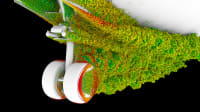
New research could lead to more efficient takeoffs on airport runways and improve safety. A mathematical tool was developed to calculate the flow of turbulent air produced by a plane’s wing tips — known scientifically as wing-tip vortices — when an airplane takes off. The study will assist in improving the present standards for the separation distance between planes, while maintaining safety. Mathematically calculating the amount of turbulence created by the wing tips of aircraft, particularly during takeoff, gives air traffic controllers a better method of determining how far each aircraft should be from the next.

The model takes the airplane’s specifications into account to develop a more precise picture of exactly how strong the wing tip vortices are. From that, you can accurately calculate how far away the following aircraft needs to be for safety. The team recreated the swirling vortices of air produced by the wing tips of aircraft during takeoff. This turbulent air is particularly dangerous when it comes to the wake created by heavy, wide-body aircrafts.
More From SAE Media Group
Tech Briefs
Preventing Gridlock on the Ground
Tech Briefs
Wing Shape Design Reduces Vortex and Wake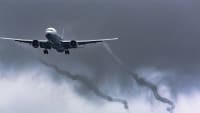
NASA Spinoff
An Electronic Traffic Monitor for Airports
Tech Briefs
Winglet with Injected Flow
Aerospace & Defense Tech Briefs
G5000 Prime Flight Deck
Aerospace INSIDER
NASA Tests Aircraft Wing Coatings that Slough Bug Guts
Tech Briefs
Bio-Inspired Wing Design for Small Drones
NASA Spinoff
Flying in the Fast Lane with Air Traffic Software
Tech Briefs
Fixed-Wing Angle eVTOL
Aerospace INSIDER
Slim Wing Can Reduce Aircraft Fuel Use and Emissions by 50%


Tech Briefs
Novel Control Method in Tailless Aircraft
Motion Design INSIDER
Tailless Jet Flies Free with Novel Control Technique
Aerospace INSIDER
NASA Software Sets Stage for Future Flights
Aerospace INSIDER
Memory Metals Shape the Evolution of Aviation
Aerospace INSIDER
Drone Traffic Management System Wins NASA Invention of the Year
NASA Spinoff
From Shark Searches to Space Tours
Aerospace & Defense Tech Briefs
Rising Star Awards: Women in Engineering Aerospace Winner - Heather Cummings
Aerospace INSIDER
Active Strake System Cuts Cruise Drag, Boosts Flight Efficiency
Aerospace INSIDER
NASA Shines Lasers on Future Aircraft Concept
Tech Briefs
Algorithms Improve Quadrotor Drone Performance
Aerospace INSIDER
New DARPA X-Plane Will Have No Moving Control Surfaces
Aerospace & Defense Tech Briefs
Designing a High-Speed Decoy Unmanned Aerial Vehicle (UAV)
Aerospace INSIDER
NASA System Would Enable Unmanned Aircraft to Fly in US Airspace
Top Stories
INSIDERDefense
 New Raytheon and Lockheed Martin Agreements Expand Missile Defense Production
NewsAutomotive
 Ford Announces 48-Volt Architecture for Future Electric Truck
INSIDERManufacturing & Prototyping
 Active Strake System Cuts Cruise Drag, Boosts Flight Efficiency
ArticlesTransportation
 Accelerating Down the Road to Autonomy
INSIDERMaterials
 How Airbus is Using w-DED to 3D Print Larger Titanium Airplane Parts
Road ReadyTransportation

Webcasts
Electronics & Computers
 Cooling a New Generation of Aerospace and Defense Embedded...
Power
 Battery Abuse Testing: Pushing to Failure
Connectivity
 A FREE Two-Day Event Dedicated to Connected Mobility
Automotive
 Quiet, Please: NVH Improvement Opportunities in the Early Design Cycle
Transportation
 Advantages of Smart Power Distribution Unit Design for Automotive &...
Aerospace
 Sesame Solar's Nanogrid Tech Promises Major Gains in Drone Endurance