




Adas & Autonomous Vehicle Engineering - November 2023
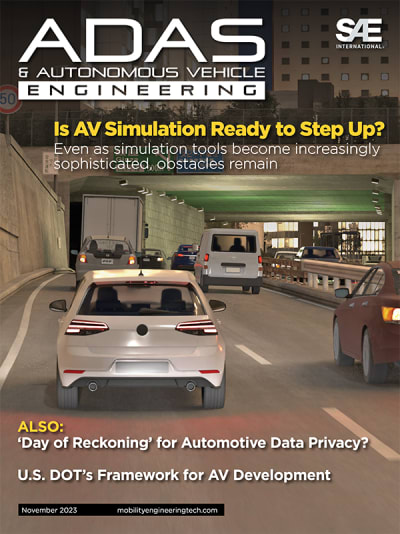
Inside this issue
Overview
The November 2023 issue of ADAS & Autonomous Vehicle Engineering presents a comprehensive exploration of the latest advancements and discussions in the field of autonomous vehicles (AVs) and advanced driver-assistance systems (ADAS). This quarterly publication, produced by SAE Media Group, serves as a vital resource for professionals and enthusiasts in the automotive industry, focusing on the integration of technology, safety, and regulatory frameworks.
Key Highlights:
-
Editorial Insights: The editorial section, led by Bill Visnic, emphasizes the ongoing evolution of automated driving technologies. It reflects on the challenges and progress made in the industry, underscoring the importance of continuous innovation and collaboration among stakeholders.
-
Feature Articles:
- Are Robotaxis Ready for Prime Time?: This article delves into the current state of robotaxi services, evaluating their readiness for widespread deployment. It discusses technological advancements, regulatory hurdles, and public acceptance, providing a balanced view of the potential and limitations of this emerging service.
- AV Simulation Faces a Long and Winding Road: The piece highlights the critical role of simulation in the development and testing of automated vehicles. It addresses the complexities involved in creating realistic simulations that can effectively train AV systems, while also discussing the ongoing challenges faced by developers in this domain.
-
U.S. Department of Transportation Framework: A significant focus of this issue is the U.S. Department of Transportation's newly established framework for AV development. This framework aims to facilitate collaborative testing and development of AV technologies, promoting safety and innovation. The article outlines the key components of this framework and its implications for the future of AV testing.
Data Privacy Concerns: The issue also tackles the chaos surrounding automotive data privacy. With the increasing collection and sharing of vehicle-related data, experts express concerns about privacy and security. The article discusses potential regulatory responses and the need for a balanced approach to data management in the automotive sector.
-
Simulation Technology: A feature on simulation developer rFpro showcases how advanced simulation tools, including ray-tracing software, are being utilized to train ADAS systems. The article notes that eight of the top ten original equipment manufacturers (OEMs) are leveraging these technologies to enhance their development processes, highlighting the growing reliance on simulation in the automotive industry.
-
New Tools & Technologies: The magazine introduces various new tools and technologies that are shaping the future of automotive engineering. This includes innovations in single board computers, system on modules, and touch panel human-machine interfaces (HMIs), which are essential for the development of sophisticated AV systems.
-
Subscription Information: The publication provides details on subscription options for both members and non-members of SAE International, emphasizing the value of staying informed through this resource. Annual print subscriptions are available at competitive rates, with digital options also offered.
-
Ownership and Circulation: The magazine includes a statement of ownership, detailing its publication frequency, circulation numbers, and the commitment to providing accurate and relevant content to its readers. The publication maintains a high percentage of paid circulation, reflecting its credibility and the trust it has built within the industry.
Conclusion:
The November 2023 issue of ADAS & Autonomous Vehicle Engineering serves as a vital resource for understanding the current landscape of autonomous vehicle technology. Through insightful articles and expert commentary, it addresses the challenges and opportunities facing the industry, from regulatory frameworks to technological advancements. As the automotive sector continues to evolve, this publication remains a key player in disseminating knowledge and fostering discussions that will shape the future of mobility. Whether you are a professional in the field or an enthusiast, this issue provides valuable insights into the ongoing journey toward safer and more efficient autonomous driving solutions.
Articles
Top Stories
INSIDERAerospace
 How Airbus is Using w-DED to 3D Print Larger Titanium Airplane Parts
NewsAutomotive
 Microvision Aquires Luminar, Plans Relationship Restoration, Multi-industry Push
INSIDERManufacturing & Prototyping
 A Next Generation Helmet System for Navy Pilots
INSIDERDefense
 New Raytheon and Lockheed Martin Agreements Expand Missile Defense Production
ArticlesAR/AI
 Accelerating Down the Road to Autonomy
Road ReadyDesign

Webcasts
Automotive
 Advantages of Smart Power Distribution Unit Design for Automotive...
Unmanned Systems
 Quiet, Please: NVH Improvement Opportunities in the Early Design...
Defense
 Cooling a New Generation of Aerospace and Defense Embedded...
Power
 Battery Abuse Testing: Pushing to Failure
Power
 A FREE Two-Day Event Dedicated to Connected Mobility
