




Multi-Agent Software for Airspace Control in the Combat Zone
AGENTFLY software is part of a computer-based system technology that will enhance airspace operation, providing ever-increasing support to personnel without freeing them from the ultimate responsibility. AGENTFLY features distributed coordination mechanisms based on collective decision-making and knowledge sharing, agent architecture, and specific agents responsible for data collection/ updating and planning/scheduling tasks, and the required visualization technology.
A multi-agent system, AGENTFLY offers the following features:
- Mathematical modeling of the “big picture” in the functional domain, spatial domain, and time domain, utilizing various practical aspects of the air operation planning process such as types of manned and unmanned air vehicles and their unclassified characteristics, types of hazards, types of targets, existing practices, and safety considerations.
- Numerical solution of the particular subsets of the airspace control problem and coordination of local, independently obtained solutions, resulting in conflict-free, long-term and short-term plans and schedules.
- Continuous data acquisition addressing the dynamics of the battlefield, status of the aircraft, and weather, facilitating the ongoing, iterative solution process driven by continuously updated databases.
- Implementation of the physical realities of the problem in the individual software agents capable of negotiation leading to a numerical solution of the planning, conflict resolution, and execution tasks.
- Incorporation of a system that is flexible, capable of ongoing incorporation of human expertise presented in formalized and intuitive fashion, and upgradeable by inclusion of new rules, considerations, and conditions.
- The resultant system offers advanced visualization and utilizes advanced graphics and graphic interfaces, making it user friendly.
Successful completion of this project prompted a study of the relevance and applicability of the developed technology to FAA plans that include further development of computer support systems for air traffic controllers.
This work was done by Victor A. Skormin of Advanced Technical Concepts for the Air Force Research Laboratory. AFRL-0129
This Brief includes a Technical Support Package (TSP).
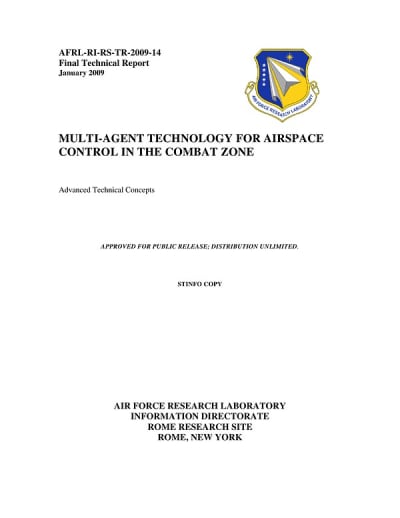
Multi-Agent Technology For Airspace Control In The Combat Zone
(reference AFRL-0129) is currently available for download from the TSP library.
Don't have an account?
More From SAE Media Group

Tech Briefs
Fused Analytic Desktop Environment (FADE)
Off-Highway Engineering
Big Data’s Benefits Keep A-Comin’
Off-Highway Engineering
AI Moves into Military Boards and Subsystems

Aerospace & Defense Tech Briefs
Digital Twins: How The Digital Replica Concept Is Used By Robotic Systems
Aerospace & Defense Tech Briefs
Geospatial Accuracy of Small Unmanned Airborne System Data in the Coastal Environment
Tech Briefs
Meta Monitoring System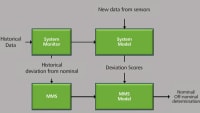
Aerospace & Defense Tech Briefs
Automation Streamlines Accreditation to Speed Aerospace and Defense Technology Deployment
Off-Highway Engineering
Software Needs Security, and Security Needs Software: A Scientific Overview
Tech Briefs
Hacker-Resistant Cloud Software System
Tech Briefs
Data Transfer Service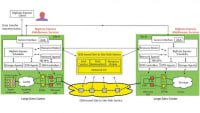
Tech Briefs
How Much Do You Know About Agentic AI?
Off-Highway Engineering
Deere’s Ingredients for Innovation
Motion Design
Build IIoT Networks with Smart Control and HMI Software
Automotive Engineering
SkillReal Signs Tier 1 Supplier for NVIDIA-Powered AI Inspection
Automotive Engineering
Machine Learning Software Monolith Cuts Development Time for BMW’s Test Engineers

Automotive Engineering
Revolutionizing Vehicle Technology Through Intelligent Actuators

Tech Briefs
Executive Forum: Machine Learning & AI
Autonomous Vehicle Engineering
Complexity of Autonomous-Systems Simulation, Validation Soars to the Clouds
Autonomous Vehicle Engineering
10 Best Practices for ADAS and AV Testing

NASA Spinoff
NASA Engineers Help Create A Virtual World of Data
Automotive Engineering
Thermal Imaging Makes Its Case for ADAS, AVs
Autonomous Vehicle Engineering
Autonomy’s Computing Edge
Overview
The document titled "Multi-Agent Technology for Airspace Control in the Combat Zone" is a Final Technical Report published by the Air Force Research Laboratory in January 2009. It addresses the challenges of airspace control in combat environments, emphasizing the need for advanced decision-making systems that can adapt to rapidly changing conditions.
The report begins with an abstract and overview, outlining the significance of effective airspace management in military operations. It highlights the complexities involved in air traffic control, particularly in combat zones where the dynamics of airspace can shift quickly due to various factors, including enemy actions and environmental changes.
A key focus of the report is the application of multi-agent systems (MAS) in airspace control. These systems consist of multiple autonomous agents that can communicate and collaborate to achieve common goals. The document details the specifics of the airspace control problem, existing practices in air traffic control, and the potential benefits of implementing multi-agent planning and execution processes.
The report is structured into several sections, including data acquisition, initial planning, deconfliction, and flight execution. It discusses the importance of acquiring relevant information and the methods of deconfliction to ensure safe and efficient air operations. The authors emphasize the need for systems that can accommodate new rules and conditions, presenting human expertise in a formalized and intuitive manner.
Implementation aspects are also covered, with a focus on the AgentFly system developed by the Gerstner Laboratory. The report outlines the testing and validation processes for this system, as well as its potential interface with existing software used by air traffic control authorities.
Finally, the document discusses the relevance of the proposed multi-agent technology to the plans of the Federal Aviation Administration (FAA), suggesting that such innovations could enhance airspace management not only in combat scenarios but also in civilian air traffic control.
In summary, this report presents a comprehensive exploration of multi-agent technology as a solution for improving airspace control in combat zones, highlighting its potential to enhance decision-making, safety, and efficiency in complex and dynamic environments.
Top Stories
NewsRF & Microwave Electronics
 Microvision Aquires Luminar, Plans Relationship Restoration, Multi-industry Push
INSIDERAerospace
 A Next Generation Helmet System for Navy Pilots
INSIDERDesign
 New Raytheon and Lockheed Martin Agreements Expand Missile Defense Production
INSIDERMaterials
 How Airbus is Using w-DED to 3D Print Larger Titanium Airplane Parts
NewsPower
 Ford Announces 48-Volt Architecture for Future Electric Truck
ArticlesAR/AI

Webcasts
Electronics & Computers
 Cooling a New Generation of Aerospace and Defense Embedded...
Automotive
 Battery Abuse Testing: Pushing to Failure
Power
 A FREE Two-Day Event Dedicated to Connected Mobility
Unmanned Systems
 Quiet, Please: NVH Improvement Opportunities in the Early Design Cycle
Automotive
 Advantages of Smart Power Distribution Unit Design for Automotive &...
Energy
 Sesame Solar's Nanogrid Tech Promises Major Gains in Drone Endurance