




Blue Origin Tests Gravity-Independent Fuel Cells for Lunar Lander Program
In a key milestone for future human spaceflight, Nimbus Power Systems announced the successful completion of shock and vibration tests on Nimbus’ gravity-independent fuel cell technology. The tests simulated the anticipated mechanical loads, including launch, for NASA’s upcoming Artemis crewed missions to the Moon.

The fuel cell met all performance targets throughout the tests, demonstrating the system’s structural and operational readiness for future flight integration.
Fuel cells react oxygen and hydrogen to produce electricity, heat, and potable water, three vital resources for crewed space operations. Nimbus’ innovative water management technology removes product water via a combination of capillary and hydraulic forces that are uncompromised by the space environment. This water management advantage decreases system complexity and offers significant mass savings, resulting in more reliable and affordable space operations.
“These test results reflect the successful collaboration between Blue Origin and Nimbus Power Systems on advanced Polymer Electrolyte Membrane (PEM) fuel cell technology specifically tailored to space applications,” said John Couluris, Senior Vice President of Lunar Permanence at Blue Origin. “We continue to leverage the latest advances in Nimbus’ terrestrial fuel cell technology to accelerate Blue Origin’s in-house fuel cell solutions for in-space and lunar products.”
“This demanding hardware demonstration is the culmination of more than a year of close cooperation between the talented teams at Nimbus and Blue Origin,” said Michael Gorman, CEO of Nimbus Power Systems. “It speaks to the reliability of the underlying technology and our combined attention to product detail. We look forward to supporting Blue Origin’s commercial space objectives by continuing to harmonize space and terrestrial fuel cell supply chains to lower costs and increase reliability for both applications.”
Blue Origin currently licenses Nimbus Power System’s fuel cell technology for its Blue Moon Lunar Lander program and other space applications. NASA will use the Blue Moon lander for its Artemis campaign to safely send astronauts from lunar orbit to the Moon’s surface and back for expeditions on the lunar surface.
More From SAE Media Group
Aerospace INSIDER
NASA Tests Artemis II Crew Seat and Flight Suit


Aerospace Manufacturing and Machining INSIDER
Three Companies to Lead Development of Artemis Lunar Terrain Vehicles
Tech Briefs
5Ws of the AstroRad

Aerospace INSIDER
NASA Tests Radiation Vest for Deep Space Missions
Aerospace INSIDER
NASA Seeks Space Technologies for Suborbital and Orbital Flight Tests
Tech Briefs
A Next-Generation Space Suit for Artemis III
Aerospace INSIDER
Assembly and Testing Milestone for Artemis II Spacecraft

Tech Briefs
NASA's 2014 Highlights
Tech Briefs
CES 2020: NASA Arrives, Ready to Partner Up
Tech Briefs
How Artemis I Launched
NASA Spinoff
Test Rockets Prepare for Distant Landings

Aerospace Manufacturing and Machining INSIDER
NASA Builds Welding Test Article for SLS Exploration Upper Stage
Aerospace Manufacturing and Machining INSIDER
Collins Aerospace to Provide Critical Subsystems for NASA’s Orion Spacecraft


Aerospace INSIDER
Nuclear-Powered Drone Destined for Titan Enters Final Design Phase

Tech Briefs
“I Told You the Moon Was Made of Cheese”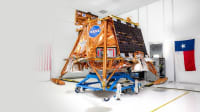

Top Stories
INSIDERDefense
 New Raytheon and Lockheed Martin Agreements Expand Missile Defense Production
NewsAutomotive
 Ford Announces 48-Volt Architecture for Future Electric Truck
INSIDERManufacturing & Prototyping
 Active Strake System Cuts Cruise Drag, Boosts Flight Efficiency
ArticlesTransportation
 Accelerating Down the Road to Autonomy
INSIDERMaterials
 How Airbus is Using w-DED to 3D Print Larger Titanium Airplane Parts
Road ReadyTransportation

Webcasts
Electronics & Computers
 Cooling a New Generation of Aerospace and Defense Embedded...
Power
 Battery Abuse Testing: Pushing to Failure
Connectivity
 A FREE Two-Day Event Dedicated to Connected Mobility
Automotive
 Quiet, Please: NVH Improvement Opportunities in the Early Design Cycle
Transportation
 Advantages of Smart Power Distribution Unit Design for Automotive &...
Aerospace
 Sesame Solar's Nanogrid Tech Promises Major Gains in Drone Endurance