




APFIT Invests $50 Million into US-Made Drone Battery Production for Air Force, Army, Navy, and SOCOM
The Defense Department’s APFIT program has committed up to $50 million to Packet Digital to fast-track production of advanced batteries for U.S. military uncrewed aerial systems (UAS), supporting the Air Force, Army, Navy, and Special Operations Command (SOCOM).
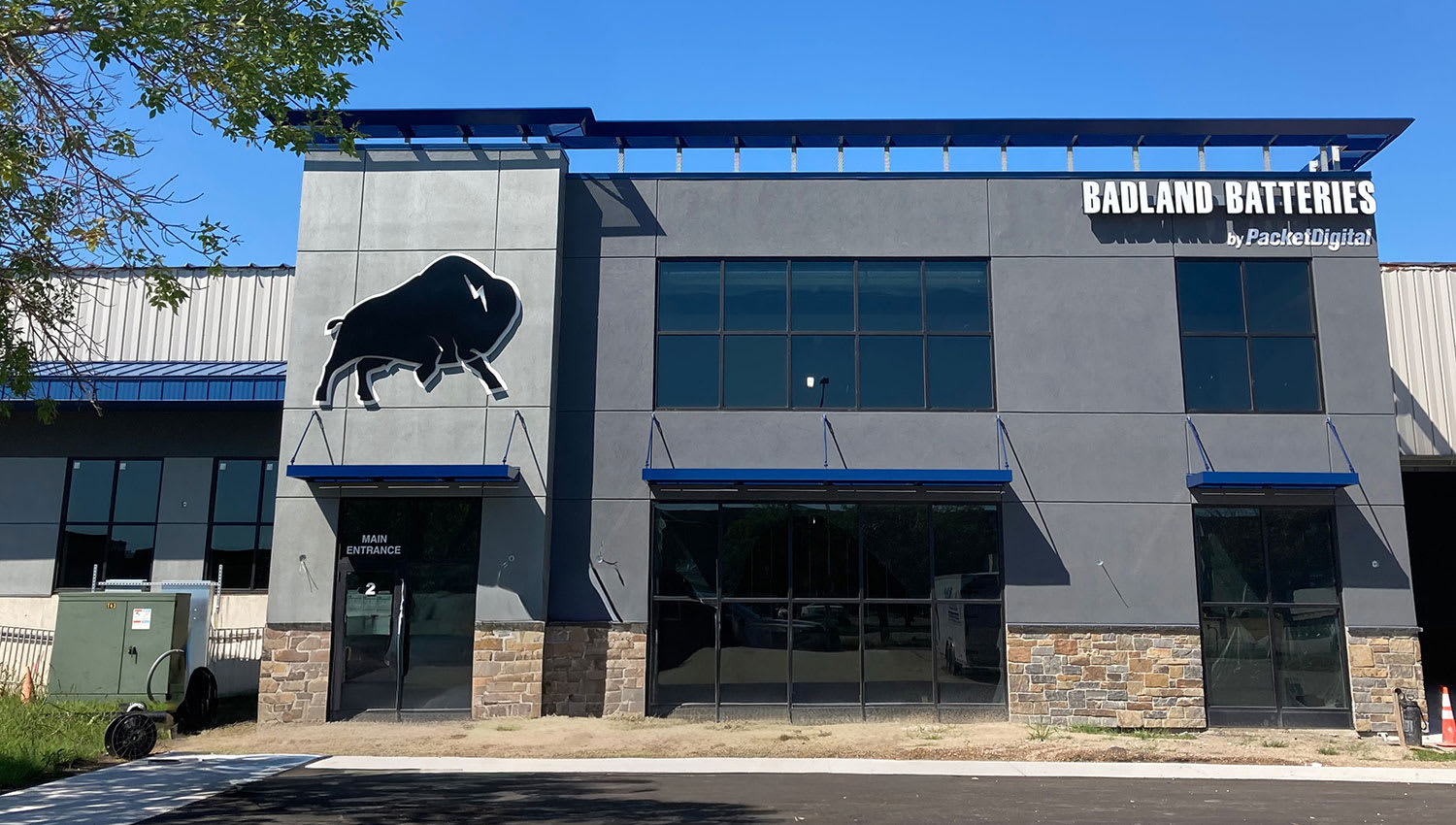
The U.S. defense ecosystem currently lacks a reliable domestic supply chain for lithium-ion batteries—a critical gap as the nation works to maintain superiority across air, space, and underwater domains. To address this, Packet Digital’s Badland Batteries facility in Fargo, North Dakota, will begin producing U.S.-made battery cells in 2026, delivering secure, high-performance energy solutions for defense applications.
“Our advanced high-power, high-energy density lithium-ion cell technology is a mission-critical enabler for extended-range UAS operations, space-based platforms, and submersible assets,” said Terri Zimmerman, CEO of Packet Digital. “This capability directly enhances warfighter readiness by improving endurance, agility and energy resilience in contested environments.
“The U.S. currently lacks the manufacturing base for high-energy battery cells at the scale required for defense platforms,” Zimmerman added. “We are working every day to close that gap and ensure our warfighters have the tools they need.”
Expanding Defense Partnerships
The APFIT award builds on a series of recent contracts awarded to Packet Digital across multiple defense agencies:
- U.S. Navy:
- January 2025: Follow-on contract for UAS smart batteries, chargers, and power systems.
- December 2022: $8.5 million contract to develop standardized battery solutions for ship-to-ship and ship-to-shore missions.
- Air Force Research Laboratory (AFRL):
- $7.2 million add-on contract for satellite power solutions following successful completion of an initial $8 million project to build a high-powered SmallSat power converter with 98 percent efficiency.
- The new effort expands scalable power systems for CubeSats and SmallSats using advanced MPPT and PMAD architecture.
Scaling Production for Future Needs

Packet Digital has significantly expanded its manufacturing capabilities at its Fargo facility, integrating surface mount technology (SMT) lines, automated welding systems, and state-of-the-art assembly spaces. These upgrades position the company to deliver high volumes of smart battery packs for some of the most advanced UAS systems in the world.
“We have scaled our operations to meet increasing demand,” Zimmerman said. “By combining automation with our talented engineering team, we’re achieving unprecedented quality in battery packs and charging systems for the Navy drone fleet.”
Looking Ahead
The APFIT investment will accelerate development at Packet Digital’s new 80,000-square-foot Badland Batteries plant, the company’s third location. Full-scale battery cell production is scheduled to begin in 2026, strengthening the U.S. defense supply chain and enabling next-generation energy solutions for military platforms.
More From SAE Media Group
Off-Highway Engineering
FPT’s Battery Pack Dives into Marine Market
Aerospace INSIDER
Four Companies to Design Air Force Enterprise Test Drone Prototypes
Aerospace INSIDER
Two Startups Partner to Expand Hydrogen-Powered Drone Production
Aerospace Manufacturing and Machining INSIDER
Meeting the Demands of Defense Production and Sustainment Through Additive Manufacturing
Aerospace Manufacturing and Machining INSIDER
Amprius Eyes Mass Production for Next Generation Electric Aircraft Battery

Battery & Electrification Technology
Breaking the Rules to Build a Better Battery
Tech Briefs
Factorial’s Solid-State B-Samples Send a Message
Aerospace & Defense Tech Briefs
Drone Charging System
Off-Highway Engineering
Enerdel Goes Off-Road with Its Hard-Carbon Lithium-Ion Battery Technology

Automotive Engineering
Scaling the Solid-State Battery FEST
Automotive Engineering
Q&A: Panasonic Races to Keep Pace with EV Battery Demand
Aerospace & Defense Tech Briefs
Ghoul Tool: The Weapon-Mountable Counter UAS Transmitter
Aerospace INSIDER
Air Force Forecasts 2040 Operating Environments in Global Futures Report
Battery & Electrification Technology
New Products
Aerospace & Defense Tech Briefs
AIA Predicts Flying Air Taxis, Supersonic Air Travel, and Space Industry for 2050

Automotive Engineering
Fully Charged in Six Minutes?

Aerospace INSIDER
WATCH: Air Force Research Lab's First Flight of XQ-67A Drone
Automotive Engineering
Factorial CEO Says Cells with 375Wh/kg Energy Density a ‘Milestone’ for Stellantis
Automotive Engineering
All (Robot) Hands on Deck

Aerospace & Defense Tech Briefs
Lithium-Ion Batteries
Defense INSIDER
In-Flight 3D Printing of Drone Parts on a Black Hawk Helicopter

Aerospace & Defense Tech Briefs
New Swarm and Search AI Challenge Combines Machine Learning and UAS to Help Map Wildfires
Battery & Electrification Technology
Testing the Engineering Limits for eVTOL Battery Power
Aerospace INSIDER
AI Algorithms Fly Uncrewed XQ-58A Valkyrie Drone for Three Hour Sortie
Top Stories
INSIDERDefense
 New Raytheon and Lockheed Martin Agreements Expand Missile Defense Production
NewsAutomotive
 Ford Announces 48-Volt Architecture for Future Electric Truck
INSIDERManufacturing & Prototyping
 Active Strake System Cuts Cruise Drag, Boosts Flight Efficiency
ArticlesTransportation
 Accelerating Down the Road to Autonomy
INSIDERMaterials
 How Airbus is Using w-DED to 3D Print Larger Titanium Airplane Parts
Road ReadyTransportation

Webcasts
Electronics & Computers
 Cooling a New Generation of Aerospace and Defense Embedded...
Power
 Battery Abuse Testing: Pushing to Failure
Connectivity
 A FREE Two-Day Event Dedicated to Connected Mobility
Automotive
 Quiet, Please: NVH Improvement Opportunities in the Early Design Cycle
Transportation
 Advantages of Smart Power Distribution Unit Design for Automotive &...
Aerospace
 Sesame Solar's Nanogrid Tech Promises Major Gains in Drone Endurance