




EV Industry Grapples with Unprecedented Battery Regulation Compliance Challenges
A regulatory storm is hitting the electric vehicle industry and most manufacturers are unprepared.
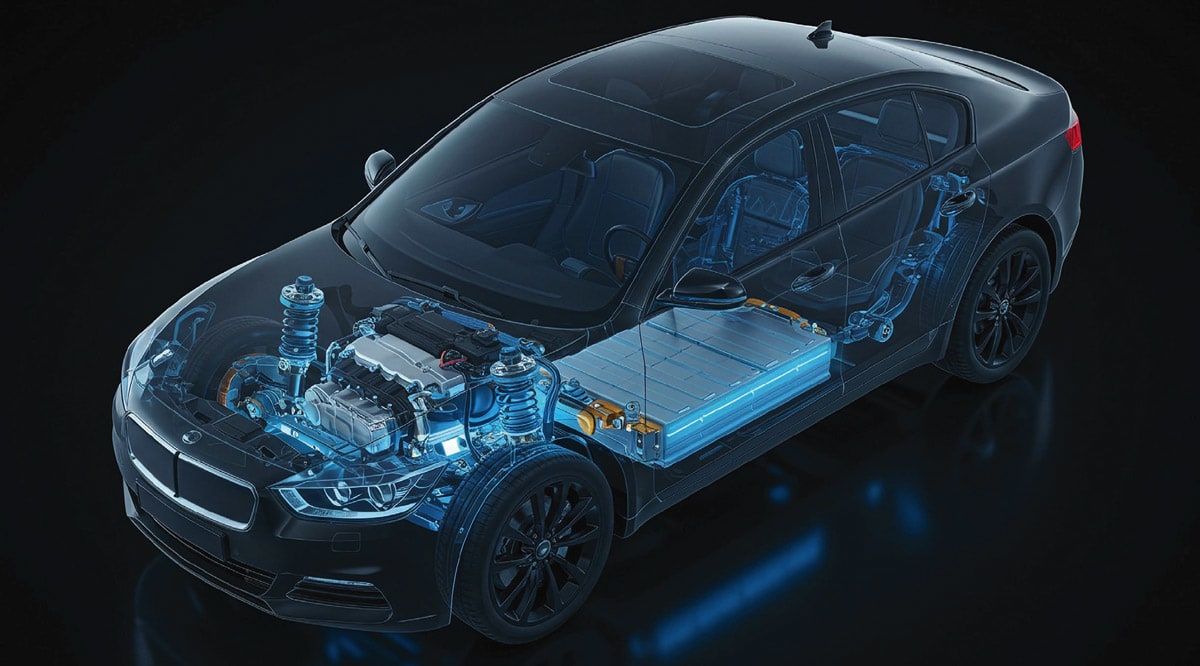
Starting in February 2027, every EV and industrial battery over 2 kWh entering the EU market must carry a digital passport accessible via QR code. Carbon footprint tracking is already mandatory. Yet the industry has discovered a sobering reality: Many existing systems cannot handle these requirements.
The EU Battery Regulation demands unprecedented granularity in supply chain tracking. Manufacturers must now document carbon emissions specific to manufacturing sites and battery batches, provide detailed electrochemical performance data with verified methodologies, and maintain comprehensive records throughout the entire product lifecycle, from raw material extraction through to recycling.
The shift represents a fundamental break from traditional automotive compliance. Previous regulations focused primarily on safety standards or end-of-life disposal requirements that could be addressed through discrete testing phases. The new framework demands continuous data collection and real-time verification, transforming regulatory compliance from a checkpoint into an integrated business process.
What Does This Mean for the Industry?
The August 2025 regulation rollout has created a compliance maze that’s testing even the most sophisticated manufacturers. While the EU Battery Regulation provides an overarching framework, implementation varies between member states, including the U.K., creating a patchwork of requirements that must be satisfied simultaneously.
The compliance timeline currently looks like this:
February 2027: Battery passports become mandatory for all EV and industrial batteries over 2 kWh.
End of 2027: Minimum recycling efficiency requirements take effect (Lithium 50 percent, increasing to 80 percent by the end of 2031).
February 2028: Lifecycle carbon footprint thresholds become mandatory with maximum limits.
August 2028: Minimum recycled content requirements take effect.
Each deadline brings increasingly complex verification requirements. National authorities are interpreting specific provisions at different speeds and with subtle but significant variations in emphasis.
The U.K.’s post-Brexit regulatory environment adds another dimension of complexity. While technical cooperation continues with European standards bodies, divergent approaches are emerging that require separate compliance strategies. Manufacturers serving both markets must maintain parallel documentation systems, effectively doubling the regulatory burden.
This fragmentation creates challenges for global manufacturers who must ensure their testing protocols satisfy multiple regulatory environments while maintaining cost-effective development timelines.
The cascading nature of compliance deadlines compounds these pressures, as companies must simultaneously prepare for near-term requirements while also building systems capable of handling future obligations.
What This Means for Testing Facilities
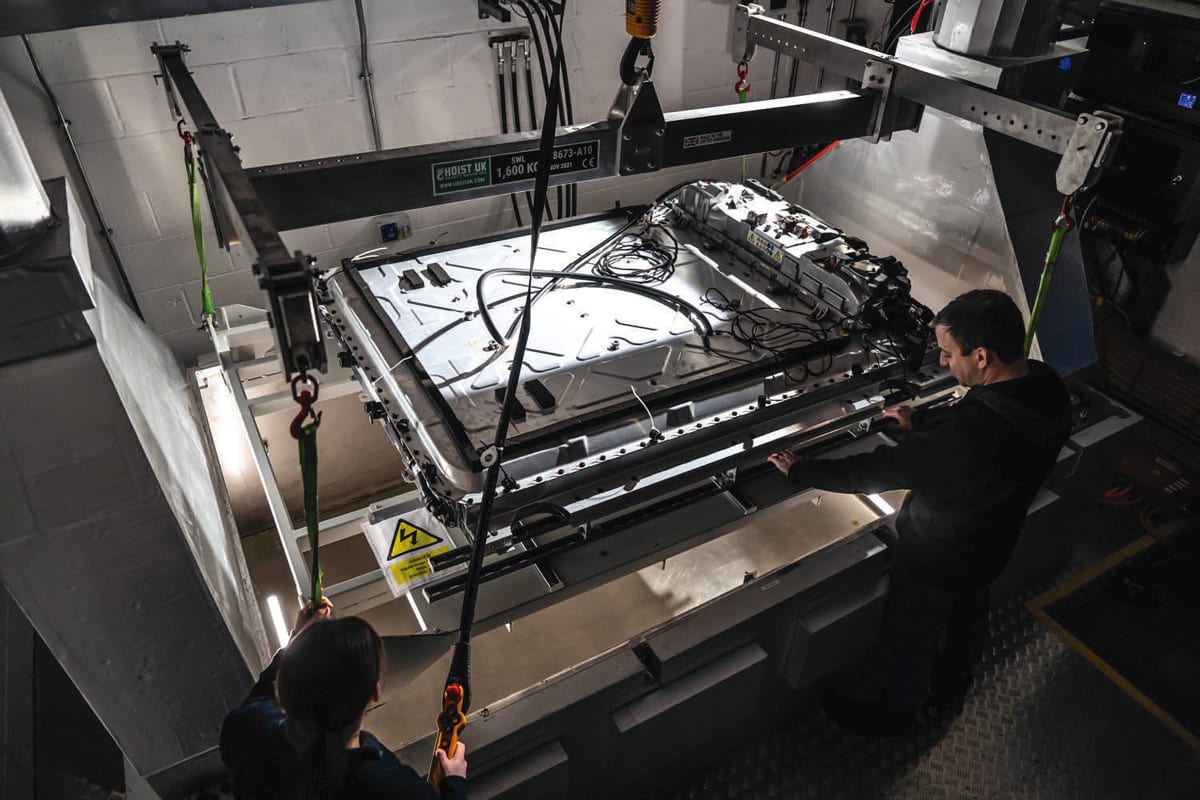
The technical demands of battery passport compliance have exposed critical infrastructure gaps across the industry. Many traditional testing facilities designed for conventional automotive validation lack the sophisticated environmental controls and data collection capabilities required for regulatory-grade documentation.
Modern battery development centers are emerging as the industry’s response to these challenges. MAHLE Powertrain’s facilities are one example of this transformation, featuring climatic chambers capable of operating across extreme temperature ranges from -40° C to +90 °C (-40 °F to +194 °F). These systems enable comprehensive ageing, electrical, and thermal testing that generates regulatory-compliant data during development phases rather than requiring separate compliance exercises.

Testing versatility has become equally important. Facilities must now accommodate diverse battery chemistries, form factors, and application requirements while maintaining consistent data quality standards. The ability to seamlessly transition between development testing and regulatory validation has become a competitive differentiator.
The manufacturing simulation capabilities represent another critical advancement. State-of-the-art dual-robot laser welding stations can handle active HV battery modules, enabling prototype production under conditions that mirror fullscale manufacturing environments. This capability is essential for generating representative performance data that meets regulatory verification standards while supporting iterative design improvements.
Striking a Balance
Battery passport requirements have changed the relationship between product development and regulatory compliance. Performance and durability statistics, including charge cycles, energy efficiency, and degradation trends, must be documented using specific methodologies that align with regulatory verification standards from the project’s inception.
The verification requirements add substantial complexity to data management systems. Carbon footprint calculations must be third-party verified and publicly accessible online, meaning that internal testing data must meet external verification standards from the outset. This has prompted wholesale redesigns of testing protocols to ensure data quality and traceability meet regulatory requirements while supporting ongoing development activities.
Real-time monitoring capabilities have also become essential. Battery passport systems require continuous data updates throughout the product lifecycle, demanding monitoring infrastructure that can track performance degradation, maintenance events, and operational parameters across distributed fleets. This operational data must integrate seamlessly with manufacturing and development data to provide comprehensive lifecycle documentation.
Timeline Pressures
The compressed implementation timeline has created unprecedented pressure across the industry. With mandatory battery passport enforcement beginning in less than 18 months, manufacturers have limited time to implement comprehensive data collection systems and testing protocols capable of supporting continuous compliance.
Strategic planning now requires integration of regulatory considerations into product development roadmaps from the earliest conceptual stages. Companies that treat compliance as a parallel process risk discovering irreconcilable conflicts between regulatory requirements and development objectives that cannot be resolved without significant delays or performance compromises.
The cascading deadline structure compounds timeline pressures. Businesses must simultaneously prepare for immediate requirements while building systems capable of handling future obligations. This requires sophisticated project management approaches that can coordinate multiple compliance workstreams across different functions.
A Watershed Moment
Cross-industry collaboration is emerging as manufacturers recognize that individual compliance efforts cannot address the systemic challenges posed by fragmented regulatory implementation. Industry associations are developing shared standards and best practices that can reduce compliance complexity while maintaining competitive differentiation.
The long-term trajectory points toward increasing regulatory sophistication across global markets. The EU Battery Regulation represents the leading edge of a worldwide trend toward lifecycle-based product regulation that will likely expand to other automotive systems and eventually to other industries entirely.
As the industry continues navigating these unprecedented challenges, the organizations that successfully transform regulatory compliance from a constraint into a competitive capability will emerge as leaders in the next phase of automotive industry evolution.
This article was written by Simon Williams, RDE Operations Leader, MAHLE Powertrain (Northampton, United Kingdom). For more information, visit here .
More From SAE Media Group

Battery & Electrification Technology
Upcycling Commercial Fleets into Circular EVs
Battery & Electrification Technology
Solving the Battery Recycling Challenge
Battery & Electrification Technology
How Battery Simulation Is Taking High-Performance EV Development to New Heights
Battery & Electrification Technology
Batteries and Recycling: The Next Frontier
Battery & Electrification Technology
Meeting the Challenge of Electric Vehicle Battery Cell Innovation
Tech Briefs
Dry Manufacturing Process for EV Batteries

Battery & Electrification Technology
A Cleaner, Scalable Process to Recycle Lithium-Ion Batteries
Battery & Electrification Technology
Developing Advanced Recycling Technology to Restore Spent Battery Cathode Materials
Off-Highway Engineering
How Battery Technology Will Drive Truck Electrification
Tech Briefs
EV Battery Breakthrough: 10-Minute Charge
Battery & Electrification Technology
Product Showcase
Battery & Electrification Technology
Examining EV Battery Thermal Management
Aerospace & Defense Tech Briefs
Improving Battery Design for eVTOL Aircraft With Simulation
Battery & Electrification Technology
Decarbonizing the EV Battery Supply Chain
Automotive Engineering
Mahle Powertrain Leveraging New Facilities in Electrified Shift

Battery & Electrification Technology
New Products
Automotive Engineering
The Factory’s Hidden Power Grid
Automotive Engineering
Engineering ‘Electron Guzzlers’
Automotive Engineering
Finding Solutions for Sustainable Mobility


Battery & Electrification Technology
Testing Times: Understanding the Impact of Climatic Conditions on EV Charging Times
Battery & Electrification Technology
Driving EV Development with a Twin-Battery Approach
Tech Briefs
How to Detect Battery Failures Quicker

Power Electronics INSIDER
World’s Strongest Battery Paves Way for Light, Energy-Efficient Vehicles

Top Stories
INSIDERManufacturing & Prototyping
 How Airbus is Using w-DED to 3D Print Larger Titanium Airplane Parts
INSIDERManned Systems
 FAA to Replace Aging Network of Ground-Based Radars
NewsTransportation
 CES 2026: Bosch is Ready to Bring AI to Your (Likely ICE-powered) Vehicle
NewsSoftware
 Accelerating Down the Road to Autonomy
EditorialDesign
 DarkSky One Wants to Make the World a Darker Place
INSIDERMaterials
 Can This Self-Healing Composite Make Airplane and Spacecraft Components Last...
Webcasts
Defense
 How Sift's Unified Observability Platform Accelerates Drone Innovation
Automotive
 E/E Architecture Redefined: Building Smarter, Safer, and Scalable...
Power
 Hydrogen Engines Are Heating Up for Heavy Duty
Electronics & Computers
 Advantages of Smart Power Distribution Unit Design for Automotive...
Unmanned Systems
 Quiet, Please: NVH Improvement Opportunities in the Early Design...
