




Bailey Electrohydraulics and Specialized Scenarios
Custom electrohydraulic solutions can address unique demands not satisfied by standard components.

As mobile equipment is pushed to perform in increasingly demanding and challenging environments – ranging from frozen construction sites to harsh marine applications – some OEMs are discovering that customized solutions can provide significant advantages.
Standard electronic controls and hydraulic components are carefully engineered to meet the requirements of a broad range of typical applications. For many OEMs, these components provide a dependable and cost-effective foundation, especially in environments and duties that don’t push operational boundaries.
However, as equipment demands increase, some manufacturers have discovered benefits in tailored solutions designed to optimize performance for those specific conditions. Custom solutions can be engineered with the precise specifications necessary to address unique challenges, enhancing reliability and extending service life in demanding scenarios.
Supply chain and service life considerations
Working with standard components often simplifies procurement and logistics, thanks to their wide availability and proven track record. In select cases where equipment requirements are highly specialized, custom solutions can further streamline the process by consolidating components and reducing the need for additional adapters or modifications.
A collaborative approach with specialized partners can help OEMs improve system integration, minimize complexity and strengthen quality control. This can result in greater consistency and ease of management for unique projects, while still valuing the strengths standard solutions bring to the table.
Another consideration is that warranty claims and field maintenance can arise from components operating outside their optimal parameters. By designing solutions precisely for the actual operating environment, custom-engineered systems help minimize these issues in specialized applications, supporting long-term reliability and performance.
Standard components continue to be a mainstay in countless reliable machines across industries. When equipment is tasked with meeting more demanding or unique operational requirements, custom solutions can add another level of assurance and efficiency.
Focused design approach
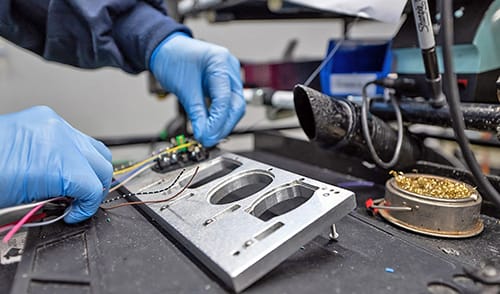
The principal advantage of custom electrohydraulic solutions is their design philosophy centered on the specific application. While standard components are optimized for versatility and broad compatibility, custom solutions enable OEMs to fine-tune every detail – such as cylinder dimensions, seal selection and power unit configuration – to support the equipment’s intended function.
This focused engineering ensures that each component performs at its very best, delivering measurable advantages in operational reliability for equipment facing unique use cases.
Custom systems can be engineered for effective integration, helping eliminate the need for workarounds or design compromises sometimes required with standard components. This results in streamlined equipment layouts, superior control system interoperability, and easier maintenance – all of which can enhance field performance and reduce downtime.
Another benefit of custom solutions is their ability to provide manufacturing and application efficiency. As real-world operating conditions evolve, custom systems can be updated and optimized to maintain peak performance. Predictive maintenance features and advanced diagnostics are more easily built into system designs, supporting proactive equipment management.
A recent application that our team completed was the adaptation of operator controls for snow clearing equipment. This application required the controls to provide a unique ergonomic operating position for an operator to comfortably operate the plow for an extended period. The installation and commissioning of the controls required an efficient and simple method of field diagnosing and adjusting operational parameters without the use of proprietary tools or interfaces.
Our team provided the customer with a complete electrohydraulic solution that reduced their cabling requirements by 50% and supported their requirement for adjusting operational parameters through a non-proprietary interface. This customization not only optimized their production efficiency but also enhanced the field service technical support of the application, with the potential to reduce after-sales product support requirements.
Strategic steps toward customization
The shift toward custom electrohydraulic solutions should start with a comprehensive assessment of performance requirements and operational objectives. This involves carefully analyzing where existing solutions are performing well and identifying areas where further optimization could drive better results.
For example, standard components may work effectively in certain applications with predictable demands, but in more complex or specialized scenarios, customization can unlock greater efficiency. By thoroughly understanding these distinctions, OEMs can make well-informed decisions about when to rely on standard components and when tailoring a solution is the better path forward, ensuring the best possible alignment with their goals.
Selecting a partner with deep engineering experience and extensive application knowledge is critical for effective customization. Such a partner can provide invaluable insights into the specific challenges and opportunities within an OEM’s target applications. Suppliers should ideally be able to support OEMs not only with robust technical capability and manufacturing capacity, ensuring the production of high-quality, specialized components, but also through comprehensive ongoing service, detailed training programs, and proactive design collaboration. This holistic approach creates a strong support network that significantly extends the value proposition of custom solutions, making them a sustainable and integrated part of an OEM’s operational strategy rather than a one-off transaction.
To ensure a smooth transition and effective integration, a phased implementation strategy is often employed. This approach allows OEMs to gradually introduce custom solutions, running them alongside existing standard components. This concurrent operation provides a valuable opportunity to validate results in real-world scenarios and learn from each deployment, minimizing disruption and maximizing success. Furthermore, comprehensive documentation and thorough knowledge sharing are crucial. This ensures that the OEM’s team is fully prepared to understand, operate and maximize the benefits derived from both standard and custom approaches, fostering a cohesive and efficient operational environment.
Responding to industry evolution
The electrohydraulic market is in a constant state of flux, driven by evolving regulations, rapid digital transformation, and the ever-increasing expectations of customers. In this dynamic environment, manufacturers face continuous pressure to deliver superior performance, enhance reliability, and offer features that are precisely tailored to specific needs.
Custom electrohydraulic systems emerge as a powerful solution in this context, offering targeted and specialized approaches precisely where conventional, off-the-shelf options fall short. Concurrently, standard components continue to play a vital role, providing dependable and cost-effective value for a broad range of equipment requirements. The strategic integration of both custom-engineered solutions and reliable standard components allows OEMs to effectively navigate market demands.
Custom solutions provide OEMs with a significant opportunity to distinguish their products in a crowded marketplace. By offering unique features and tailored performance, OEMs can cultivate stronger, more enduring customer relationships. This differentiation often leads to repeatable advantages, particularly in scenarios where the specific operational demands and performance benchmarks of the equipment far exceed the capabilities or scope of typical, readily available off-the-shelf components.
Both standard and custom electrohydraulic products have a place in a well-equipped engineering toolbox. Suppliers like Bailey International can offer the technical expertise, manufacturing capabilities and partnership approach needed to help companies navigate this landscape.
Robin Cooper, sales application manager for Bailey International , wrote this article for SAE Media.
More From SAE Media Group
Off-Highway Engineering
CAN-Enabled Electrohydraulic Mobile Valve
Aerospace & Defense Tech Briefs
Industry Invited to Participate in AeroTech Aerospace and Defense Technical Program
Aerospace & Defense Tech Briefs
SAE International Extends Call for Abstracts, Seeks Submissions for AeroTech Conference
Aerospace & Defense Tech Briefs
SAE International Issues, Revises Technical Reports for Aerospace Engineering
Automotive Engineering
Case Study: Accuracy Is Key in AHP Hydraulics’s New Ball Joint Tester
Off-Highway Engineering
Liebherr Reveals ‘Hybrid’ CFRP Cylinders and Parallel-Pump Concept

Automotive Engineering
U.S. States Focus on Taiwan as Trade War Continues
Off-Highway Engineering
Hydraulic Fluids Evolve to Meet Critical Equipment-Design Trends
Off-Highway Engineering
HydraForce Strengthens Electrohydraulic-Controls Position in India
Off-Highway Engineering
Parker Takes Electro-Hydrostatic Approach for Electric Machines
Automotive Engineering
Q&A: Envorso Wants to Help OEMs Make Better Software In-House
Off-Highway Engineering
Yanmar CE Adds to Growing Compact Track Loader Segment
Off-Highway Engineering
Approved Vendor List Supplier Reduction: Everyone Is Doing It
Off-Highway Engineering
Volvo CE’s Road to the Future

Automotive Engineering
3D, No Waiting!
Off-Highway Engineering
Bits and Bytes Boost Hydraulic System Capabilities
Medical Design Briefs
Built to Adapt: Rethinking Contract Manufacturing for a New Era
Motion Design
The Fundamentals of Applying Electrohydraulic Valves
Off-Highway Engineering
Rexroth Takes Aim at Electrification for Off-Highway Vehicles
Aerospace & Defense Tech Briefs
Hydraulic Thermal Bypass Valve
Automotive Engineering
Electrifying Opportunities at IAV
Automotive Engineering
CES 2021: Bosch Consolidates Computing Talent in New Mobility Division
Aerospace & Defense Tech Briefs
Quality Management Experts Provide Guidance on AS9100 Standard, Equipment Calibration
Off-Highway Engineering
Rethinking Profitability — A Business Accelerator Model
Off-Highway Engineering
Industry Seeks Partners with Proven Performance and Reduced Risk
Motion Design
Assessing Five Key Areas of Modern Hydraulic Power Units
Off-Highway Engineering
Holistic Hydraulic Designs Add More Sensors, Advanced Controls
Off-Highway Engineering
Case Unveils Fully-Electric Backhoe Loader, Begins Delivery This Year
Top Stories
INSIDERManned Systems
 How Airbus is Using w-DED to 3D Print Larger Titanium Airplane Parts
INSIDERRF & Microwave Electronics
 FAA to Replace Aging Network of Ground-Based Radars
NewsAR/AI
 CES 2026: Bosch is Ready to Bring AI to Your (Likely ICE-powered) Vehicle
NewsUnmanned Systems
 Accelerating Down the Road to Autonomy
INSIDERMaterials
 Can This Self-Healing Composite Make Airplane and Spacecraft Components Last...
EditorialDesign

Webcasts
Transportation
 Hydrogen Engines Are Heating Up for Heavy Duty
Electronics & Computers
 Advantages of Smart Power Distribution Unit Design for Automotive...
Unmanned Systems
 Quiet, Please: NVH Improvement Opportunities in the Early Design...
Internet of Things
 A FREE Two-Day Event Dedicated to Connected Mobility
Connectivity
 E/E Architecture Redefined: Building Smarter, Safer, and Scalable Vehicles
Unmanned Systems
 How Sift's Unified Observability Platform Accelerates Drone Innovation