




CONNECTED: EV Battery Tech Advancements and Facility Coatings Selection
New battery chemistries and the rise of automated guided vehicles in EV battery plants will redefine what’s expected from floor and wall coatings.
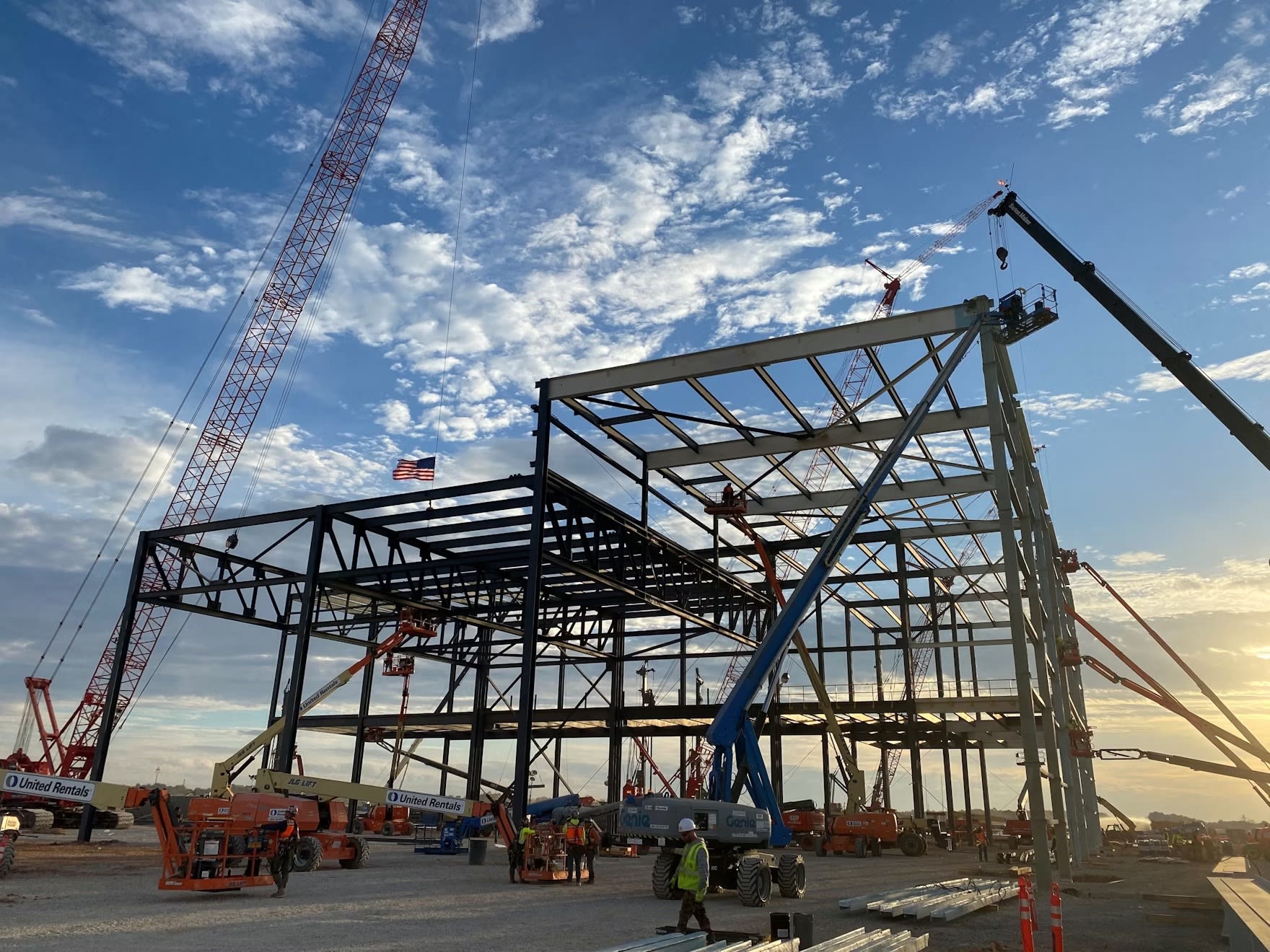
Over the last five years, the EV industry has undergone a dramatic transformation driven by consumer demand, ambitious OEM production targets and significant public and private investment. In response, battery manufacturing facilities have evolved from rebuilt legacy plants into purpose-built manufacturing facilities designed for scale, speed, and precision. These modern facilities no longer resemble the assembly lines of OEMs of the past. Instead, they are highly controlled environments optimized for automation, environmental control, new chemicals and materials and particulate-free clean manufacturing processes.
With the rise of next-generation battery formats such as solid-state, lithium-sulfur and lithium iron phosphate (LFP) chemistries, facility requirements have changed. These technologies often require tighter environmental controls, cleaner production conditions, and more robust safety measures, all of which place new demands on facility flooring, walls, ceilings and roofs.
Now, more than ever, it’s important for owners to select the right high-performance coatings that can meet the complex demands of EV battery manufacturing.

Battery chemistries and cell designs drive coatings choice
As EVs continue to gain market share, automakers are under pressure to improve performance, extend range, and reduce costs to remain competitive. That push has driven a wave of innovation in battery technologies, with researchers and manufacturers exploring new chemistries that can unlock greater energy density, faster charging, and better overall efficiency. To keep up with growing consumer expectations and to meet sustainability and supply chain goals, advanced chemistries like solid-state, lithium-sulfur, lithium-iron phosphate, and sodium-ion are being actively developed and tested.
Before we dive any deeper, let’s take a look at some of the key differences with these new battery chemistries.
- Solid-state batteries: These replace the traditional liquid electrolyte with a solid one, offering the potential for higher energy density, improved safety, and faster charging.
- Lithium-sulfur batteries: These are appealing due to their lightweight nature and ability to store more energy by weight than traditional lithium-ion, though they still face challenges around longevity and stability.
- Lithium-iron phosphate batteries: These are generally known for their longer cycle life and thermal stability, while using more widely available materials that make them more cost-effective without sacrificing safety.
- Sodium-ion batteries: On the opposite end of the spectrum, sodium-ion batteries are gaining attention for their potential to reduce reliance on critical minerals like lithium and cobalt, making them attractive for markets focused on low cost and raw material availability.
While nickel manganese cobalt (NMC) and nickel cobalt aluminum (NCA) are the most prominent chemistries used in EVs today due to their high energy densities, each of these emerging battery chemistries brings unique benefits and can help meet and even exceed the growing demands of the industry and consumers.
In addition to the battery chemistry, the rise of automated guided vehicles (AGVs), AMRs and other robotic systems built for speed and volume in EV battery plants will also redefine what’s expected from floor and wall coatings. These machines move along repetitive paths in cleanrooms and formation areas, creating concentrated wear zones that can quickly degrade unprotected flooring. Impact-resistant, abrasion-tough coatings are required to handle constant traffic without creating dust or debris that could interfere with cell production.
Future EV battery manufacturing facilities may require more stringent cleanroom environments, stronger chemical resistance for facility floors and walls or modular designs that allow production lines to adapt to new chemistries quickly. For example, solid-state batteries may require tighter environmental controls, while lithium-sulfur batteries may introduce new solvents and chemical byproducts that challenge conventional protective coatings. In addition, as manufacturing becomes more automated and precise, coatings must be equally advanced and engineered not only to protect but to perform as part of the facility’s critical systems.
These facilities will continue to produce and use new chemistries, making it critical to have flexible coatings that can handle them now and the potentially more complex chemistries of the future. By factoring these emerging technologies into today’s facility planning and materials specifications, owners and general contractors can ensure their operations are future-ready and can scale with innovation rather than be limited by it.
Building smarter: the role of modular construction

With tight timelines and complex project scopes, many EV battery facility owners and general contractors are turning to modular and offsite construction to streamline delivery. Cleanrooms, utility zones, and precoated steel assemblies can be manufactured offsite and arrive ready for installation.
This shift to modern shop-applied coatings processes brings clear advantages. High-performance coatings applied in controlled environments allow for consistent application and faster cure times as they remove common obstacles like weather from the process. This reduces the risk of project schedule delays caused by temperature, humidity or coordination conflicts during construction which, according to a recent research survey commissioned by Sherwin-Williams, are one of the primary drivers of construction delays based on responses from industry leaders.
With shop application, owners benefit from higher quality assurance, fewer job site bottle-necks and safer conditions, especially in the critical process of structural steel, flooring, and wall system installation.
Where coatings matter most in an EV battery plan
Too often, coatings are seen as a final protective layer, something added at the end to make floors, walls or steel look clean and finished. But in advanced EV battery manufacturing facilities, high-performance coatings are a functional part of the facility itself.
Like automation equipment, production lines and HVAC systems, coatings directly impact how a facility performs. They help maintain cleanroom integrity, reduce static discharge risk, protect against chemical spills and even contribute to fire safety. Some of the most critical areas of a manufacturing facility include:
- Battery formation areas: Need chemical resistant high-performance flooring that withstands exposure to corrosive electrolyte solutions.
- Cleanrooms: Use conductive or ESD flooring systems to prevent electrostatic discharge that could negatively impact sensitive battery components.
- Dry rooms: Require seamless, moisture-resistant, high-performance coatings to maintain low humidity levels.
- Manufacturing and assembly lines: Depend on durable, high-performance coatings with increased durability that resist impact and wear from automated systems.
- Logistics and warehouse areas: Require impact-resistant, anti-slip coatings to keep automated material handling systems moving efficiently and safely.
High-performance coatings aligned with EV industry demands
Each section of a facility should have high-performance coatings designed for the unique challenges that that area presents. If not, owners run the risk of increased project delays and suboptimal plant production efficiency. High-performance coatings help remove some of these roadblocks, with solutions that meet the unique needs of gigafactories. These might include:
- Advanced ESD and conductive coatings for cleanrooms and electronics-sensitive areas.
- Chemical resistant systems tested against common solvents like N-Methyl-2-pyrrolidone (NMP).
- High-performance coatings with fast curing properties to support offsite modular construction timelines.
- Fireproofing coatings that combine safety and efficiency through shop application.
- Anti-slip, impact resistant high-performance flooring for logistics and worker-heavy zones.
Whether applied in a controlled shop environment or on the construction site, these systems are engineered to keep modern gigafactories safe, clean, and efficient. In environments where uptime, product yield and safety are critical, the right coatings can mean the difference between a facility that runs efficiently and one that doesn’t. When viewed as part of the operational system, coatings become more than just protection. They are part of the infrastructure that keeps production on track.
Future-proofing starts with the right specs
That preparation starts with selecting materials that are proven, flexible, and built to withstand the specific demands of battery production. High-performance coatings aren’t just a finishing touch, they’re a critical part of making facilities safer, faster, and simpler.
EV battery manufacturing will continue to evolve. New chemistries, automation technologies, and modular construction will raise the bar for performance, and facility owners must be ready.
Kristin Meyers is the market segment manager, EV battery and automotive facilities, for Sherwin-Williams Protective & Marine division.
More From SAE Media Group
Battery & Electrification Technology
New Cathode Material for Sodium-Ion Batteries
Battery & Electrification Technology
Refining Automotive Battery Management Systems with Lumped-Approach Thermal Modeling
Battery & Electrification Technology
New Products
Battery & Electrification Technology
Niobium: Magic Metal for Battery Anodes?
Battery & Electrification Technology
Cobalt-Free Electrodes Achieved with Nickel Ions
Battery & Electrification Technology
Volvo Trucks’ Battery Chemistry of Choice: NCA
Power Electronics INSIDER
World’s Strongest Battery Paves Way for Light, Energy-Efficient Vehicles
Automotive Engineering
How Emerging Technologies Can Transform EV Battery Reliability and Safety
Battery & Electrification Technology
Powering the Future of Electric Vehicles with Safer, Lighter Batteries
Battery & Electrification Technology
Cobalt-Free Batteries Could Power EVs of the Future
Battery & Electrification Technology
How Intelligent Battery Management Drives EV Buyer Confidence

Tech Briefs
Factorial’s Solid-State B-Samples Send a Message
Automotive Engineering
Honda Taps Recycling Firms for Future EV Batteries
Automotive Engineering
BYD’s Blade Runner
Automotive Engineering
WCX 2023: Battery Leaders Say Manufacturing Prowess Needs to Advance
Automotive Engineering
3D Graphene Boosts New Batteries Beyond Lithium-Ion
Battery & Electrification Technology
New Priming Method for Improving Battery Lifecycle
Battery & Electrification Technology
New Polymer Coating Could Boost EV Batteries
Battery & Electrification Technology
Thick Electrodes’ Chemistry Matters More Than Structure for Battery Performance
Automotive Engineering
GM Picks LMR as Its Future Affordable Battery Technology

Tech Briefs
New Fluids Coming for EV Thermal Management

Automotive Engineering
Our Next Energy’s Gemini Battery Could Bring 600-Mile EVs by 2026
Automotive Engineering
EMBATT Technology Could Double the Driving Range of EVs
Automotive Engineering
Nissan's Innovative Solid-State Gambit
Battery & Electrification Technology
A Quick and Easy Way to Produce Anode Materials for Sodium-Ion Batteries Using Microwaves
Battery & Electrification Technology
A Triple-Layer Battery Resistant to Fire and Explosion
Transcript
00:00:04 the investment in electrification of the automotive Market is driving rapid construction of EV battery facilities throughout North America these massive facilities introduce complex and unique challenges for the owners and Constructors tasked with building them faster than ever traditional field applied installation of passive fire protection materials disrupts
00:00:26 construction trades by requiring preparation application curing and cleanup at the megasite exposure to unpredictable weather conditions impacts dry times resulting in schedule delays and added project costs however there is a better way to fireproof your steel shop applied into messent fireproof Coatings can enhance both safety and quality by reducing potential risk as
00:00:52 work is done mostly offsite at ground level following the application of Sherwin Williams fireex intumescent cating which is engine engineered to withstand severe operating environments physical demands of transportation and construction the fireproof steel is delivered to the job site ready for assembly this process not only reduces site congestion but accelerates
00:01:15 construction schedules by requiring fewer trades people and on-site equipment lower rental fees and boosting productivity by adopting shop applied fireproofing on Mega projects construction teams can achieve increased safety on the project site reduction of job site Insurance costs reduction of field applied coating disruptions and reduction of waste which helps save
00:01:40 millions of dollars and thousands of hours at Sherwin Williams our goal is to help you create a sustainable and operationally excellent EV battery Facility by engaging with our Construction Solutions team we can help create a safer faster simpler construction project contact us today to get your project started
Top Stories
NewsRF & Microwave Electronics
 Microvision Aquires Luminar, Plans Relationship Restoration, Multi-industry Push
INSIDERAerospace
 A Next Generation Helmet System for Navy Pilots
INSIDERDesign
 New Raytheon and Lockheed Martin Agreements Expand Missile Defense Production
INSIDERMaterials
 How Airbus is Using w-DED to 3D Print Larger Titanium Airplane Parts
NewsPower
 Ford Announces 48-Volt Architecture for Future Electric Truck
ArticlesAR/AI

Webcasts
Electronics & Computers
 Cooling a New Generation of Aerospace and Defense Embedded...
Automotive
 Battery Abuse Testing: Pushing to Failure
Power
 A FREE Two-Day Event Dedicated to Connected Mobility
Unmanned Systems
 Quiet, Please: NVH Improvement Opportunities in the Early Design Cycle
Automotive
 Advantages of Smart Power Distribution Unit Design for Automotive &...
Energy
 Sesame Solar's Nanogrid Tech Promises Major Gains in Drone Endurance