




GM Picks LMR as Its Future Affordable Battery Technology
Lithium manganese-rich (LMR) cathodes will power the automaker’s future EVs.
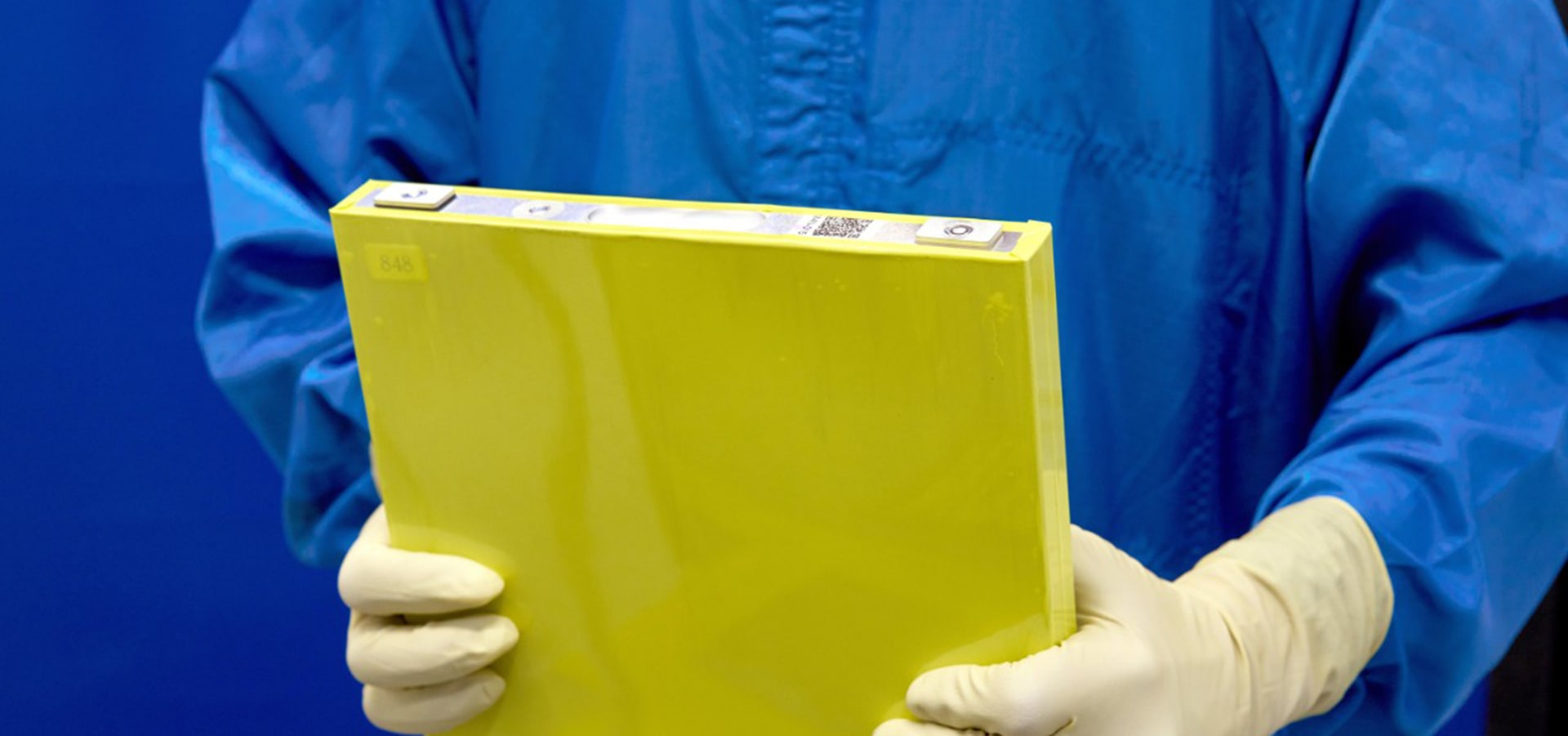
Nearly every automaker with an electric car in its lineup has aimed to bring the price of EVs down to parity with their gas-powered counterparts. Concerns about EV tax incentives going away have likely super-charged concerns that EVs might still be too expensive for the average consumer. For many, it's imperative to produce vehicles with competitive sticker prices regardless of powertrain. It'll also help with EV adoption.
To try and meet this goal, GM announced that it's betting on lithium manganese-rich (LMR) battery cells. The automaker says that the new battery technology will have 33% more energy density than the LFP (lithium iron phosphate) battery technology many automakers are currently using to bring down EV prices. Both chemistry systems are less expensive to produce than lithium-ion battery packs.
For additional efficiency, GM said that it's moving to prismatic cells housed in rectangular cases. These cells will fit better in larger EVs like trucks and SUVs. GM currently uses high-nickel pouch cells in its vehicles. According to the automaker, moving to prismatic cells will reduce pack components by 50% and battery module components by 75%.
A denser battery pack with fewer components equals a less expensive pack. Currently, the battery pack is the most expensive part of an electric vehicle. Increasing density also allows automakers to reduce the pack size and weight, which equals more range from the same capacity pack.
Another big win for LMR cells is that there is "virtually no cobalt." Instead, the manganese content is 65% of the cell, and it's far less expensive and more readily available than cobalt or nickel. Cobalt supplies are notoriously expensive, with Congo controlling the supply for the entire industry. The nickel content has also been reduced compared to LFP battery packs. Again, this will reduce reliance on other countries for the production of the packs. China controls most of the world's nickel supply.
GM's cell partner LG Energy Solutions holds over 200 LMR technology patents. The joint venture had to work to fix one of the biggest issues with LMR packs, a short lifespan and a tendency to suffer voltage losses over time. LG and GM noted that thanks to proprietary dopings and coatings in addition to particle engineering, the LMR packs should have the same lifespan as its current nickel-cell battery packs. GM said it expect to put the new LMR cells into commercial production in 2028,
More From SAE Media Group
Automotive Engineering
Reducing the Battery Materials Supply Risk
Automotive Engineering
Ford Starts the Hard Work of EV Battery, Raw Materials Security
Automotive Engineering
Our Next Energy’s Gemini Battery Could Bring 600-Mile EVs by 2026
Automotive Engineering
Architecting GM’s New EV Batteries
Automotive Engineering
GM’s Ultium Battery System Future-Proofed
Automotive Engineering
New GM, LG Chem Joint Venture to Build EV Battery Plant in U.S.
Automotive Engineering
BMW Plans Move to Structural Battery Packs and ‘46120’ Cells
Off-Highway Engineering
Volvo Trucks’ Battery Chemistry of Choice: NCA
Off-Highway Engineering
Medium-Duty Electric Trucks Multiply to Meet Demand
Off-Highway Engineering
Brownout for Commercial-Vehicle Electrification?
Battery & Electrification Technology
Powering the Future of Electric Vehicles with Safer, Lighter Batteries
Off-Highway Engineering
Making the Case for Battery-Electric Fleet Power
Off-Highway Engineering
Bigger Barrier to CBEVs: Batteries or Infrastructure?
Off-Highway Engineering
Mercedes-Benz Goes Long with EActros 600 Electric Truck
Automotive Engineering
Engineering ‘Electron Guzzlers’
Automotive Engineering
Battery Guru: Future of 18650 Cells Unclear Beyond Tesla S
Automotive Engineering
Establishing Closed-Loop EV Battery Recycling
Off-Highway Engineering
BEV Truck Manufacturers Charge Ahead at 2022 NTEA Show
Off-Highway Engineering
EV Startup Rivian Gets More Funding from Ford, Amazon
Off-Highway Engineering
Battery Chemistries for Construction EVs
Automotive Engineering
GM and Honda to Jointly Develop Honda’s Electric Vehicles
Automotive Engineering
Hercules Readies Alpha Electric Pickup Prototypes
Automotive Engineering
Slate and SK Executives on Bringing the Inexpensive EV to Market
Autonomous Vehicle Engineering
Extending EV Range with AV Programming
Off-Highway Engineering
Nikola Producing Battery-Electric Trucks, Fuel-Cell EVs Coming
Automotive Engineering
New Ultium Battery System Underpins GM’s EV Future
Off-Highway Engineering
Mega Push for Heavy-Duty EV Charging
Off-Highway Engineering
Hydrogen ‘Inevitable’ for Commercial Vehicles
Off-Highway Engineering
Kalmar Launches 3rd-Gen Electric Terminal Tractor
Top Stories
NewsSensors/Data Acquisition
 Microvision Aquires Luminar, Plans Relationship Restoration, Multi-industry Push
INSIDERRF & Microwave Electronics
 A Next Generation Helmet System for Navy Pilots
INSIDERWeapons Systems
 New Raytheon and Lockheed Martin Agreements Expand Missile Defense Production
NewsAutomotive
 Ford Announces 48-Volt Architecture for Future Electric Truck
INSIDERAerospace
 Active Strake System Cuts Cruise Drag, Boosts Flight Efficiency
ArticlesTransportation

Webcasts
Aerospace
 Cooling a New Generation of Aerospace and Defense Embedded...
Energy
 Battery Abuse Testing: Pushing to Failure
Power
 A FREE Two-Day Event Dedicated to Connected Mobility
Automotive
 Quiet, Please: NVH Improvement Opportunities in the Early Design Cycle
Electronics & Computers
 Advantages of Smart Power Distribution Unit Design for Automotive &...
Unmanned Systems
 Sesame Solar's Nanogrid Tech Promises Major Gains in Drone Endurance