




Factorial CEO Says Cells with 375Wh/kg Energy Density a ‘Milestone’ for Stellantis
Factorial’s cells can charge from 15% to over 90% in 18 minutes at room temperature and have discharge rates up to 4C.
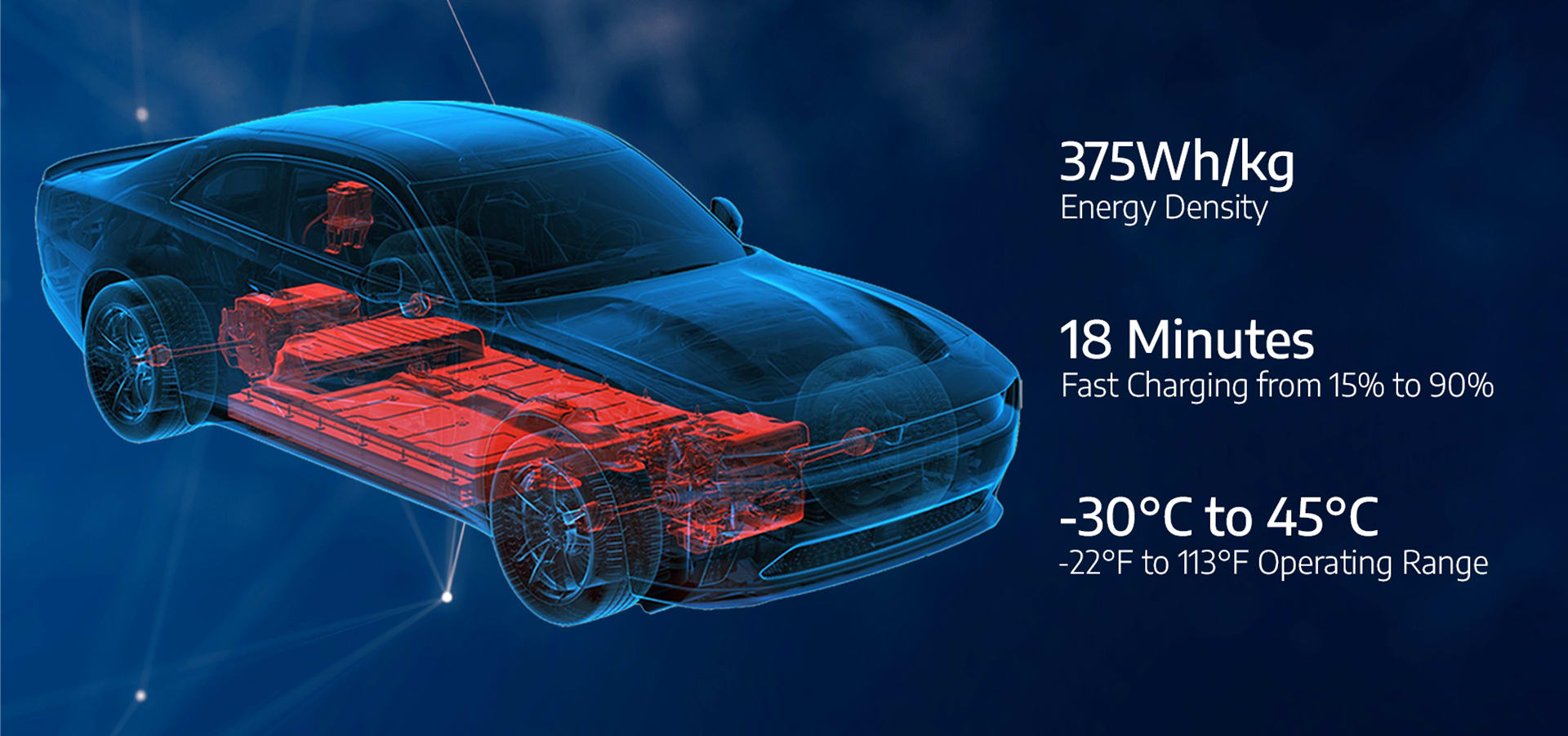
In April, Stellantis and Factorial Energy announced that the two companies validated automotive-sized solid-state battery cells with an energy density of 375Wh/kg. The companies called this “a major step toward commercial use.” Factorial’s cells can charge from 15% to over 90% in 18 minutes at room temperature and have discharge rates up to 4C. Stellantis invested $75 million in Factorial in 2021. SAE Media recently spoke with Factorial CEO Siyu Huang about the partnership.
The Factorial Electrolyte System Technology (FEST) cells that Stellantis will use have a claimed energy density of 375Wh/kg. How are these different from the B-samples sent to Mercedes-Benz last year, which had a rating of over 106Ah while the Stellantis ones are 77Ah?

We’re not releasing technical spec sheets or comparing across programs, but what we can confirm is that the validated 77Ah FEST cells for Stellantis are large-format, automotive-sized solid-state batteries with an energy density of 375Wh/kg. The Ah rating relates to cell capacity. In general, differences like 77Ah vs. 106Ah reflect tailoring cells for specific vehicle platforms and performance requirements. For Stellantis, this validation is a milestone because it's the first time a solid-state lithium-metal battery of this size has demonstrated both high energy density and durability over 600 charge cycles.
Stellantis will test these batteries in Dodge Charger Daytonas by 2026, and the companies are “closely collaborating on pack design” and on reducing weight and improving overall system efficiency. What challenges did the engineering teams face and find solutions for?
Stellantis and Factorial’s collaboration goes beyond cell development to jointly optimizing pack architecture, vehicle integration and system-level efficiency. This includes reducing weight to extend range and improve performance. While we’re not sharing specific engineering workflows, the integration of solid-state batteries into a demonstration fleet by 2026 reflects progress on joint development milestones and real-world readiness.
Can you share any technical details about how the collaboration goes “beyond cell development to optimizing pack architecture, improving vehicle integration, and enhancing overall range and cost efficiency”?
Factorial’s FEST technology offers higher energy density and the potential for smaller, lighter packs, giving OEMs more flexibility in vehicle design. The collaboration with Stellantis includes refining pack design and integration approaches to take full advantage of these benefits, with the goal of reducing overall system weight and improving both range and cost efficiency. This work is ongoing and tied directly to the demonstration fleet planned for 2026.
Tell me about Factorial’s “AI-driven tools.” How was AI used in the development of the cells, and how did AI change the process?
Factorial’s AI-driven tools played a key role in developing the latest FEST electrolyte formulation, which supports high-performance operation from -30 C to 45 C (-22 F to 113 F), helping to overcome traditional temperature limitations in solid-state batteries. AI accelerated electrolyte optimization and it enabled faster iteration to balance safety, energy density and fast-charging capability in large-format cells. We also use a digital twin to make more informed decisions about which physical experiments – such as electrolyte formulations – to run. In addition, we used it to forecast the cycle life of cell designs, which was later validated through physical testing.
More From SAE Media Group
Automotive Engineering
Scaling the Solid-State Battery FEST

Tech Briefs
Factorial’s Solid-State B-Samples Send a Message
Battery & Electrification Technology
Recyclable ‘Water Batteries’ That Won’t Catch Fire
Battery & Electrification Technology
A High-Energy Density Lithium-Ion Battery
Automotive Engineering
Clarios to Build Supercapacitor Plant in U.S.
Automotive Engineering
EMBATT Technology Could Double the Driving Range of EVs
Automotive Engineering
Battery Experts: Solid-State EV Tech Could Be Five Years Out
Automotive Engineering
Are We Stuck with Lithium-Ion?
Off-Highway Engineering
Yanmar, ELEO Announce Electrification Strategy for Off-Highway Sector
Automotive Engineering
All (Robot) Hands on Deck
Tech Briefs
Solid-State Lithium-Sulfur Battery Tech
Automotive Engineering
Nissan's Innovative Solid-State Gambit
Off-Highway Engineering
Batteries Go Underground
Automotive Engineering
Clarios Sees Low-Voltage Electricals as Vital in EV, AV Future
Automotive Engineering
Launching Aerospace Battery Tech for EVs
Tech Briefs
Getting EV Battery Gigafactories Up to Speed
Battery & Electrification Technology
Volvo Trucks’ Battery Chemistry of Choice: NCA
Automotive Engineering
New Materials Move Li-Ion Batteries Toward the Solid-State Endgame
Automotive Engineering
Proving out DC Fast Charging — in the Extreme


Automotive Engineering
How Emerging Technologies Can Transform EV Battery Reliability and Safety
Automotive Engineering
Novelis Creates First Aluminum Sheet Battery Enclosure for Mass Electric Vehicle Production
Automotive Engineering
Mercedes-Benz Concept CLA Class Updates VISION EQXX Tech for a 466-Mile EV
Tech Briefs
Next-Generation Flow Battery Design
Tech Briefs
Machine Learning Method for Battery Development
Medical Design Briefs
Flexible Screen-Printed Rechargeable Battery
Automotive Engineering
Artificial Intelligence, Big Data Optimize EV Batteries
Automotive Engineering
Volvo’s Electric High-Wire Act
Top Stories
INSIDERManufacturing & Prototyping
 How Airbus is Using w-DED to 3D Print Larger Titanium Airplane Parts
NewsAutomotive
 Microvision Aquires Luminar, Plans Relationship Restoration, Multi-industry Push
INSIDERManufacturing & Prototyping
 A Next Generation Helmet System for Navy Pilots
ArticlesSoftware
 Accelerating Down the Road to Autonomy
INSIDERManufacturing & Prototyping
 New Raytheon and Lockheed Martin Agreements Expand Missile Defense Production
ArticlesAR/AI
 CES 2026: Bosch is Ready to Bring AI to Your (Likely ICE-powered) Vehicle
Webcasts
Automotive
 Advantages of Smart Power Distribution Unit Design for Automotive...
Transportation
 Quiet, Please: NVH Improvement Opportunities in the Early Design...
Aerospace
 Cooling a New Generation of Aerospace and Defense Embedded...
Energy
 Battery Abuse Testing: Pushing to Failure
AR/AI
 A FREE Two-Day Event Dedicated to Connected Mobility
