




Fully Rugged Mobile PCs Provide an Edge on the Battlefield and Beyond
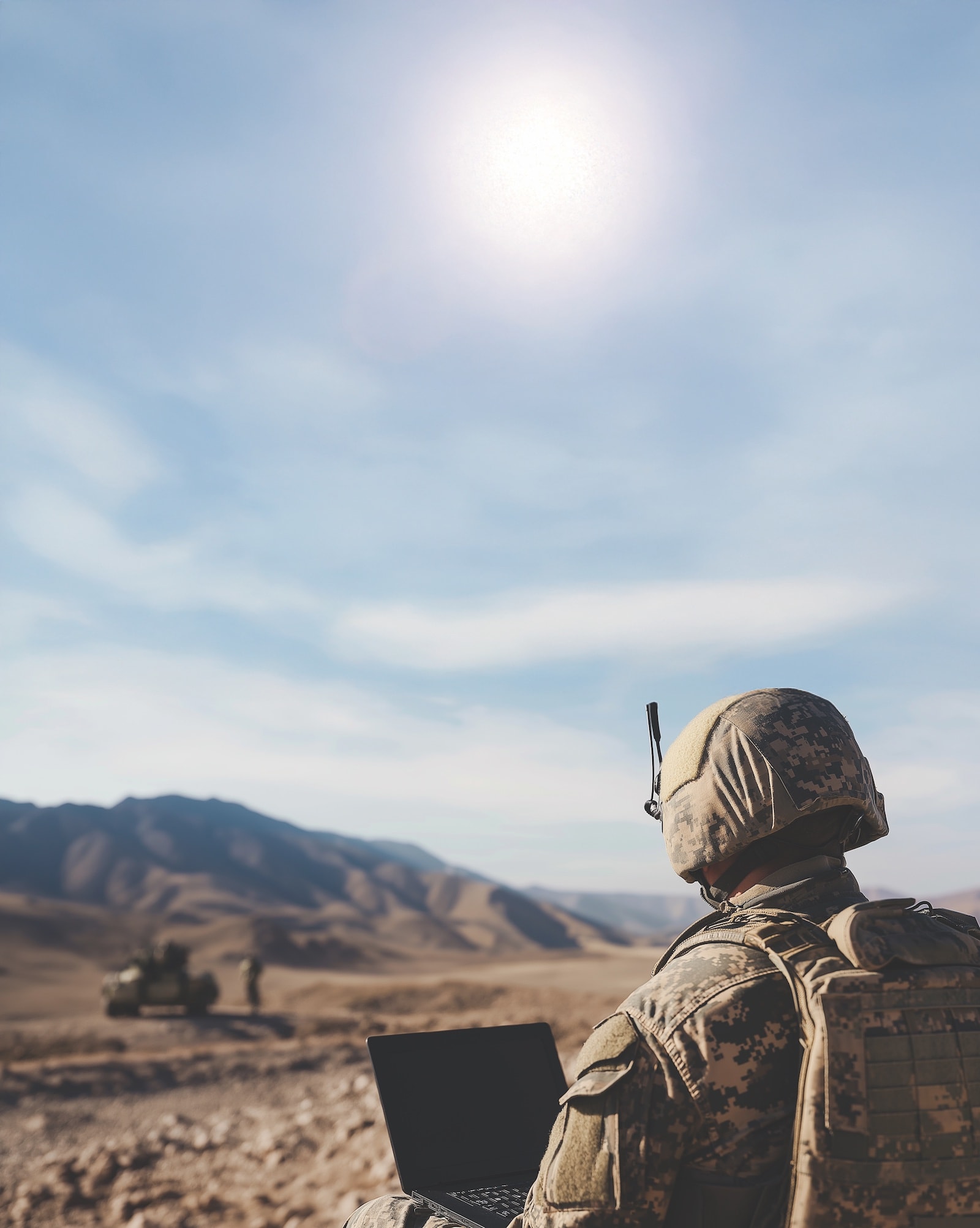
The Defense Advanced Research Projects Agency (DARPA) pioneered satellites, the internet, drones, and human-computer interfaces. Now that work is enabling the next round of revolutionary technologies, including artificial intelligence (AI), edge and cloud computing, and the Internet of Military Things (IoMT) for a wide variety of Command, Control, Communications, Computers, Intelligence, Surveillance, and Reconnaissance (C4ISR) applications.
Laptops and tablets are beneficiaries of yesterday’s DARPA breakthroughs as well as enablers of today’s and tomorrow’s innovations. For example, ruggedized mobile PCs provide powerful new tools for asymmetric warfare by giving soldiers anytime, anywhere access to biometric information such as fingerprints and facial recognition. That information enables them to quickly determine whether a person in street clothes at a checkpoint is a civilian or combatant. This application also highlights the fundamental role of edge computing and the cloud for securely storing and sharing that biometric information.
Another example is IoMT devices such as wearable sensors that monitor the location and health of soldiers for applications such as blue force tracking, and drone-mounted sensors such as thermal video cameras. Mobile PCs provide officers, drone pilots, and other users with secure access to this tactical and personnel IoMT data so they can make informed decisions. Increasingly those decisions are made with the help of generative AI, which can develop battlefield scenarios and options faster than any human.
But not just any mobile PC is up to the task. To be military grade, tablets, and laptops must be ruggedized to meet standards such as MIL-STD-810H, MIL-STD-461G, and IP66 rating, indicating protection against water and dust ingress. These certifications prove they can operate safely and reliably even in the most challenging conditions, including explosive atmospheres. They also must have sealed cases and ports, the latest state-of-the-art CPUs and other major components, a broad selection of wired and wireless connectivity options, hot-swappable batteries, and screens that remain bright and readable even in direct sunlight.

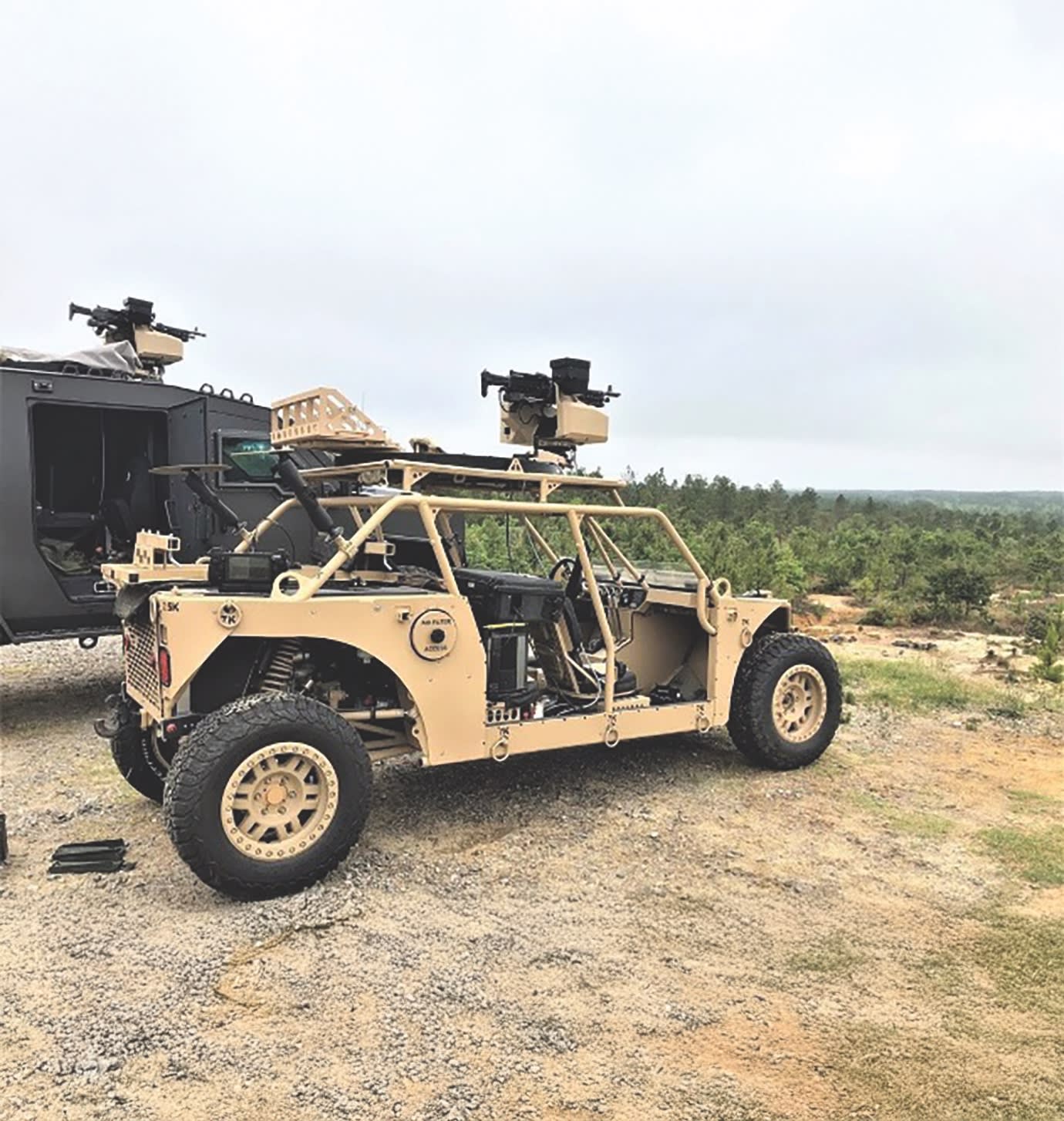
One example is IEC Infrared Systems’ T360 Remote Weapon Station, used to aim and fire the M240 7.62mm medium machine gun and LWMMG .338 light machine gun. A key component is the handheld Rugged Controller Unit (RCU), which controls the weapon and camera systems and provides information such as ammunition levels. The RCU is based on the Durabook R8 tablet, whose fully rugged specs include an IP66 rating, six-foot drop resistance, and MIL-STD 810H and ANSI/UL C1D2 certifications.
The R8 features Durabook’s proprietary DynaVue® technology to ensure that the RCU’s 8-inch LCD display is always viewable even in direct sunlight. The R8 also uses the Coolfinity™ passive cooling system to eliminate fans and thus ingress points for liquids, sand, and other foreign object debris. Coolfinity helps maximize battery life by reducing power consumption and extends the RCU’s service life by eliminating moving parts that can eventually wear out.
Another example is Durabook rugged devices are supporting the system integrator community for short-, medium-, and intermediate-range ballistic missile threats with the ability of intercepting targets both outside and inside the atmosphere. One major anti-missile system uses the Durabook Z14I fully rugged laptop, whose specs mirror those of the R8 rugged tablet: IP66, MIL-STD 810H certification, six-foot drop resistance, and DynaVue® sunlight readable display.
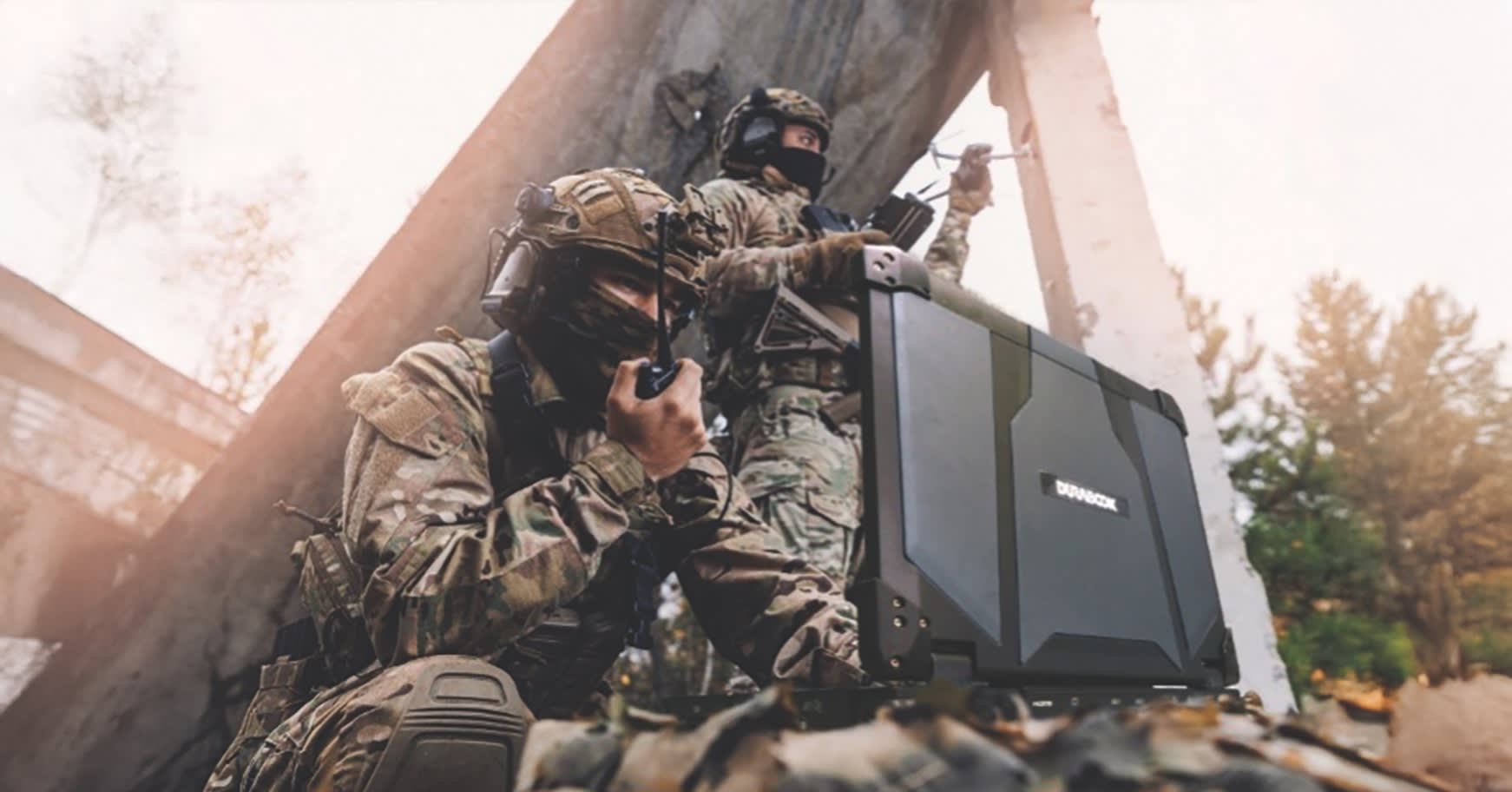
The Z14I’s 14-inch high-definition multi-touch screen provides a high contrast ratio and up to 1,200 nits of brightness, all of which maximizes viewing clarity from multiple angles and in both direct sunlight and low-light conditions. That’s critical for defense systems that provide combat teams on the battlefield with granular tactical insights. The Durabook Z14I delivers mobile mission integrated capabilities, enhanced situational awareness, and interoperability at the tactical edge across combat teams to allow faster and more accurate leader decisions.
Finally, as Windows 11 devices, the R8 and Z14I are designed with Microsoft’s Secured-core PC technology. Microsoft’s Secured-core PC technology, built on firmware and dynamic root of trust measurement, shields credentials, sensitive information, and mission-critical data at the edge computing to cloud infrastructure by protecting devices against firmware-level malware attacks.
This article was written by Joe Guest, Federal President, Durabook (Fremont, CA). For more information, visit here .
More From SAE Media Group
Defense INSIDER
MIT Report Finds US Lead in Advanced Computing is Almost Gone
Aerospace & Defense Tech Briefs
New Products
Aerospace & Defense Tech Briefs
Inside Story: The Role of the SFFs in Rugged HPEC Computing
Aerospace Manufacturing and Machining INSIDER
Army Launches CMOSS Prototyping Competition for Computer Chassis and Cards
Tech Briefs
How Much Do You Know About Computer Processors?
Aerospace & Defense Tech Briefs
MOSA Enclosure Design for Military Systems
Aerospace & Defense Tech Briefs
Helicopter Cabin Computer
Photonics & Imaging Technology INSIDER
NVIDIA Includes Ethernet Photonics in New Six-Chip AI Rubin Platform
Tech Briefs
New on the Market: June 2020
Tech Briefs
Thin-Film Electronics for Flexible Chip Design
Electronics & Sensors INSIDER
Next-Gen Automotive Semiconductors Are Critical for Level 5 Driverless Cars
Tech Briefs
Product of the Month
Tech Briefs
New on the Market
Defense INSIDER
A Quantum Leap for Defense Computing Applications
Tech Briefs
AUSA 2019: A Really Cool Computer
Aerospace & Defense Tech Briefs
Microchip’s New Microprocessor to Enable Generational Leap in Spaceflight Computing
Aerospace & Defense Tech Briefs
How SpaceVPX is Influencing the Design of Next Generation Spacecraft Avionics
Tech Briefs
Essential Control and Visualization, Combined
Aerospace & Defense Tech Briefs
COM Express: The Architecture to Support the Future of Robotics & Unmanned Systems
Aerospace & Defense Tech Briefs
Deterministic and Modular Architecture for Embedded Vehicle Systems
Aerospace & Defense Tech Briefs
New Qubit Circuit Enables Quantum Operations With Higher Accuracy
Aerospace & Defense Tech Briefs
Bringing RF into the Embedded World: It's Time
Tech Briefs
New on the Market: June 2018

Aerospace & Defense Tech Briefs
SHIP Prototype Computer Chip
Top Stories
INSIDERManufacturing & Prototyping
 How Airbus is Using w-DED to 3D Print Larger Titanium Airplane Parts
INSIDERManned Systems
 FAA to Replace Aging Network of Ground-Based Radars
NewsTransportation
 CES 2026: Bosch is Ready to Bring AI to Your (Likely ICE-powered) Vehicle
NewsSoftware
 Accelerating Down the Road to Autonomy
EditorialDesign
 DarkSky One Wants to Make the World a Darker Place
INSIDERMaterials
 Can This Self-Healing Composite Make Airplane and Spacecraft Components Last...
Webcasts
Defense
 How Sift's Unified Observability Platform Accelerates Drone Innovation
Automotive
 E/E Architecture Redefined: Building Smarter, Safer, and Scalable...
Power
 Hydrogen Engines Are Heating Up for Heavy Duty
Electronics & Computers
 Advantages of Smart Power Distribution Unit Design for Automotive...
Unmanned Systems
 Quiet, Please: NVH Improvement Opportunities in the Early Design...
