




Chipping in to Get More From Battery Packs
Power semiconductors help extend range, keeping their cool while improving efficiency at higher voltages.
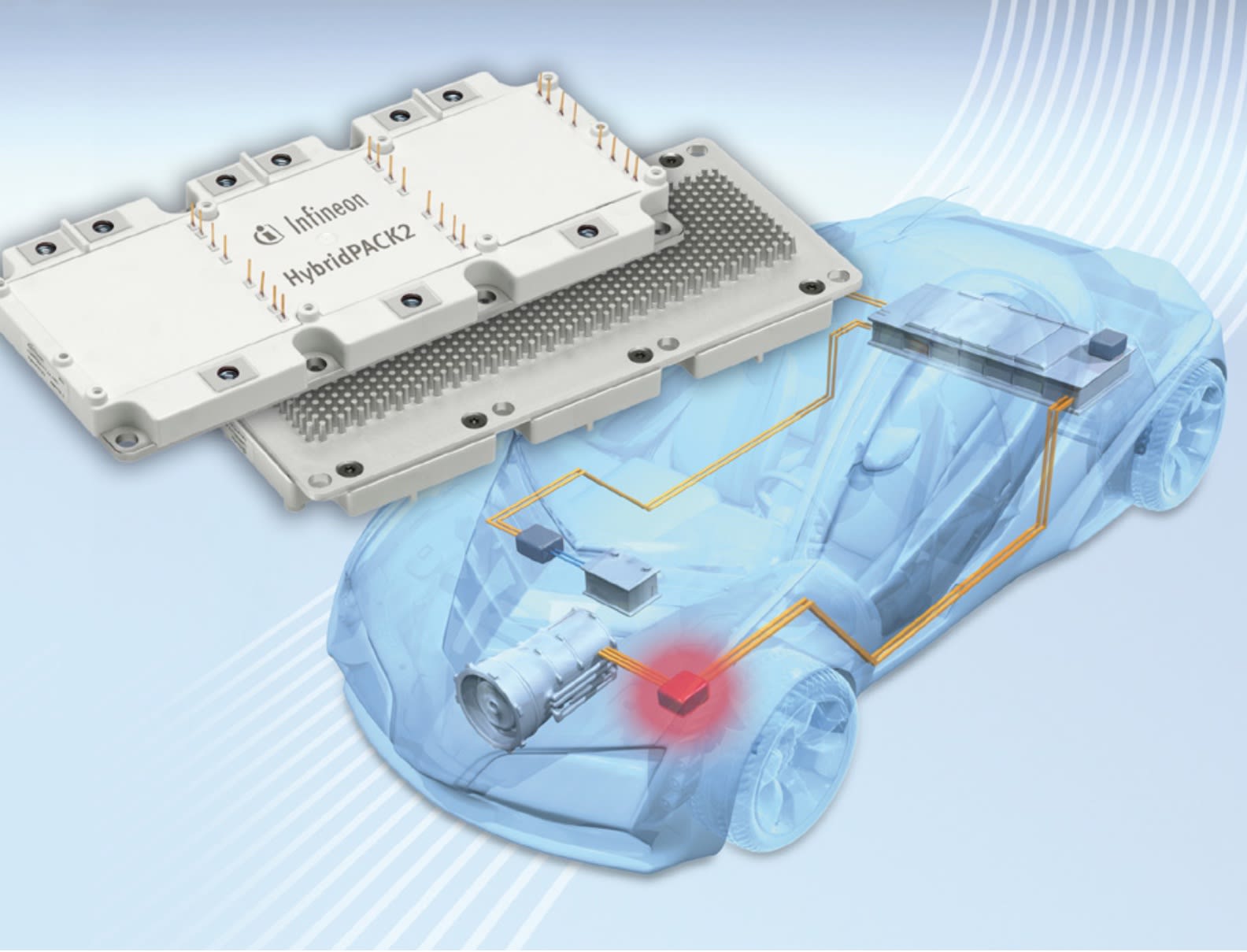
Electrified vehicle designers are pushing semiconductor technologies to help them extend ranges and reduce the weight of battery packs. Power semiconductor improvements are helping powertrain designers move to higher voltages and reduce losses while managing a battery pack’s nemesis, heat.
Falling oil prices curtailed electrified vehicle sales during 2014. Hybrid volumes dropped, with market share of just 2.8%, according to a survey by HybridCars.com and Baum & Associates. In the U.S., plug-in vehicle sales soared by 23% in 2014, yet still barely cracked 120,000, according to InsideEVs.
The ardor of early buyers also seems to be cooling. Only 45% of last year’s hybrid and EV trade-ins went toward buying another alternative fuel vehicle, down from around 60% in 2012, according to Edmunds.com.
Power rangers
Power semiconductor advances are helping developers improve efficiency and increase range with fewer batteries. Improvements are making it more cost effective to use higher voltage systems while still meeting lifetime requirements.
“Semiconductors for higher voltage levels can transfer more power at less losses, [and] power semiconductors for higher voltage levels (1200 V) will help to increase mileage,” said Markus Schermann, Director New Product Area Electrification at Magna Powertrain. “Those that can bear more amps are able to provide more power. Semiconductors that can withstand higher temperatures allow higher continuous power output.”
Many of the changes occur in insulated gate bipolar transistors (IGBTs) and field effect transistors (FETs), central players in electrified powertrain components. Infineon recently introduced a line of automotive IGBTs with a breakdown voltage of 750 V, up from 650 V for the preceding generation. That simplifies designs for powertrain developers who opt to increase battery-pack voltages while providing other benefits.
“We have faster switching, which everyone wants because they get lower losses,” said Carl Bonfiglio, Senior Segment Marketing Manager, Powertrain and Electric Vehicle, at Infineon Technologies North America. “In the past, people often had to slow down so they would not surpass the breakdown voltage.”
Keep your cool
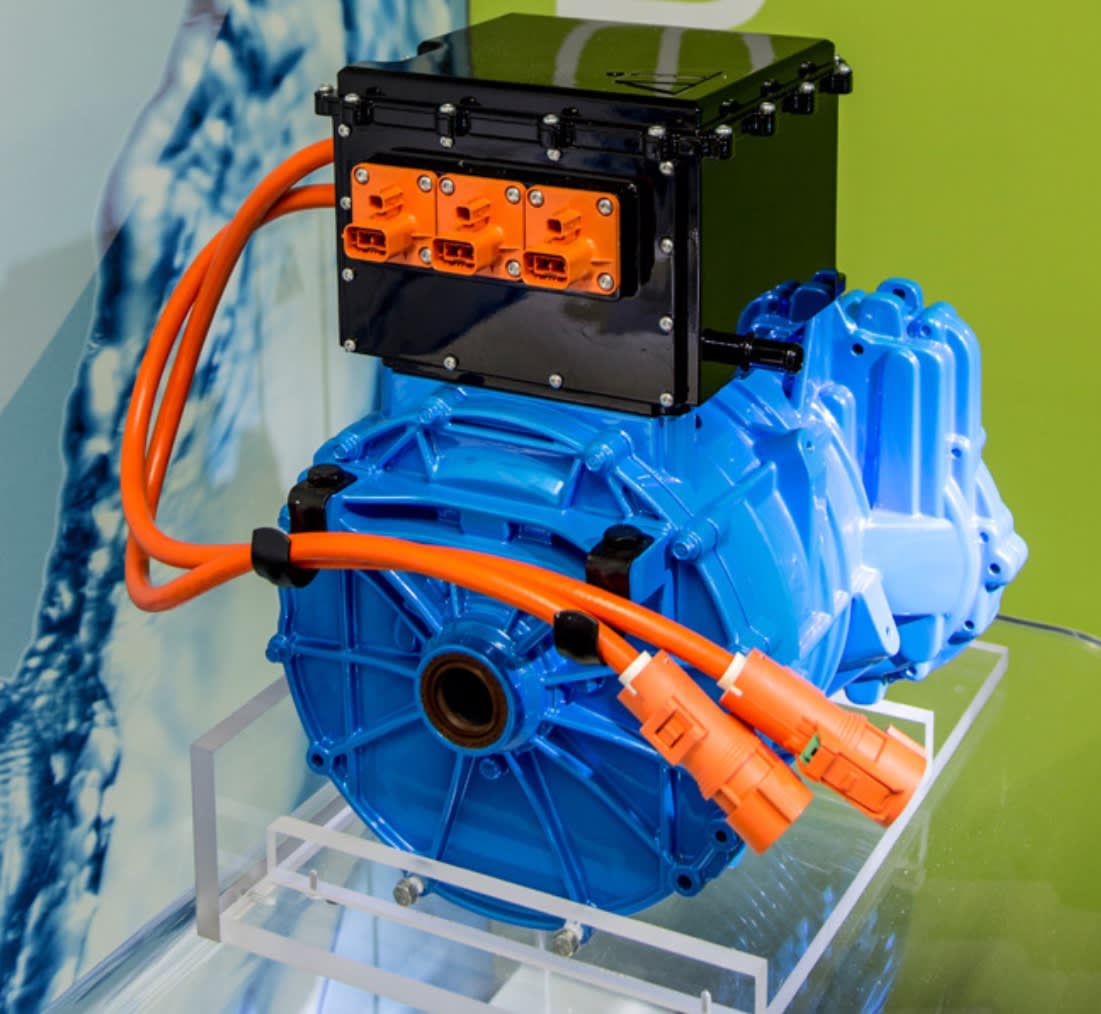
As voltages rise, cooling challenges follow suit. Chipmakers are trimming resistance factors such as RDS(on), which helps determine both maximum current ratings and loss.
“Lower RDS(on) and reduced switching losses are reducing thermal losses in the FET or IGBT,” said Antonio Leone, Product Marketing Manager at Freescale Automotive Battery Management. “This leads to reduced requirements regarding cooling as well as increased efficiency of the drivetrain.”

Metal oxide semiconductor FETs and IGBTs are competing in many instances, creating competition that drives innovation. Early this year, STMicroelectronics rolled out a silicon-carbide power MOSFET with RDS(on) better than 290 mΩ at the 200°C (392°F) maximum operating junction temperature. That facilitates switching frequencies up to three times higher than similar-rated silicon IGBTs offer, letting designers employ smaller external components to trim size and simplify cooling-system design.
On the other hand, Fairchild trimmed energy loss by 30% in its latest IGBTs. An advanced high-density-pitch self-balancing cell uses a self-aligned contact technology for extremely high current densities and improved dynamic switching features.
Packaging is a major factor in all power devices. Component housings and heat sinks can help system designers improve efficiency while meeting temperature goals.
“The IGBT chip is soldered to a ceramic substrate that’s soldered to copper fins that are immersed in liquid,” Bonfiglio said. “That increases the power cycling capability of the package, letting you run more current through, around 20% more.”
While power semiconductors play a central role in electrified powertrains, other digital devices can’t be overlooked. The electronic control units that oversee powertrains constantly make adjustments to maximize overall efficiency.
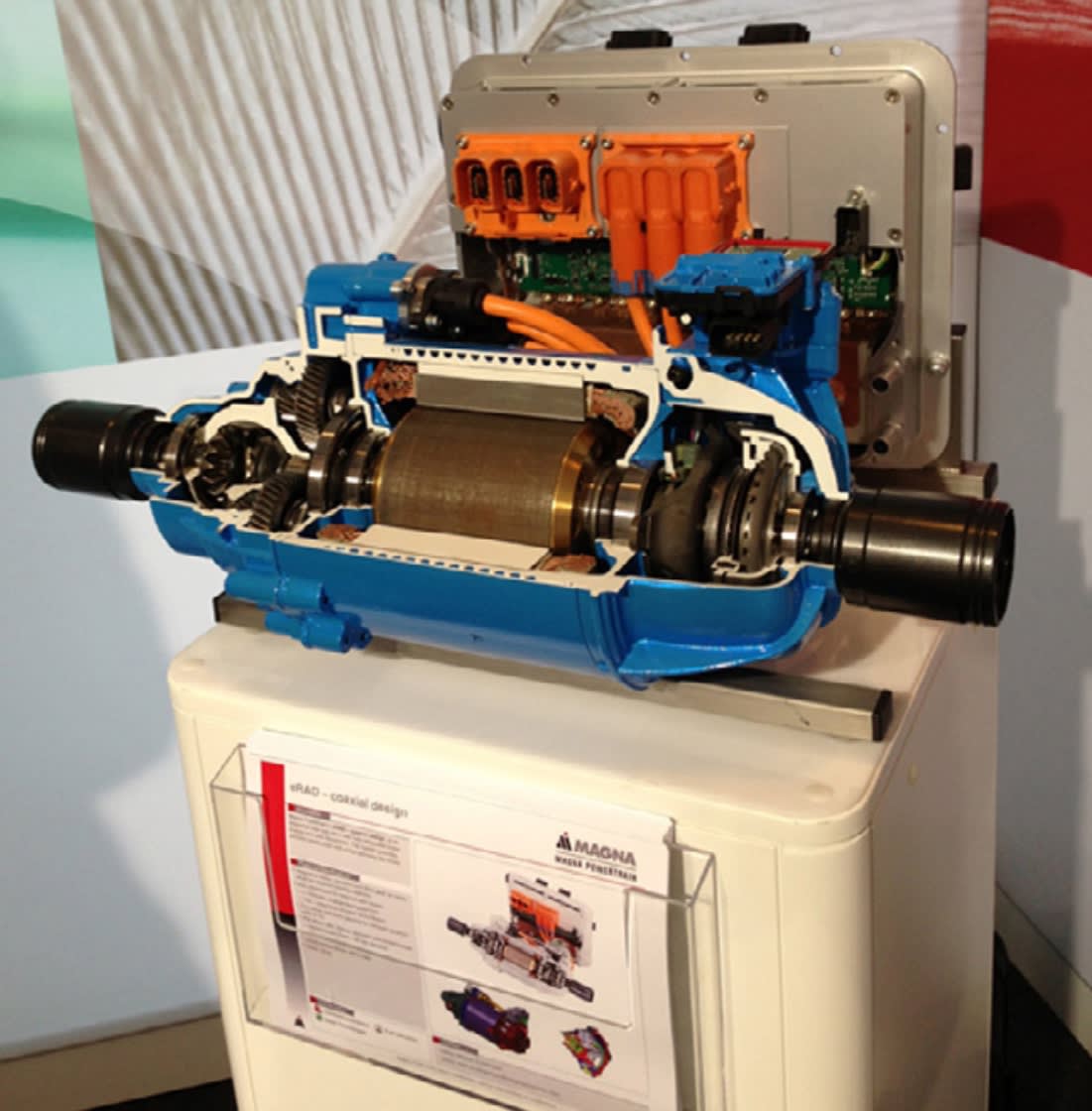
“A big role is going to be played by a central ECU, which controls the ICE, the transmission, and the electric propulsion,” Schermann said. “This ECU can choose the optimum setup of the entire powertrain for every operating condition. Ideally also the vehicle dynamics are controlled by this central ECU.”
Look everywhere

While there’s a major focus on semiconductors in the powertrain, chipmakers are looking at all aspects of vehicle power requirements. Power saved in the instrument cluster can drive the powertrain.
For example, Texas Instruments trimmed the quiescent current of its low drop-out regulators to 10 μA in standby mode, cutting power consumption in infotainment systems, clusters, and other applications. Other vendors are focusing on sleep modes and networking.
“Amps equal ‘miles per gallon,’ especially in hybrids,” said Paul Kanan, Senior Manager, Automotive Controls Solutions Marketing at Renesas Electronics America’s Automotive Marketing Unit. “Instead of having door or sun roof modules alive during operations, they go to sleep and wake up only when needed. That’s done using partial networking.”
The focus on communications extends into the battery pack. A lot of data is moved when controllers and chargers interact to power vehicle components and recharge batteries. Simplifying data links can trim costs without sacrificing efficiency.
“Significant advancements are made in the battery internal communication between the individual cell monitoring ICs and the battery-management system,” Leone said. “Cheaper daisy chain and bus communication systems are available, eliminating costly isolated CAN communication.”
Electronics can also help vehicle owners improve mileage. Clusters and infotainment systems display mileage and find energy-saving routes. Navigation software is being tweaked to find routes that conserve power requirements by minimizing hills, among other tricks.
“There is also a big impact caused by the driver; the driver determines the route and the dynamics,” Schermann said. “Thus, control units can assist the driver. Navigation units can select the route with the minimum energy consumption; the vehicle controller can determine the optimum acceleration and cruise speed.”
More From SAE Media Group

Automotive Engineering
The Path to Better, Smarter Vehicle Charging
Automotive Engineering
EV Energy-Management Powers-Up
Tech Briefs
Ultra-Wide-Bandgap Power Electronics
Power Electronics INSIDER
An Electrifying Collaboration: From the Lab to the Marketplace
Battery & Electrification Technology
New Products


Automotive Engineering
Protecting High-voltage Circuits
Battery & Electrification Technology
Ultracapacitor Solutions to Address Energy-Storage Needs of Vehicles
Battery & Electrification Technology
EV Energy Management Powers Up
Automotive Engineering
Efficient Power Electronics for Hybrids and EVs
Automotive Engineering
Moving Targets: How Improvements to SiC, GaN Power Electronics Will Redefine EV
Power Electronics INSIDER
Small Power Modules, Building Blocks of The Electric Grid
Battery & Electrification Technology
Micro-Supercapacitors Enable Fast Charging
Automotive Engineering
Powering a Drive to Higher Voltages
Electronics & Sensors INSIDER
Organic Bipolar Transistor Developed at the Tu Dresden
Electronics & Sensors INSIDER
Sensitive New Way of Detecting Transistor Defects

Electronics & Sensors INSIDER
Leading Experts Suggest Guidelines for Assessing Emerging Transistor Performance
Automotive Engineering
Supercharging the Fuel Cell
Electronics & Sensors INSIDER
Integrating Dimensions to Get More Out of Moore’s Law
Automotive Engineering
Plug-In Vehicles Await Better Power Electronics

Sensing Technology
How to Optimize Self-Powered Sensing
Electronics & Sensors INSIDER
Tiny But Mighty: Next-Gen Transistors Hold Great Promise
Tech Briefs
New on the Market
Battery & Electrification Technology
How Test Equipment Is Evolving to Keep Up with EV Batteries
Automotive Engineering
Ricardo Reveals Details of Latest E-Motor and EDCT
Top Stories
INSIDERManufacturing & Prototyping
 How Airbus is Using w-DED to 3D Print Larger Titanium Airplane Parts
INSIDERManned Systems
 FAA to Replace Aging Network of Ground-Based Radars
NewsTransportation
 CES 2026: Bosch is Ready to Bring AI to Your (Likely ICE-powered) Vehicle
NewsSoftware
 Accelerating Down the Road to Autonomy
EditorialDesign
 DarkSky One Wants to Make the World a Darker Place
INSIDERMaterials
 Can This Self-Healing Composite Make Airplane and Spacecraft Components Last...
Webcasts
Defense
 How Sift's Unified Observability Platform Accelerates Drone Innovation
Automotive
 E/E Architecture Redefined: Building Smarter, Safer, and Scalable...
Power
 Hydrogen Engines Are Heating Up for Heavy Duty
Electronics & Computers
 Advantages of Smart Power Distribution Unit Design for Automotive...
Unmanned Systems
 Quiet, Please: NVH Improvement Opportunities in the Early Design...
