




WCX 2024: The ‘What’s Next?’ Rollercoaster Ride Can Be Problematic for Engineers
Career coach advises engineers to adapt personal strategies that can build mental resilience for mobility-industry uncertainties.

Uncertainties swirl as the automotive industry transitions to electrified and automated vehicles, and that rollercoaster ride can be very unsettling for engineers. The mental solution? Stop fretting.
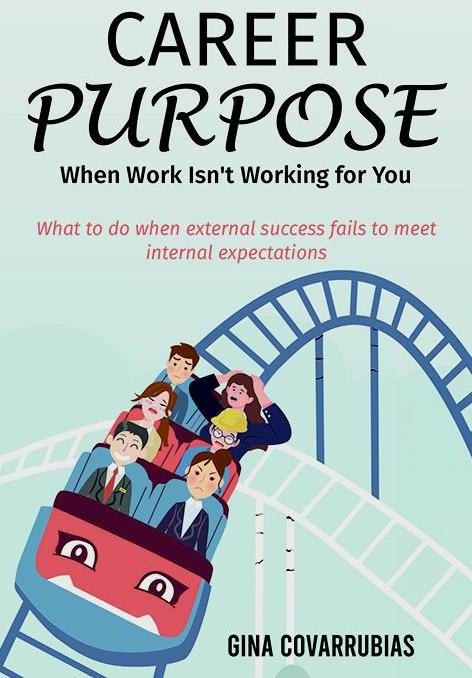
“By thinking about the future and trying to predict it, we are creating anxiety. We’re creating unnecessary stress for ourselves,” said Gina Covarrubias, a career development coach and founder of Deliberate Doing LLC. The former aerospace engineer spoke with SAE Media about mental fitness prior to her WCX 2024 Knowledge Bar session, which takes place at 1 p.m., Tuesday, April 16.
Rather than stressing over possibilities and non-controllable events that may or may not happen, focus on you. “Think about your self-development and what you’re doing on a day-to-day basis in order to build a foundation that can withstand a storm,” she said.
The launchpad for resiliency begins with continual learning. “You have resources around you,” she said. “People. Archives. Training. Conferences. A professional-development budget. You want to use resources because knowledge is power.” There is a caveat, though. “You can do something mindlessly just to do it, or you can do it mindfully where you’re absolutely engaged 100%,” she said.
Sleepwalking through the daily work tasks is a bad habit. “Sometimes people just go through the motions,” she said. “That defeats the purpose.” Engineers generally excel with a multitude of hard skills, but they can fall flat with “softer” skills. “Hard skills, the things relating to doing an engineering task — the numbers, the coding, the nitty-gritty technical skills — that’s what engineers love,” she said.

Because engineers are so comfortable with the hard skills, they tend to neglect the soft skills, like communicating with others. Networking is as crucial as talking with the boss. “There should always be a feedback cycle between an engineer and his or her supervisor,” she said.
Another important zone of personal focus is integrity and confidence. “After so many months of just going through the motions, it can be depressing and put you in a spiral,” she said. “So doing your best every day — as hard as it may be — will build integrity and confidence.”
Cutting corners with work tasks can absolutely damage integrity and confidence. “You might be able to cover it up, but you know that you’re cutting corners. And after so much of that, you start blaming the job, you might start blaming your peers, and that could lead to big problems,” Covarrubias said.
The wrap-up is practice, practice, practice. “A great personal foundation is a springboard to the next level,” she said. “When the chance comes, you’ll be ready. And if the worse-case scenario happens, you don’t have to have a meltdown because you have all these skills and knowledge.”
More From SAE Media Group
Automotive Engineering
Toyota Reinvesting in Collaborative Safety Research
Automotive Engineering
J.D. Power Launches New Vehicle-Engineering Award at SAE’s WCX 2019
Aerospace & Defense Tech Briefs
SAE International Extends Call for Abstracts, Seeks Submissions for AeroTech Conference
Aerospace & Defense Tech Briefs
Industry Invited to Participate in AeroTech Aerospace and Defense Technical Program

Automotive Engineering
2016 SAE Congress: Engineering Education Gets Industry Boost
Automotive Engineering
Meeting the Need for Engineering Talent
Automotive Engineering
The ‘Coming STEM Crisis’ Is Already Here
Automotive Engineering
Denso Senior VP Offers Career Advice to Young Engineers
Automotive Engineering
The US Needs More Engineers. What’s the Solution?

Automotive Engineering
Addressing the Needs of an Aging Population

Aerospace & Defense Tech Briefs
AIA Predicts Flying Air Taxis, Supersonic Air Travel, and Space Industry for 2050
Automotive Engineering
Toyota Stretches SUV Line-Up with World Debut of Grand Highlander
Battery & Electrification Technology
Using Nano-Engineering Techniques to Develop a Safer Battery
Power Electronics INSIDER
Polyphase Wireless Power Transfer System
Automotive Engineering
Innovative ‘Afreecar’ Wins SAE’s 2021 Create the Future Design Award
Medical Design Briefs
Medical Rising Star Award Winner 2024: Oonagh Hassett

Automotive Engineering
Book Offers Actionable Knowledge on Automotive Glass Engineering

Aerospace & Defense Tech Briefs
SAE International Issues, Revises Technical Reports for Aerospace Engineering
Power Electronics INSIDER
World’s Strongest Battery Paves Way for Light, Energy-Efficient Vehicles
Automotive Engineering
All-Electric Nissan Ariya Handles Ultra-Cold Temps on Pole to Pole Trek
Robotics & Automation INSIDER
Innovative Framework for Autonomous Robot Learning and Task Mastery
Motion Design INSIDER
Physics-Aware Neural Networks Improve Camera-Based Machines
Medical Design Briefs
Researchers Develop At-Home Pap Smear Test
Automotive Engineering
Racetrack Simulation Hits the (Public) Road
Automotive Engineering
GM CEO Barra Promises $30K EV SUV by Fall 2023; Automated Driving by Mid-Decade
Top Stories
NewsSensors/Data Acquisition
 Microvision Aquires Luminar, Plans Relationship Restoration, Multi-industry Push
INSIDERRF & Microwave Electronics
 A Next Generation Helmet System for Navy Pilots
INSIDERWeapons Systems
 New Raytheon and Lockheed Martin Agreements Expand Missile Defense Production
NewsAutomotive
 Ford Announces 48-Volt Architecture for Future Electric Truck
INSIDERAerospace
 Active Strake System Cuts Cruise Drag, Boosts Flight Efficiency
ArticlesTransportation

Webcasts
Aerospace
 Cooling a New Generation of Aerospace and Defense Embedded...
Energy
 Battery Abuse Testing: Pushing to Failure
Power
 A FREE Two-Day Event Dedicated to Connected Mobility
Automotive
 Quiet, Please: NVH Improvement Opportunities in the Early Design Cycle
Electronics & Computers
 Advantages of Smart Power Distribution Unit Design for Automotive &...
Unmanned Systems
 Sesame Solar's Nanogrid Tech Promises Major Gains in Drone Endurance