




Battery & Electrification Technology - December 2022
Inside this issue
Overview
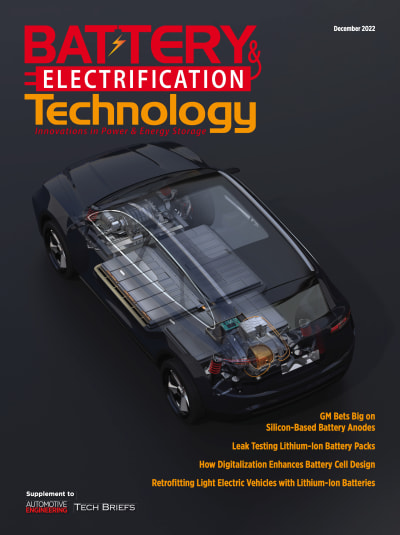
The December 2022 issue of Battery & Electrification Technology presents a comprehensive overview of the latest advancements and challenges in battery technology, particularly focusing on electric vehicles (EVs) and light electric vehicles (LEVs). This issue is packed with insightful articles that delve into various aspects of battery innovation, safety standards, and the integration of new technologies in the automotive sector.
Key Features
-
Silicon-Based Battery Anodes: The issue opens with a feature on the growing trend of silicon-based battery anodes. Traditional lithium-ion batteries typically use graphite anodes, but silicon offers a higher capacity for lithium-ion storage, potentially leading to batteries that are lighter and have a longer lifespan. The article discusses the challenges associated with silicon anodes, such as their expansion during charging, which can lead to mechanical failure. However, ongoing research and development are paving the way for more robust silicon anode technologies that could significantly enhance battery performance.
-
Leak Testing for Lithium-Ion Battery Packs: Another critical topic covered is the proposed standards and methods for leak testing lithium-ion battery packs. As the demand for EVs increases, ensuring the safety and reliability of battery packs becomes paramount. The article outlines various testing methodologies that can help identify leaks and ensure that battery packs meet safety standards. This is particularly important given the potential hazards associated with battery failures, including fires and environmental damage.
-
Electric Vehicle Battery Cell Innovation: The issue also addresses the challenges of battery cell innovation for electric vehicles. As manufacturers strive to improve energy density, charging speed, and overall efficiency, they face numerous technical hurdles. The article emphasizes the importance of collaboration between battery engineers and vehicle designers to create integrated solutions that enhance vehicle performance. It highlights emerging technologies in battery chemistry and design that could lead to significant advancements in the EV market.
Powering Light Electric Vehicles: The magazine features a segment on light electric vehicles (LEVs), such as golf carts and e-bikes, which have traditionally relied on lead-acid batteries. The transition to lithium-ion batteries for these vehicles is discussed, showcasing the benefits of improved energy efficiency, reduced weight, and longer operational life. The article also touches on the retrofitting of existing LEVs with lithium-ion technology, which can enhance their performance and sustainability.
Digitalization and Certification
A significant theme throughout the issue is the role of digitalization in enhancing battery design and safety. The magazine features a webinar led by Callum Snell, an Electrical Vehicle Supply Equipment (EVSE) Certification Manager at BSI, discussing the benefits of end-to-end EV charging-component product certification. The IEC System of Conformity Assessment Schemes for Electrotechnical Equipment and Components (IECEE) is highlighted as a framework for ensuring that key automotive components meet safety standards. This certification process is crucial for building consumer trust and facilitating the widespread adoption of EVs.
Industry Trends and Innovations
The issue also includes a section on new products and innovations in the battery and electrification technology space. It showcases various companies and their contributions to the industry, including TLX Technologies, which specializes in custom solenoids and actuators for electric and hybrid vehicle thermal management systems. Their development of energy-efficient valve systems demonstrates the ongoing push for innovation in the EV sector.
Conclusion
In summary, the December 2022 issue of Battery & Electrification Technology provides a thorough exploration of the current landscape of battery technology, particularly in relation to electric vehicles. It highlights the importance of innovation in battery materials, safety testing, and the integration of digital solutions to enhance performance and reliability. As the industry continues to evolve, the insights presented in this issue serve as a valuable resource for professionals and enthusiasts alike, offering a glimpse into the future of electrification and sustainable transportation.
This issue not only underscores the challenges faced by the industry but also celebrates the advancements that are driving the transition to cleaner, more efficient mobility solutions. With ongoing research and collaboration, the future of battery technology looks promising, paving the way for a new era in electric transportation.
Features
-
Articles
2 Silicon Forging Ahead for Higher-Performance Battery Anodes
6 Proposed Standards and Methods for Leak Testing Lithium-Ion Battery Packs
12 Meeting the Challenge of Electric Vehicle Battery Cell Innovation
Products
-
19 New Products
Top Stories
INSIDERDefense
 New Raytheon and Lockheed Martin Agreements Expand Missile Defense Production
NewsAutomotive
 Ford Announces 48-Volt Architecture for Future Electric Truck
INSIDERManufacturing & Prototyping
 Active Strake System Cuts Cruise Drag, Boosts Flight Efficiency
ArticlesTransportation
 Accelerating Down the Road to Autonomy
INSIDERMaterials
 How Airbus is Using w-DED to 3D Print Larger Titanium Airplane Parts
Road ReadyTransportation

Webcasts
Electronics & Computers
 Cooling a New Generation of Aerospace and Defense Embedded...
Power
 Battery Abuse Testing: Pushing to Failure
Connectivity
 A FREE Two-Day Event Dedicated to Connected Mobility
Automotive
 Quiet, Please: NVH Improvement Opportunities in the Early Design Cycle
Transportation
 Advantages of Smart Power Distribution Unit Design for Automotive &...
Aerospace
 Sesame Solar's Nanogrid Tech Promises Major Gains in Drone Endurance