




Cat Reveals All-New 255 and 265 Compact Track Loaders
The 255 model will replace the 259D3, while the 265 replaces both the 279D3 and 289D3 machines.
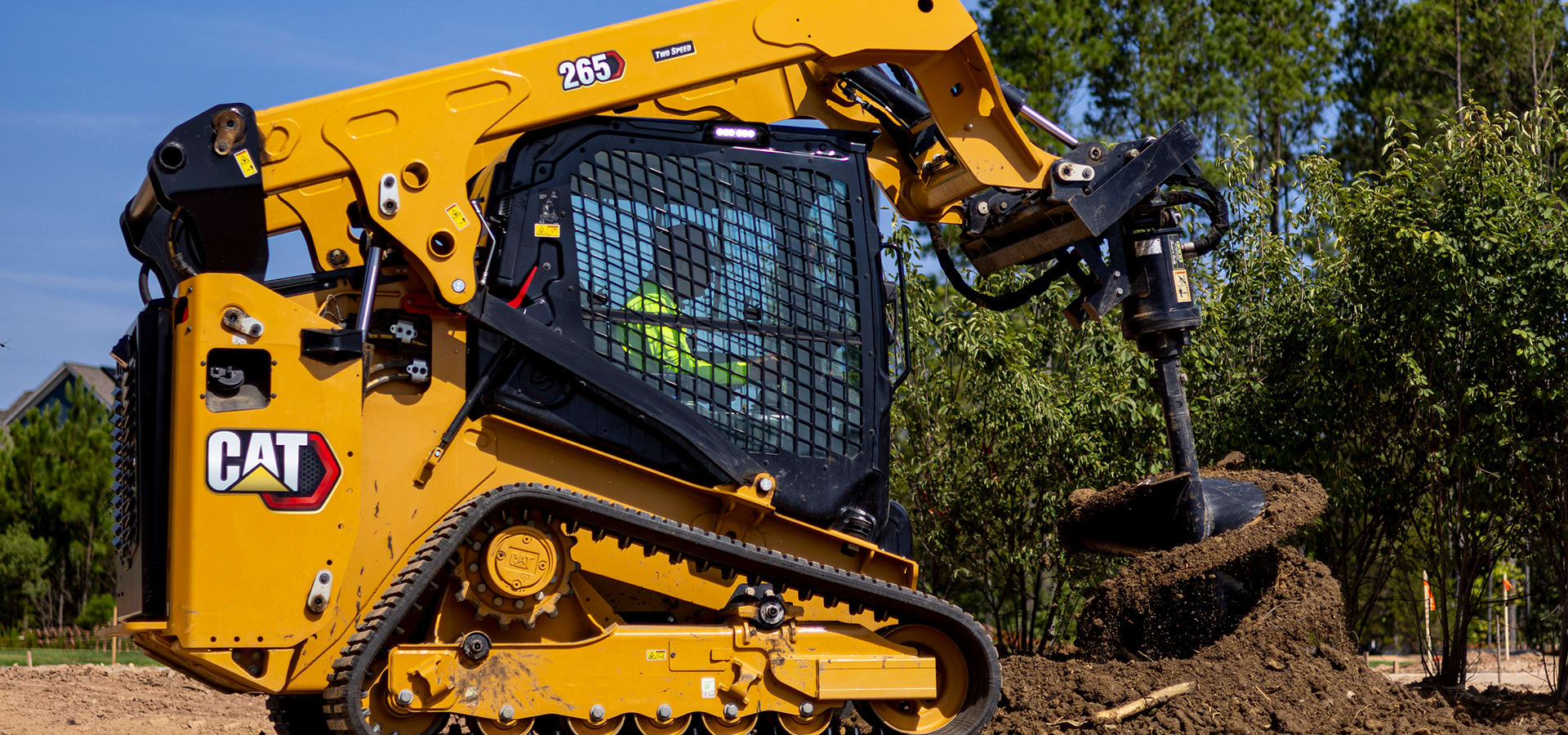
Caterpillar revealed its next-generation 255 and 265 compact track loaders at its Edwards Demonstration and Learning Center in Peoria, Illinois, in October. Based on D3 series, the 255 and 265 are a ground-up redesign of the previous models. Caterpillar claims the 255 and 265 offer major improvements in lift and tilt performance, as well as greater stability and operator comfort.
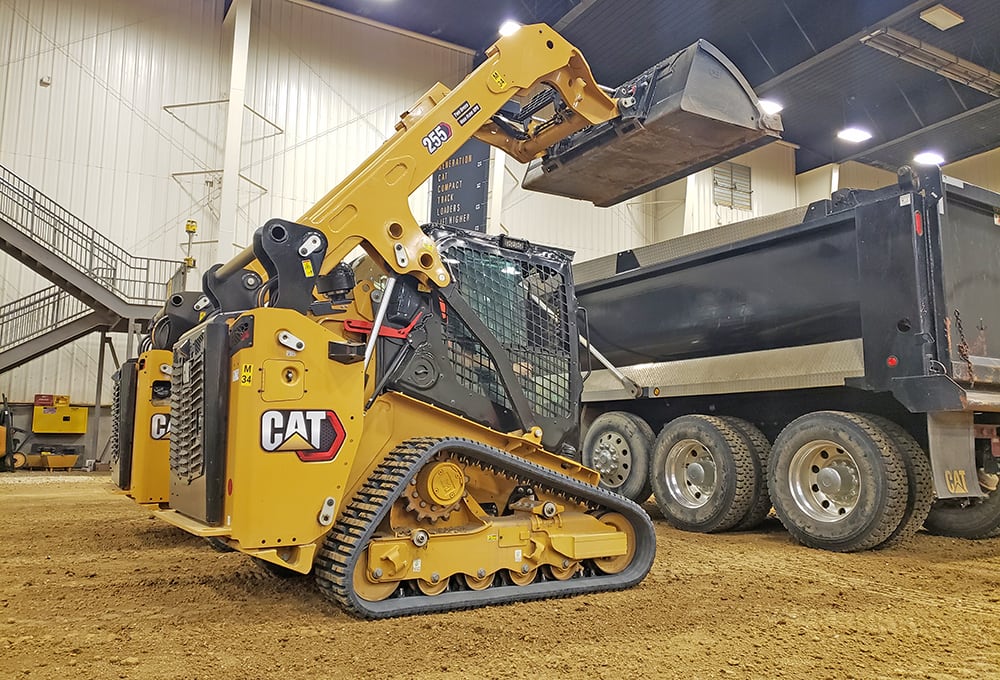
“We kept the DNA of the D3 series while reimagining the possibilities of loader performance using voice of customer feedback to lead the way,” said Trevor Chase, product application specialist for Caterpillar. “Both next-generation models leverage the many benefits offered by the vertical lift design. The new Cat 255 replaces the 259D3, while the 265 replaces both the 279D3 and 289D3 machines.”
Caterpillar states that all models have significantly increased torque output over the outgoing models thanks to new engines, as well as greater lift height, tilt breakout forces and rated operating capacity. Additionally, both models feature wider operating cabs with more overall volume, foot space, height and width between joysticks.
New muscle
One of the centerpieces of the new 255 and 265 loaders are the Cat C2.8T and Cat C2.8TA engines, which offer 74.3 hp (55.4 kW). Cat states that the new engines maintain power across a wider powerband and supply significantly more torque. Total output has been increased for both models, with gains of 13% for the 255 and 43% for the 265. Caterpillar also redesigned engine compartment mounts and mounted the cooling package lower into the frame for improved stability.
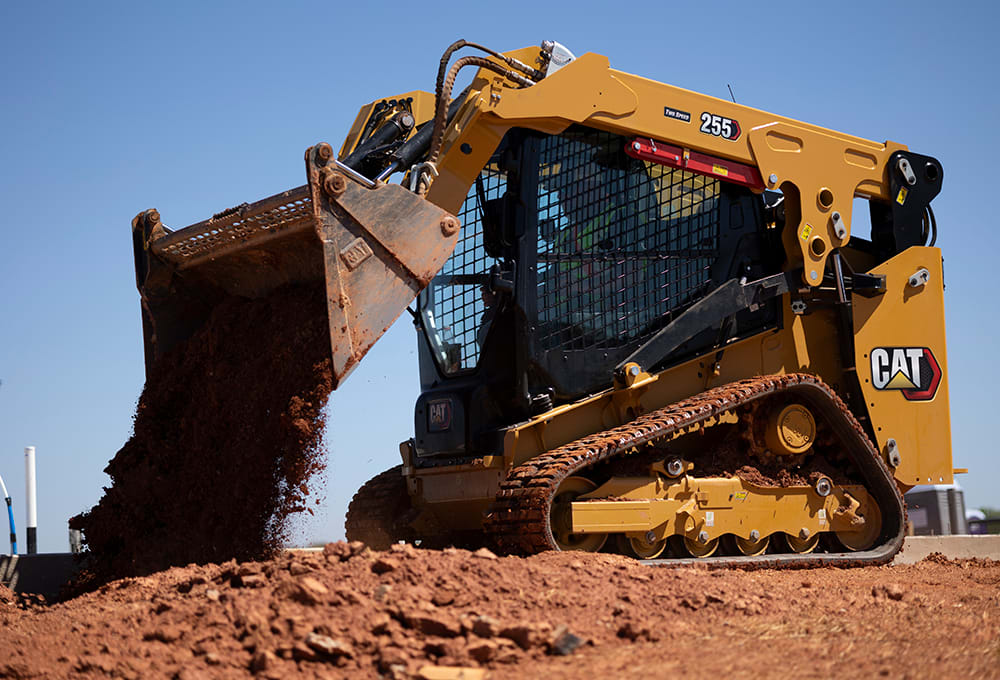
Compared to the outgoing 259D3, the new 255 loader delivers 36% more tilt breakout, 26% higher lift breakout force and a 24% increase in rated operating capacity. Height to the B-pin for the 265, compared to the 289D3, increases by 7.6 inches (193 mm), resulting in a maximum lift height of 11 ft. (3.35 m). The 265 also delivers 19% higher tilt breakout force and 22% higher lift breakout force.
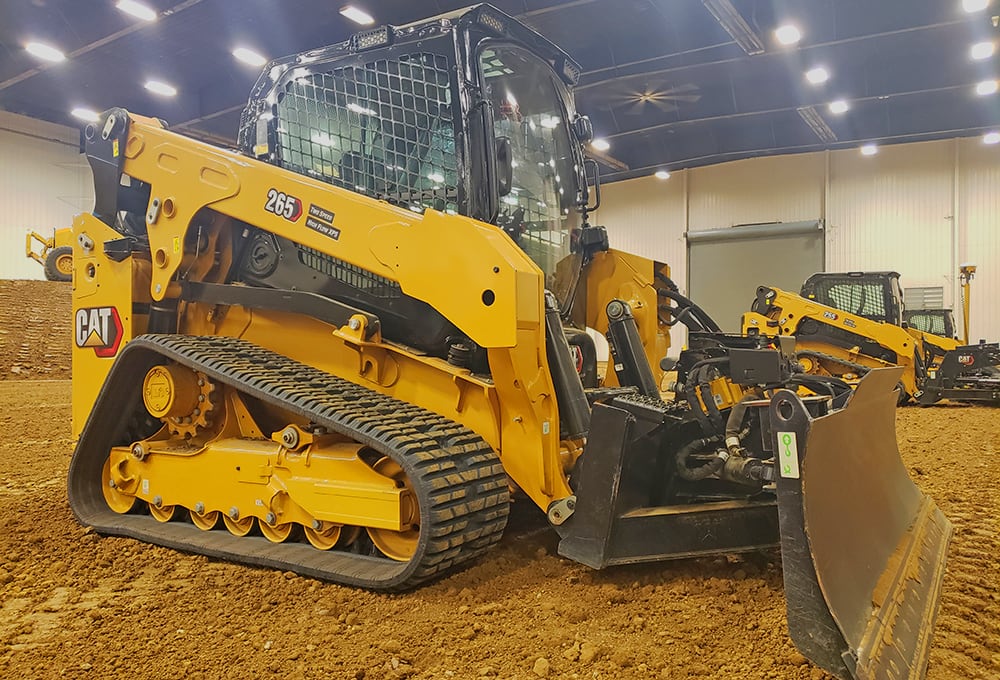
The standard hydraulic system pressure has increased to 3,500 psi (24,130 kPa). The new closed-center auxiliary hydraulic system allows the 255 and 265 to operate all Cat Smart Attachments, including the Cat Smart Dozer Blade, with the standard auxiliary hydraulics provided. These attachments are tied into the joysticks, and the machine automatically recognizes the type of attachment and the required joystick pattern for controlling it.
Machines equipped with standard flow hydraulics are shipped from the factory outfitted as “high flow ready.” Cat states that the high flow functionality is activated via a new software enabled attachment (SEA), permitting on-machine or remote activation of increased hydraulic flow to 30 gal/min (113 L/min) at the standard system pressure.
The High Flow XPS factory option reportedly increases auxiliary hydraulic system pressure to 4,061 psi (28,000 kPa) for both models, while also increasing the hydraulic flow to 30 gal/min for the 255 and 34 gal/min (129 L/min) for the 265.
“We’re really excited about the more powerful hydraulic systems we’re introducing on these loaders,” said Chase. “We’ve been offering our high-flow XPS hydraulic platform on our larger machines for some time. However, this system was not available on our prior 259 machine. So we’re very excited to offer more hydraulic horsepower on our smaller machines.”
Working room
The operating cabin of the 255 and 265 have been enlarged over the D3 series. The new cabs feature 22% more overall volume and 26% additional foot space. A range of new mechanical and air-ride suspension seat options are available for the new loaders, including a high-comfort seat that is both ventilated and heated. New auto temperature control plus vent outlet positioning above the operator also increase comfort.
The redesign allows the operator to open the cab door without the lift arms being fully lowered to the frame stops. A simplified two-step door removal process allows operators to quickly remove it with no tools required. Visibility has also reportedly been improved thanks to the lower engine mounting position, which permitted a larger rear window as well as a bigger top window that provides a 15% increase in viewable area.
Revisions of lower machine components have resulted in a stronger and stiffer undercarriage for improved machine stability, which according to Caterpillar translates to less pitching when filling the bucket with material. The torsion suspension undercarriage of the 255 and 265 also reportedly delivers better operator comfort, track wear and material retention. The 255 is now available in a new 12.6-inch (320-mm) bar-tread narrow track option.
More From SAE Media Group
Off-Highway Engineering
Caterpillar Expands Family of Next-Gen Compact Track Loaders and Skid Steers
Off-Highway Engineering
ASV Rolls out a Pair of New Loaders
Off-Highway Engineering
HD Hyundai Rolls out a Slew of New Machines
Automotive Engineering
2018 Ford EcoSport
Automotive Engineering
NAIAS 2019: FCA Debuts New Ram Heavy Duty Pickups
Off-Highway Engineering
Komatsu Logs a New Timber Machine
Automotive Engineering
2019 Honda Pilot Gets Refined 9-Speed, Tougher Styling and Standard Safety Suite
Automotive Engineering
Yamaha Unveils AWD and Electric Power Steering for Concept E-Bikes
Automotive Engineering
Engineering the Chevrolet Corvette's First-Ever Mid-Engine Architecture
Automotive Engineering
2024 Ford F-150 Sports Flashy Tailgate, Better Raptor Ride
Automotive Engineering
Volkswagen Unveils New-Generation Golf R
Off-Highway Engineering
Yanmar CE Adds to Growing Compact Track Loader Segment
Off-Highway Engineering
Rexroth Takes Aim at Electrification for Off-Highway Vehicles
Off-Highway Engineering
2019 Ram Chassis Cab: More Capability, More Driver-Assist Tech

Automotive Engineering
What We’re Driving: Mercedes-AMG E 53 4Matic+
Automotive Engineering
2019 Dodge Challenger: Deceased Demon Seeds Stronger and Wider Muscle-Car Lineup
Automotive Engineering
Ford Returns to Midsize-Pickup Game with 2019 Ranger
Off-Highway Engineering
Volvo CE, Norrhydro Team to ‘Revolutionize’ Digital Hydraulics
Off-Highway Engineering
Case Unveils Fully-Electric Backhoe Loader, Begins Delivery This Year
Automotive Engineering
2019 Acura RDX Brings World’s-First Chassis Tech
Automotive Engineering
Raptor 4-Door-Only for 2021; R Version Coming Next Year
Off-Highway Engineering
Liebherr Reveals ‘Hybrid’ CFRP Cylinders and Parallel-Pump Concept
Off-Highway Engineering
Hydraulic Position and Motion Control Systems
Off-Highway Engineering
Making the Most of a Clutch Situation at Formula SAE
Off-Highway Engineering
Pump and Motor Series
Automotive Engineering
2018 Nissan Leaf SV
Automotive Engineering
Making over the World’s Leading Hybrid
Automotive Engineering
2019 Toyota RAV4: Doubling down on a Best-Seller
Off-Highway Engineering
New Power Steering Concept Uses Variable Displacement Pump
Top Stories
NewsRF & Microwave Electronics
 Microvision Aquires Luminar, Plans Relationship Restoration, Multi-industry Push
INSIDERAerospace
 A Next Generation Helmet System for Navy Pilots
INSIDERDesign
 New Raytheon and Lockheed Martin Agreements Expand Missile Defense Production
INSIDERMaterials
 How Airbus is Using w-DED to 3D Print Larger Titanium Airplane Parts
NewsPower
 Ford Announces 48-Volt Architecture for Future Electric Truck
ArticlesAR/AI

Webcasts
Electronics & Computers
 Cooling a New Generation of Aerospace and Defense Embedded...
Automotive
 Battery Abuse Testing: Pushing to Failure
Power
 A FREE Two-Day Event Dedicated to Connected Mobility
Unmanned Systems
 Quiet, Please: NVH Improvement Opportunities in the Early Design Cycle
Automotive
 Advantages of Smart Power Distribution Unit Design for Automotive &...
Energy
 Sesame Solar's Nanogrid Tech Promises Major Gains in Drone Endurance