




The Inside Story on Adhesive Tapes for Automotive Heat Shielding
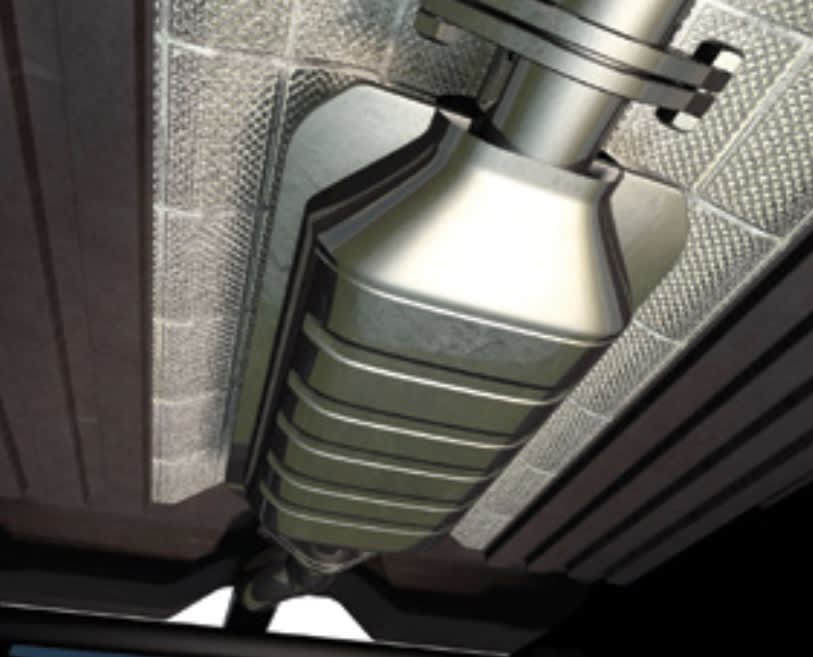
The goal to enhance efficiency for conventional and hybrid vehicles has intensified the need for advanced thermal management throughout the vehicle. Avery Dennison, a leading global supplier of high-performance, pressure-sensitive tapes and adhesives is addressing the need for advanced heat-shielding solutions with its portfolio of tapes to mount foil or composite heat shields virtually anywhere on the vehicle. In an interview with SAE’s Automotive Engineering, Michael VanHaerents, automotive business development manager for Avery Dennison Performance Tapes, explains the unique properties and benefits of Avery Dennison’s adhesive tapes for heat-shield attachment.
Why are adhesive tapes emerging as an alternative solution to mechanical attachment for heat shields?
High-performance adhesive backed heat shields are emerging as an alternative to traditional rigid heat shields due to a wide range of application, performance and efficiency benefits. Adhesive tape is the enabler for new, peel-and-stick heat shield constructions. With the trend of more low surface energy (LSE) plastics and composites, peel-and-stick heat shields featuring pressure-sensitive adhesives are becoming a sound solution for thermal management.
With a reduced total applied cost of self-adhesive heat shields using aluminum or fiber-based constructions, manufacturers can eliminate extensive initial design costs or re-engineering due to packaging changes. A peel-and-stick heat shield can be shaped exactly for where it’s needed, versus hard heat shields that must be designed to fit within a packaging space for anchoring. Finally, the format is quieter: peel-and stick applications are an anti-chatter upgrade compared to hard heat shields that can cause buzz, squeak or rattle issues.
Some might worry about durability. Can tapes really be as robust as mechanical fastening?

Yes, adhesive tapes actually can be as durable as mechanical fasteners. After continuous use, traditional heat shields can tear where they are secured by mechanical fasteners. Self-adhesive tape fasteners allow for a continuous bond area for the heat shield that prevents ripping or tearing — often identified as fatigue failure — that can be an issue with mechanical fasteners. Adhesive-based solutions also eliminate potential galvanic corrosion between a conventional aluminized heat shield and steel fasteners. But not all adhesive tapes will be durable enough. OEMs have specifications to ensure the parts specified for their vehicles are effective. Avery Dennison is certified to OEM specifications.
How has Avery Dennison’s portfolio of adhesive tapes evolved over the last several years?
As automobile components and parts continue to evolve, so does the chemistry and engineering science with our adhesive formulas and tape constructions. This is particularly true for LSE modified-acrylic adhesives, which are required to provide extremely high adhesion to LSE materials and still deliver excellent environmental resistance. Because the LSE bonding adhesive is so strong, we offer a unique polypropylene release liner that is quick to release from its adhesive face during assembly — yet is extremely tear- and moisture-resistant. The ability to die cut the shield to precisely conform to a complex-shaped component helps explain the growing preference for peel-and-stick heat shields.
Describe some areas in which peel-and-stick heat shields are proving particularly effective.
- Peel-and-stick heat shields are a low-cost investment in capital tooling expenditure compared to traditional stamped metal heat shields.
- Peel-and-stick heat shields can be designed in a variety of shapes and sizes, and are quick to produce and implement. And self-adhesive heat shields have a quicker implementation time from design to production.
- They can more effectively address unplanned hot thermal areas during pre-production build phases.
Tapes offer more functionality than just bonding. What is the best way for an engineer to determine the best tape for a particular application?
There are many tools to assist engineers, but we strongly recommend engaging a tape supplier such as Avery Dennison. Our experts can provide answers that do more than solve one particular issue an engineer is facing. Our technical and research teams can provide solutions that go beyond bonding — which in some instances means offering a tape that can add more functionality than merely adhering Part A to Part B.
For more information visit here .
More From SAE Media Group

Off-Highway Engineering
Thermal Shields
Aerospace & Defense Tech Briefs
Unlocking the Potential of 3D-Printed Polymers in Aerospace and Defense
Tech Briefs
Joining Gun Bonds Metal and Plastic in Seconds
Tech Briefs
Shear Assisted Processing and Extrusion

Aerospace & Defense Tech Briefs
Testing Military-Grade Adhesive in Extreme Loading Conditions

Aerospace INSIDER
Air Force Wind Tunnel Team Takes 3D Printing Program to Next Dimension

Automotive Engineering
Honda Sticking with Structural Adhesives
Tech Briefs
How Much Do You Know About Materials?
Automotive Engineering
Keeping Carbon-Composites Cool in Hot Applications
Medical Design Briefs
Winter 2021 Resource Guide

Battery & Electrification Technology
Wire Feed Laser Welding for Battery Pack Aluminum Enclosure Manufacture in EVs
Automotive Engineering
Accelerating Materials Development with Quantum Computing
Automotive Engineering
Lighter, Recyclable Body Seal from Cooper Standard Wins SAA Award

Automotive Engineering
Forming a Strong Bond Between Materials


Aerospace & Defense Tech Briefs
Evaluation of Additively Manufactured Ultrahard Steels
Medical Design Briefs
Summer 2022 Resource Guide
Tech Briefs
Metal-Plastic Hybrid 3D Printing
Tech Briefs
Self-Healing, Highly Adhesive Elastomers
Medical Design Briefs
Winter 2022 Resource Guide
Medical Design Briefs
‘Hyper Glue’ Could Be Used for Medical Implants


Top Stories
NewsSensors/Data Acquisition
 Microvision Aquires Luminar, Plans Relationship Restoration, Multi-industry Push
INSIDERAerospace
 How Airbus is Using w-DED to 3D Print Larger Titanium Airplane Parts
INSIDERManned Systems
 A Next Generation Helmet System for Navy Pilots
ArticlesTransportation
 Accelerating Down the Road to Autonomy
INSIDERWeapons Systems
 New Raytheon and Lockheed Martin Agreements Expand Missile Defense Production
NewsAutomotive
 Ford Announces 48-Volt Architecture for Future Electric Truck
Webcasts
Defense
 Cooling a New Generation of Aerospace and Defense Embedded...
Test & Measurement
 Battery Abuse Testing: Pushing to Failure
Connectivity
 A FREE Two-Day Event Dedicated to Connected Mobility
Automotive
 Quiet, Please: NVH Improvement Opportunities in the Early Design Cycle
Electronics & Computers
 Advantages of Smart Power Distribution Unit Design for Automotive &...
Energy
 Sesame Solar's Nanogrid Tech Promises Major Gains in Drone Endurance