




An EV ‘Lightning Round’ with Ford’s Farley, Field and Zhang
Ford execs deliver a new F-150 Lightning to ‘teardown specialist Sandy Munro then stay for a video interview on Ford’s EV future.

With the industry’s first full teardown of a Ford F-150 Lightning well underway, competitive-analysis specialists Munro & Associates recently purchased a second Lightning for long-term analysis. The new white electric pickup was delivered in person by an elite team: Ford CEO Jim Farley, EV chief Doug Field, and Lightning chief engineer Linda Zhang.

CEO and founder Sandy Munro and company president Cory Steuben hosted the Ford execs for a round-table video interview within the Lightning teardown area, not far from where a rival Rivian R1T is undergoing a similar program. The 50-minute YouTube video contains insights into the Lightning’s development and Ford’s electrification strategy. It also marks the first public interview of Field, who returned to Ford in September 2021 following high-level engineering roles at Apple and Tesla.
Highlights of Munro’s conversation with Farley, Field and Zhang include:
Ford having produced the $19,000 Maverick Hybrid, Munro asked, “where is the $25,000 EV?” Said Field, “I came to Ford with the excitement that this could be how electric gets into a much broader population than early adopters. And along with the electric propulsion it was going to be software. The good news is, software doesn’t add a lot of cost to a car. You can make a $25,000 vehicle to be a great experience, if you’re paying attention to the digital. The challenge is in the cost of the propulsion systems but we’re changing that fast. We want to be in that [$25,000] space; we have some very aggressive goals.”
Added Farley: “Our ‘fitness’ as a company is going to be at all price points.”
The popularity of Lightning’s “frunk” (front trunk), bi-directional charging capability, and standard premium infotainment system have proven to Farley and Field that electrification is about “more than just a propulsion change,” he said. “The burden is now on us” to affect the transition to EVs.
Lightning was one of the key reasons Field left Apple to return to Ford. Electrifying North America’s most popular vehicle “is a really good recruiter” for the automaker, he said, adding that he thinks of the truck as “my generator…a mobile energy source.”
The program’s biggest technology issue was realizing the original traction motor had to be resized—essentially over-engineering it to ensure the robust duty cycle F-Series customers expect, Zhang noted.
Munro asked if Ford would support industry adoption of the Tesla vehicle charging hardware to replace the ubiquitous ‘CCS’ hardware that was developed under SAE J1772. Munro argued that the Tesla hardware is lighter, less costly, and easier to use than the CCS. “A bad charging experience gives a bad experience not only to Ford customers but also to EVs in general, and that’s a very big deal,” Field replied cautiously. He said Ford “will consider everything” to make public charging better.
Farley noted that roughly half of Ford’s E-Transit commercial customers are purchasing Ford’s own charging equipment. “We want to have an all-in solution, even for non-Ford vehicles,” he said. “We believe most [commercial EV] fleets will be multi-make, not just Ford.”
The amount of work that still needs to be done to improve charging “is the biggest lesson I’ve learned in this [early EV] cycle,” Farley said.
More From SAE Media Group
Automotive Engineering
Kia’s 2024 EV9 Stands as First Mainstream 3-Row EV
Automotive Engineering
The Bi-Directional Bonus for EVs
Automotive Engineering
Battery Leasing Spurs VinFast’s EV Offensive
Automotive Engineering
Bidirectional Charging Is Nearly Mainstream
Off-Highway Engineering
Mercedes-Benz Details All-New Platform for EV Vans
Automotive Engineering
2019 Nissan Leaf plus Nets Extended EV Range
Automotive Engineering
New CHAdeMO 3.0 Aims to Harmonize Global EV Quick-Charging Standards
Off-Highway Engineering
Lightning EMotors Announces EChassis for Commercial EVs
Automotive Engineering
Cadillac Counts on 2025 Escalade IQ for EV Sizzle
Off-Highway Engineering
Mercedes-Benz Goes Long with EActros 600 Electric Truck
Off-Highway Engineering
Ford Expands EV Lineup with E-Transit Cargo Van
Automotive Engineering
GM Energy Introduces Vehicle-To-Home Charging Solution
Automotive Engineering
Ford Announces 48-Volt Architecture for Future Electric Truck
Automotive Engineering
Engineering ‘Electron Guzzlers’
Automotive Engineering
Hub-Motoring in Lordstown’s Novel Endurance
Battery & Electrification Technology
Putting a New ‘Charge’ in EV Recharging
Automotive Engineering
EV Confidence
Automotive Engineering
United Kingdom Develops a Pop-Up Electric Vehicle Charging Station for City Streets
Off-Highway Engineering
Electrify America Wants an Emoji for Electric Vehicles
Off-Highway Engineering
Cummins and Isuzu Announce Battery-electric Truck Collaboration
Off-Highway Engineering
Atlis EV Pickup, Platform Targets Medium-Duty Market
Off-Highway Engineering
Canada Will Establish a Cross-Country Electric Vehicle Charging Network
Automotive Engineering
Ford’s Top EV Engineer Advocates More Inclusive Charging Tech
Off-Highway Engineering
Commercial Trucks Employ Range of Power Systems
Automotive Engineering
Ford Details All-Electric F-150 Lightning
Automotive Engineering
Mercedes-Benz Product Boss: Europe, North America EVs, EV Charging to Rapidly Get Better
Automotive Engineering
SAE WCX 2022: ICE Won’t Melt amid Shift to EVs
Off-Highway Engineering
Volta’s Electric Truck Is U.S. Bound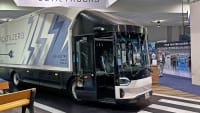
Off-Highway Engineering
Bollinger Expanding Planned EV Lineup with the Deliver-E Commercial Van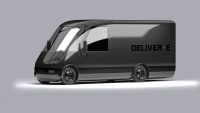
Automotive Engineering
Key ‘Plug and Charge’ Agreement Could Eliminate EV Charging-Payment Headaches
Transcript
No transcript is available for this video.
Top Stories
NewsSensors/Data Acquisition
 Microvision Aquires Luminar, Plans Relationship Restoration, Multi-industry Push
INSIDERRF & Microwave Electronics
 A Next Generation Helmet System for Navy Pilots
INSIDERWeapons Systems
 New Raytheon and Lockheed Martin Agreements Expand Missile Defense Production
NewsAutomotive
 Ford Announces 48-Volt Architecture for Future Electric Truck
INSIDERAerospace
 Active Strake System Cuts Cruise Drag, Boosts Flight Efficiency
ArticlesTransportation

Webcasts
Aerospace
 Cooling a New Generation of Aerospace and Defense Embedded...
Energy
 Battery Abuse Testing: Pushing to Failure
Power
 A FREE Two-Day Event Dedicated to Connected Mobility
Automotive
 Quiet, Please: NVH Improvement Opportunities in the Early Design Cycle
Electronics & Computers
 Advantages of Smart Power Distribution Unit Design for Automotive &...
Unmanned Systems
 Sesame Solar's Nanogrid Tech Promises Major Gains in Drone Endurance