




Autonomous Vehicle Engineering - January 2022
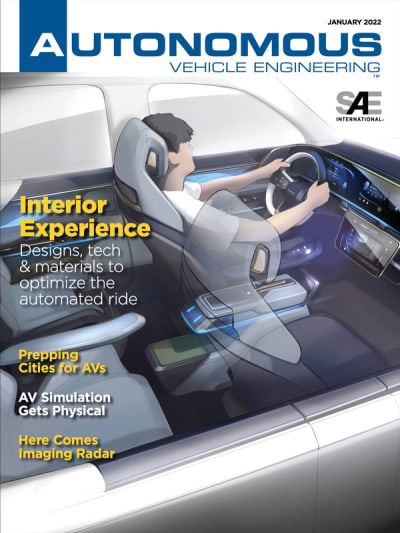
Inside this issue
Overview
This issue of Autonomous Vehicle Engineering delves into the evolving landscape of autonomous vehicles (AVs), focusing on technological advancements, sustainability, and the changing consumer mindset. The magazine highlights the importance of integrating safety standards and innovative materials in the development of AVs, as well as the implications of recent federal infrastructure investments.
Key Themes and Insights:
-
Sustainability in Automotive Design: The issue emphasizes a shift in consumer preferences towards sustainability. Sue Magnusson, director of color, material, and finishes at Lucid Motors, discusses how luxury is increasingly defined by experiences rather than opulence. Consumers are now seeking vehicles that are environmentally friendly and utilize sustainable materials. The magazine notes that many automotive manufacturers are adopting sustainable practices, such as replacing traditional leather with vegan alternatives, reflecting a broader trend towards eco-conscious design.
-
Technological Advancements: The magazine covers the steady progress towards achieving SAE Levels 4 and 5 automation. It highlights the importance of developing versatile technologies that are not overly reliant on specific sensors, as the industry is rapidly evolving. Leo Breton from Horiba emphasizes the need for adaptable methods that can accommodate future technological changes. The issue also discusses the potential of imaging radar as a transformative technology in the AV sector, suggesting that new innovations could significantly enhance vehicle capabilities.
Federal Infrastructure Investment: The recent .2 trillion federal infrastructure bill is a focal point of discussion, particularly its implications for AV development. The bill includes provisions aimed at advancing drunk and impaired driving prevention technologies, which are likely to integrate with existing advanced driver-assistance systems (ADAS). The funding allocated for automated transportation initiatives, such as the SMART program, is expected to accelerate the engineering of driver assistance and automation technologies.
-
Redefining Vehicle Interiors: The magazine explores how the interior design of vehicles is being reimagined in light of advancing automation. The XiM21 concept car from Yanfeng Automotive is showcased, featuring innovative "Smart Cabin" technologies and customizable materials. This reflects a broader trend where OEMs and suppliers are collaborating to create interiors that enhance user experience while accommodating new automation capabilities.
-
Safety and Standards: The editorial emphasizes the critical role of safety and standards in the advancement of AVs. As the industry matures, establishing robust safety protocols and regulatory frameworks will be essential to ensure public trust and acceptance of autonomous technologies. The magazine suggests that ongoing collaboration between automakers, suppliers, and regulatory bodies will be necessary to navigate the complexities of AV deployment.
-
Future Outlook: The issue concludes with a forward-looking perspective on the AV industry. While timelines for widespread adoption remain uncertain, there is a growing confidence among engineers and developers that the challenges of AV technology can be addressed. The collective efforts of industry stakeholders are expected to lead to significant advancements in both technology and infrastructure, paving the way for a new era of mobility.
In summary, this issue of Autonomous Vehicle Engineering provides a comprehensive overview of the current state and future potential of autonomous vehicles. It highlights the intersection of sustainability, technology, and safety, underscoring the importance of adapting to changing consumer expectations and regulatory environments. As the industry continues to evolve, the insights shared in this issue will be invaluable for professionals navigating the complexities of AV development and deployment.
Articles
-
Editorial
-
The Navigator
Top Stories
INSIDERAerospace
 How Airbus is Using w-DED to 3D Print Larger Titanium Airplane Parts
NewsAutomotive
 Microvision Aquires Luminar, Plans Relationship Restoration, Multi-industry Push
INSIDERManufacturing & Prototyping
 A Next Generation Helmet System for Navy Pilots
INSIDERDefense
 New Raytheon and Lockheed Martin Agreements Expand Missile Defense Production
ArticlesAR/AI
 Accelerating Down the Road to Autonomy
Road ReadyDesign

Webcasts
Automotive
 Advantages of Smart Power Distribution Unit Design for Automotive...
Unmanned Systems
 Quiet, Please: NVH Improvement Opportunities in the Early Design...
Defense
 Cooling a New Generation of Aerospace and Defense Embedded...
Power
 Battery Abuse Testing: Pushing to Failure
Power
 A FREE Two-Day Event Dedicated to Connected Mobility
