




Paccar Introduces New Vocational-Truck Axle in North America
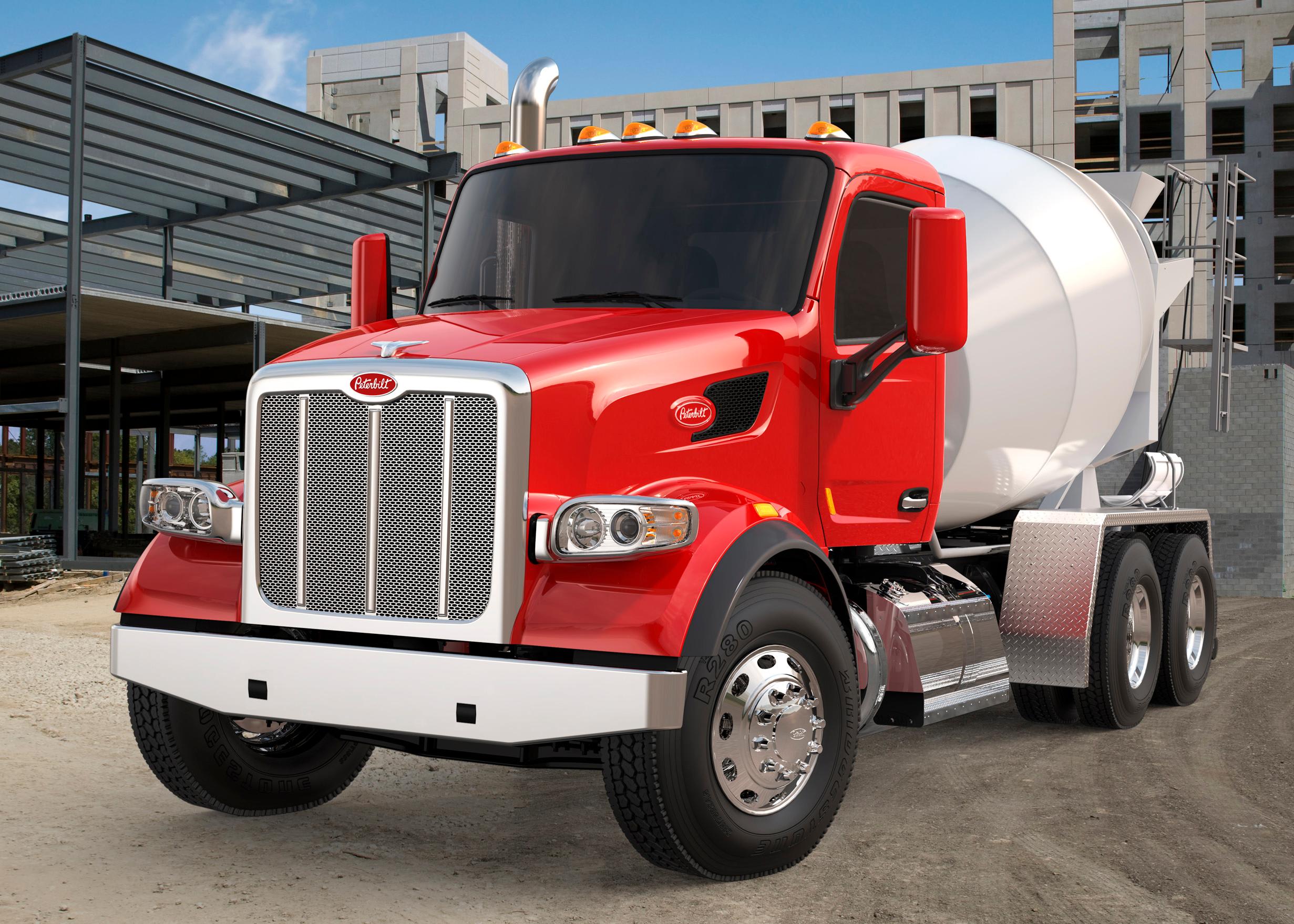
Paccar is adding a new proprietary front axle for a range of Kenworth and Peterbilt vocational vehicles in the third quarter of 2017. The new 20,000- and 22,000-lb wide track steer axles are designed for applications such as construction, refuse and heavy-haul.

The steer axle is available with standard front air disc brakes or optional drum brakes as well as suspensions and wheel end options to meet the demanding applications. Both axle ratings will be available in a range of trucks including the flagship models Kenworth T880 and Peterbilt 567. Other Peterbilt models include the 520, 389, 367, 365, 348 and the 389 glider kit.
“The idea for Paccar to investigate a new proprietary front axle started in 2013. We utilized our Paccar engineering teams in both North America and Europe in the development of a heavy front axle to meet the North American market demands,” a Paccar spokeswoman told Truck & Off-Highway Engineering.
The new axle “uses an innovative tapered kingpin roller bearing, which simplifies the design and delivers enhanced steering efficiency,” Landon Sproull, Paccar vice president, said in a statement. Sproull is currently serving as SAE’s Commercial Vehicle Sector vice president as well (PACCAR's Sproull Primed for SAE Commercial Vehicle Post).
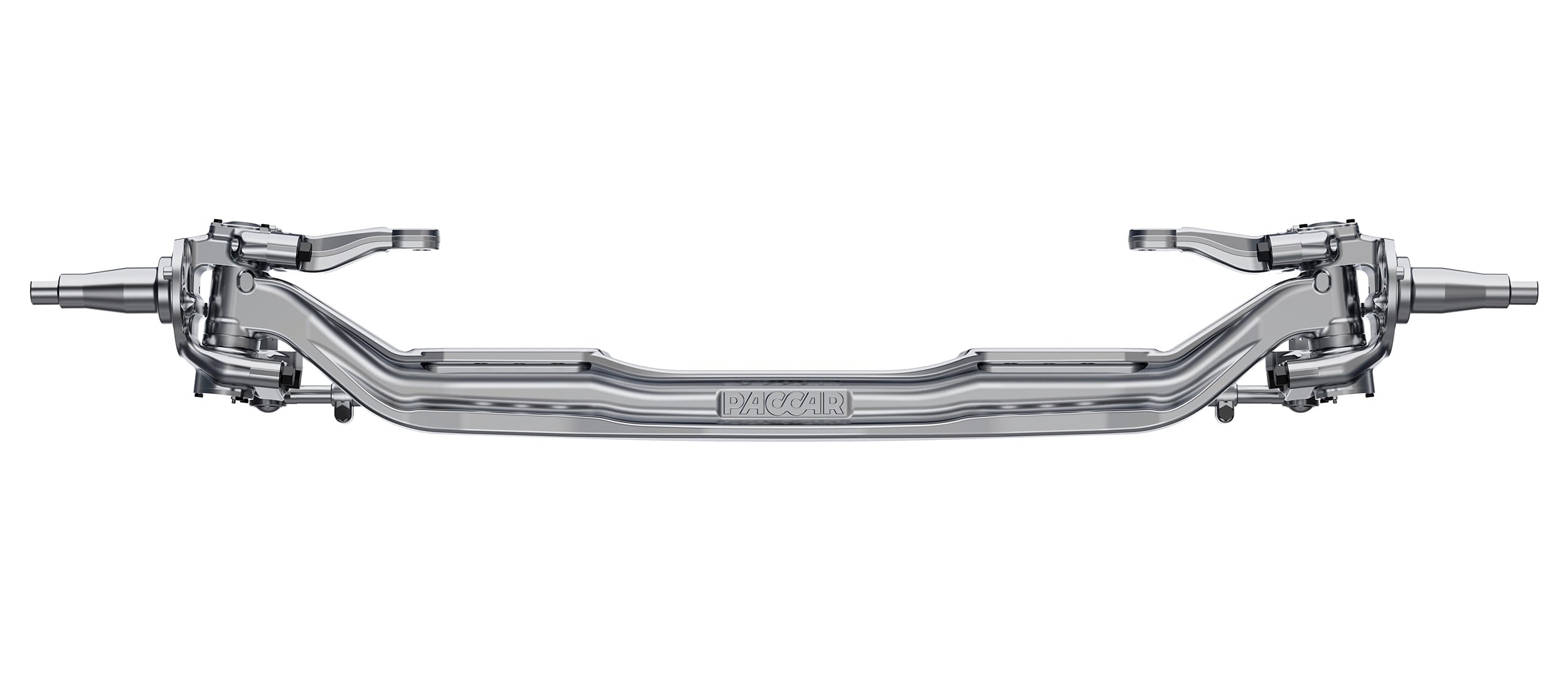
A steering angle of up to 50 degrees is possible, depending on size of tires and wheel offset.
“The tapered kingpin design improves the strength in the axle by eliminating the need for draw pins. The roller bearings ensure smooth movement of the axle knuckle for better steering performance over typical bushings,” the spokeswoman said.
The design also offers a weight-savings benefit compared to previous axles—up to 23 lb (10 kg), according to Paccar spokesman Ken Hastings. “Every pound counts in the trucking world, especially for heavy loads—the lighter the truck, the more [payload] the truck can carry since you're limited by weight,” he told TOHE.
The main benefit of the axle, according to Hastings, is that it's qualified to Paccar's rigorous validation requirements, which enhances vehicle uptime for customers. He relayed the following information about how the new front axle was tested:
"Testing was developed using data recorded from the most harsh vocational applications. Every component was individually validated as well as the complete axle assembly on multiple truck durability, fatigue and lab tests exceeding the recorded loads from each of the vocational applications targeted for this new axle."
Validation testing took place at Paccar's technical center in Mount Vernon, WA. The front axle has a five-year or 750,000-mile warranty.
More From SAE Media Group
Off-Highway Engineering
REE’s P7 Brings Advanced Suspension Control to Medium-Duty Trucks
Off-Highway Engineering
Paccar Announces TX-18 Automated Transmission
Off-Highway Engineering
Western Star Adds ‘Weight Sensitive’ 47X to Vocational Lineup
Automotive Engineering
BEV-Agnostic’ Systems Require Attention
Motion Design
Self-Contained Wheel Unit
Automotive Engineering
Dana Reveals 'Dual-Range Disconnect' 6x4-6x2 Tandem Concept
Automotive Engineering
ZF’s Current Innovations Build for EV, AV Future
Off-Highway Engineering
WABCO, Nexteer Collaborate to Develop Active Steering Systems for CVs
Automotive Engineering
Making over the World’s Leading Hybrid

Automotive Engineering
Electronic Stability Control Builds the Foundation for Safer Roads
Off-Highway Engineering
Connected-Vehicle Technologies Transform Drivetrains into Rich Sources of Intelligence
Off-Highway Engineering
Pneumatically Shifted Air Suspension Loading on 6x2 Trucks
Off-Highway Engineering
Allison Purpose-Builds More Powerful TerraTran Transmission
Off-Highway Engineering
ACT Expo 2022: Production ECascadia Ready for 230 Miles of ‘Typical Range’
Off-Highway Engineering
Mellor Bus Stresses Lightweight Construction for New Midsized Battery-Electric Buses
Off-Highway Engineering
Freightliner’s Medium-Duty Makeover
Off-Highway Engineering
Yanmar CE Adds to Growing Compact Track Loader Segment
Tech Briefs
Are In-Wheel Motor Systems Catching On?
Off-Highway Engineering
Israeli Startup REE Reinvents the Wheel with a Modular Approach to Future EV Design
Automotive Engineering
Gearing Up Drive Axle Innovations
Automotive Engineering
WCX 2025: Nira Dynamics’ Sensor-Free Tire Pressure Tech Eyes New Opportunities
Automotive Engineering
2022 Ford F-150 Lightning Redefines the Pickup Paradigm
Off-Highway Engineering
John Deere Loads Updates into E-Series Articulated Dump Trucks

Automotive Engineering
Wheel Motion Sensor
Off-Highway Engineering
Uhnder and Spartan to Partner on Hi-rez Radar
Automotive Engineering
Heavy Brake Re-Gen Feel Dominates I3 Driving Experience
Tech Briefs
Converting an Old Truck into an EV
Automotive Engineering
2025 Ford Bronco Sport Proves Sasquatch Fits on Smaller SUV
Top Stories
INSIDERDesign
 How Airbus is Using w-DED to 3D Print Larger Titanium Airplane Parts
NewsAutomotive
 Microvision Aquires Luminar, Plans Relationship Restoration, Multi-industry Push
INSIDERRF & Microwave Electronics
 A Next Generation Helmet System for Navy Pilots
ArticlesDesign
 CES 2026: Bosch is Ready to Bring AI to Your (Likely ICE-powered) Vehicle
Road ReadyAutomotive
 2026 Nissan Sentra Review: Putting the Pieces Together
NewsUnmanned Systems

Webcasts
Power
 Hydrogen Engines Are Heating Up for Heavy Duty
Electronics & Computers
 Advantages of Smart Power Distribution Unit Design for Automotive...
Transportation
 Quiet, Please: NVH Improvement Opportunities in the Early Design...
Energy
 Battery Abuse Testing: Pushing to Failure
Connectivity
 A FREE Two-Day Event Dedicated to Connected Mobility
Aerospace
 SiPhog Technology: Enabling GPS‑Independent Flight for Uncrewed Aerial...