




Automotive Engineering - January 2017
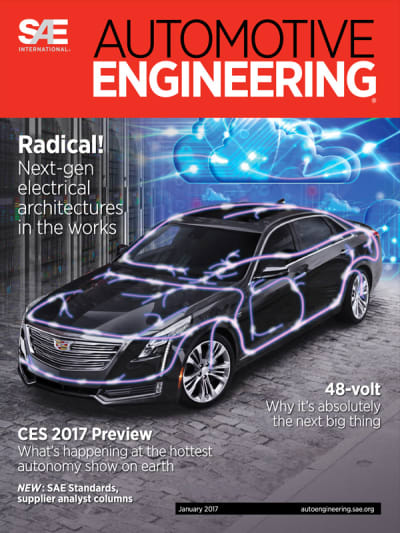
Inside this issue
Overview
The January 2017 issue of Automotive Engineering presents a comprehensive exploration of the evolving landscape of the automotive industry, focusing on the impact of new technologies, regulations, and consumer preferences on the OEM-supplier ecosystem. The issue features insights from industry experts, including Michael Robinet, Managing Director at IHS Markit, who shares his extensive experience in navigating the complexities of mobility.
One of the key themes of this issue is the shift towards "softer" technologies in automotive engineering. This encompasses advancements in connectivity, automation, and electrification, which are reshaping how vehicles are designed, manufactured, and utilized. The column "Supplier Eye" introduces readers to the challenges and opportunities that arise from these changes, emphasizing the need for collaboration between original equipment manufacturers (OEMs) and suppliers to adapt to the rapidly changing market dynamics.
The issue also highlights the importance of consumer desires in shaping automotive innovations. As consumers increasingly demand smarter, more efficient, and environmentally friendly vehicles, manufacturers are compelled to innovate and integrate new technologies that meet these expectations. This consumer-driven approach is crucial for maintaining competitiveness in a market that is becoming more saturated with advanced features and functionalities.
In addition to technological advancements, the magazine addresses regulatory changes that impact the automotive sector. As governments worldwide implement stricter emissions standards and safety regulations, manufacturers must adapt their strategies to comply with these requirements while still delivering high-quality products. The issue discusses how these regulations can drive innovation, pushing companies to develop cleaner and safer vehicles.
The magazine also features a Q&A section where industry leaders, such as Kathy Winters, share their perspectives on current trends and future directions in automotive technology. This section provides valuable insights into the challenges faced by the industry and the strategies being employed to overcome them.
Furthermore, the issue includes a detailed analysis of the circulation data for Automotive Engineering, revealing a robust readership and a strong commitment to delivering quality content to its audience. With a total net press run of 50,889 copies and a paid circulation of 47,710, the magazine demonstrates its relevance and authority in the automotive engineering field.
Overall, the January 2017 issue of Automotive Engineering serves as a vital resource for professionals in the automotive industry, offering a blend of expert analysis, industry trends, and practical insights. It encourages readers to stay informed about the latest developments and to consider how these changes can be leveraged to drive innovation and success in their organizations.
Features
-
Articles
HMI Development: More Features, less System Complexity
Connectivity Advances Dominate at CES 2017
Delphi Showcasing Next-Gen Autonomous System at CES 2017
Magna’s CTO Talks Innovation and Disruption
Regulars
-
Editorial
-
SAE Standards News
Focus for 2017: Cyber, Connected-Car, EV Charging, Vehicle Autonomy
-
Supplier Eye
-
Technology Reports
Continental Demonstrates New Sensing Technologies for SAE Level 4 Capability
-
Road Ready
2016 Los Angeles Auto Show: Mazda’s All-New CX-5 to Include Diesel Engine for North America
-
Product Briefs
1.7-Megapixel Automotive Image Sensor
High-Performance Thermoplastic Elastomer
Four-Channel Decoder for Automotive Around-View Systems
Automotive-Qualified Chipset for V2X
Automotive Display Driver Integrated Circuit
Application Lifecycle Management Module
Stories
Top Stories
NewsSensors/Data Acquisition
 Microvision Aquires Luminar, Plans Relationship Restoration, Multi-industry Push
INSIDERRF & Microwave Electronics
 A Next Generation Helmet System for Navy Pilots
INSIDERWeapons Systems
 New Raytheon and Lockheed Martin Agreements Expand Missile Defense Production
NewsAutomotive
 Ford Announces 48-Volt Architecture for Future Electric Truck
INSIDERAerospace
 Active Strake System Cuts Cruise Drag, Boosts Flight Efficiency
ArticlesTransportation

Webcasts
Aerospace
 Cooling a New Generation of Aerospace and Defense Embedded...
Energy
 Battery Abuse Testing: Pushing to Failure
Power
 A FREE Two-Day Event Dedicated to Connected Mobility
Automotive
 Quiet, Please: NVH Improvement Opportunities in the Early Design Cycle
Electronics & Computers
 Advantages of Smart Power Distribution Unit Design for Automotive &...
Unmanned Systems
 Sesame Solar's Nanogrid Tech Promises Major Gains in Drone Endurance