




Boeing Flies First 737 MAX 7 with Updated MCAS Software
It is still unclear when the update will be rolled out.
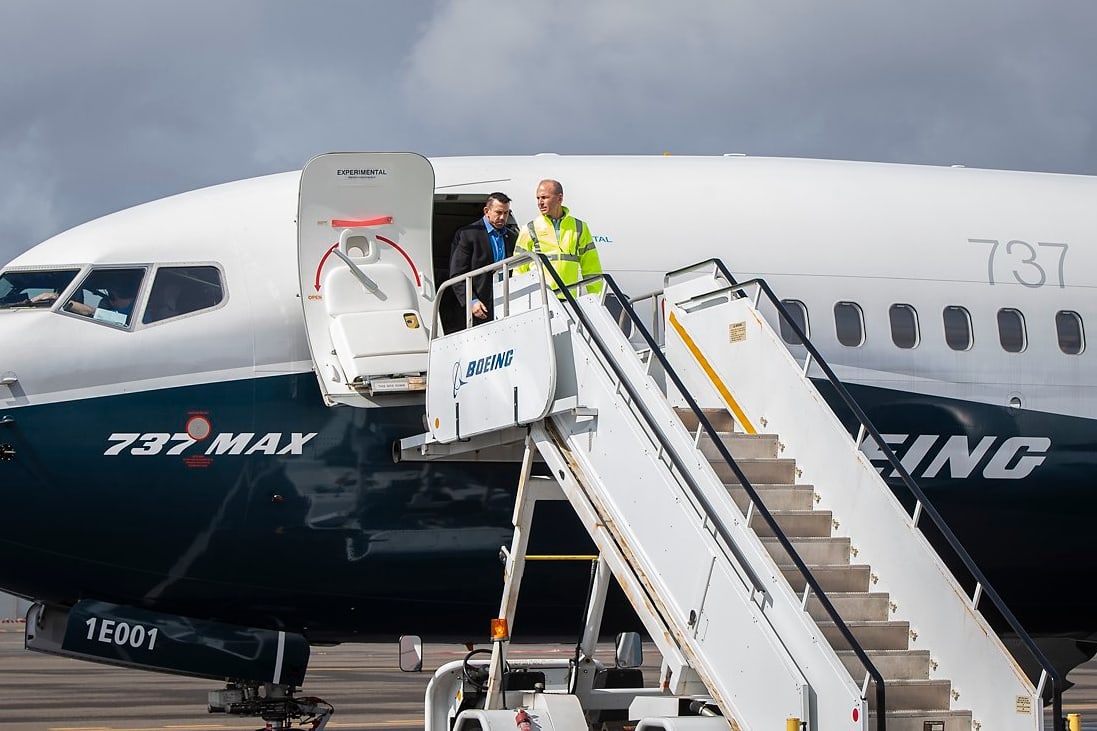
Chicago-based Boeing recently completed a “demo flight” of a 737 MAX 7 narrow-body airliner equipped with updated Maneuvering Characteristics Augmentation System (MCAS) software.
The MCAS flight control law was originally designed to enhance the pitch stability of the 737 MAX during to make the handling similar to that of other 737 models. The system initiates during manual flight when the aircraft has an elevated angle of attack (AOA) and flaps up.
“We at Boeing are sorry for the lives lost in the recent 737 MAX accidents. These tragedies continue to weigh heavily on our hearts and minds, and we extend our sympathies to the loved ones of the passengers and crew on board Lion Air Flight 610 and Ethiopian Airlines Flight 302. All of us feel the immense gravity of these events across our company and recognize the devastation of the families and friends of the loved ones who perished,” said Boeing Chief Executive Officer, Dennis Muilenburg, in a statement published today.
“The full details of what happened in the two accidents will be issued by the government authorities in the final reports, but, with the release of the preliminary report of the Ethiopian Airlines Flight 302 accident investigation, it’s apparent that in both flights the Maneuvering Characteristics Augmentation System, known as MCAS, activated in response to erroneous angle of attack information,” continued Muilenburg.
According to Boeing, the MCAS software update will “provide additional layers of protection if the AOA sensors provide erroneous data. The software was put through hundreds of hours of analysis, laboratory testing, verification in a simulator and two test flights, including an in-flight certification test with Federal Aviation Administration (FAA) representatives on board as observers.”
William Kucinski is content editor at SAE International, Aerospace Products Group in Warrendale, Pa. Previously, he worked as a writer at the NASA Safety Center in Cleveland, Ohio and was responsible for writing the agency’s System Failure Case Studies. His interests include literally anything that has to do with space, past and present military aircraft, and propulsion technology.
Contact him regarding any article or collaboration ideas by e-mail at
More From SAE Media Group
Aerospace & Defense Tech Briefs
FAA, SAE International Focus on Engine Fire Protection System Standards for Aerospace
Aerospace & Defense Tech Briefs
First Airbus A330-800 Airliner Goes Airborne in Maiden Flight, Enters Flight Test Phase
Aerospace & Defense Tech Briefs
Curtiss-Wright and Honeywell Team to Develop Cloud-Enabled Flight Recorders of the Future
Aerospace & Defense Tech Briefs
General Atomics Moves Toward Global RPA Flight Certification for MQ-9B SkyGuardian
Aerospace & Defense Tech Briefs
Boeing Debuts First Hypersonic Passenger Aircraft Concept
Aerospace & Defense Tech Briefs
NASA Crash Landing Is a Complete Success
Aerospace & Defense Tech Briefs
Curtiss-Wright Black Boxes Receive European Approval
Aerospace & Defense Tech Briefs
FLYHT and Spectralux Avionics Integrate Systems to Deliver FANS-Over-Iridium Satellite Communications to Airlines
Aerospace & Defense Tech Briefs
Sikorsky-Boeing’s FVL Contender Takes Flight
Aerospace & Defense Tech Briefs
Aireon to Launch Free, Real-Time Emergency Aircraft Location Service
Aerospace & Defense Tech Briefs
Bell Nexus Full-Scale Air Taxi Design Debuts, Taps Novel VTOL, Hybrid Propulsion, Energy Storage, and Avionics Technologies
Aerospace & Defense Tech Briefs
Air Mobility Innovations Take Center Stage at Aerospace Systems and Technology Conference
Aerospace & Defense Tech Briefs
Stratos Aircraft Evolves Carbon-Fiber Very Light Jet, Offers Limited Number of Kit Aircraft
Aerospace & Defense Tech Briefs
Aircraft, Engine Orders Reach $98B, Focus on Flying Farther, Faster, Greener at Farnborough Airshow
Aerospace & Defense Tech Briefs
How Has Automation Transformed Aviation?
Aerospace & Defense Tech Briefs
F-35 and F-16 Ground Collision Avoidance Software Team Takes Collier Trophy
Aerospace & Defense Tech Briefs
Connected Aircraft Technologies Benefit Manufacturers, Airlines, and Travelers
Aerospace & Defense Tech Briefs
Martin UAV VTOL Unmanned Aircraft Taps Persistent Systems Wave Relay Data Link Technology
Aerospace & Defense Tech Briefs
Abaco’s FORCE2 Flight Computer Enables National and International Ground Control Station Certification
Aerospace & Defense Tech Briefs
Industry Invited to Participate in AeroTech Aerospace and Defense Technical Program
Aerospace & Defense Tech Briefs
Quality Management Experts Provide Guidance on AS9100 Standard, Equipment Calibration
Aerospace & Defense Tech Briefs
Next-Generation Crash Recorders Integral to Aviation Cybersecurity
Aerospace & Defense Tech Briefs
Vertical Aerospace Is Honeywell’s Latest Partner in the UAM Industry
Aerospace & Defense Tech Briefs
Boeing Completes Assembly of the First 777X
Aerospace & Defense Tech Briefs
Gulfstream G500 Earns FAA Type and Production Certificates
Aerospace & Defense Tech Briefs
Boeing Delivers First Airplane from New 737 Completion and Delivery Center in Zhoushan, China
Aerospace & Defense Tech Briefs
BendixKing and Airwork Are Developing Cockpit Upgrades for the Often Overlooked Small- and Medium-Sized Helicopter Market
Aerospace & Defense Tech Briefs
L3 Makes Its C-130 Modernization Package Available to Global Operators
Aerospace & Defense Tech Briefs
Air Force Tests Fully Autonomous UAS Control System
Aerospace & Defense Tech Briefs
Collins Aerospace Will Provide Avionics and Synthetic Vision for the Supersonic X-59 QueSST
Top Stories
INSIDERManufacturing & Prototyping
 How Airbus is Using w-DED to 3D Print Larger Titanium Airplane Parts
INSIDERManned Systems
 FAA to Replace Aging Network of Ground-Based Radars
NewsTransportation
 CES 2026: Bosch is Ready to Bring AI to Your (Likely ICE-powered) Vehicle
NewsSoftware
 Accelerating Down the Road to Autonomy
EditorialDesign
 DarkSky One Wants to Make the World a Darker Place
INSIDERMaterials
 Can This Self-Healing Composite Make Airplane and Spacecraft Components Last...
Webcasts
Defense
 How Sift's Unified Observability Platform Accelerates Drone Innovation
Automotive
 E/E Architecture Redefined: Building Smarter, Safer, and Scalable...
Power
 Hydrogen Engines Are Heating Up for Heavy Duty
Electronics & Computers
 Advantages of Smart Power Distribution Unit Design for Automotive...
Unmanned Systems
 Quiet, Please: NVH Improvement Opportunities in the Early Design...
