




Wärtsilä Virtualizes Marine Engine Design and Testing
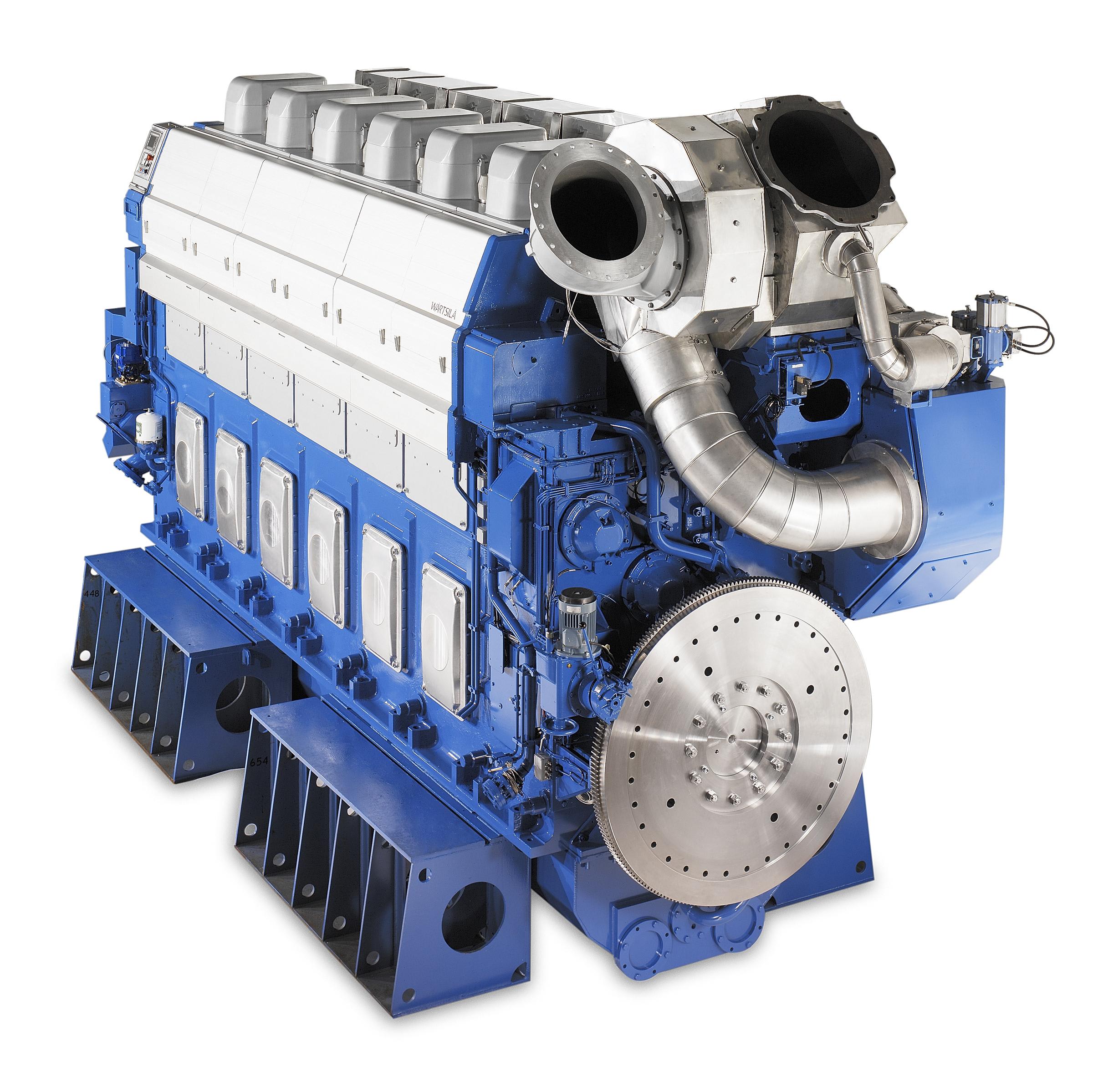
The costs of building and running prototype engines are high, but they’re extremely daunting when each cylinder of a marine engine provides more than 1000 kW (1340 hp). That’s prompted Wärtsilä Corp. to invest heavily in hardware and software so modeling, simulation and virtual testing can be used to shorten development time and ensure that all design requirements are met.
The Finnish company’s marine engines are among the world’s largest. Far from the company’s largest engine, the Wärtsilä 46 was built to run on heavy fuel oil, marine diesel oil, or light diesel so it can run in ports and at sea. It is still so hefty that building a prototype and testing it is quite costly. The four-stroke engine has a cylinder bore of 460 mm (18.1 in) Cylinder output is 1200 kW (1610 hp)/cylinder. The smallest model stands 4930 mm (194 in) and weighs 97 t (107 ton), while the largest is 5863 mm (231 in) tall and a hefty 233 t (257 ton).
“Prototyping is really expensive; fuel costs alone are really substantial,” said Juho Könnö, digital design platform manager at Wärtsilä. “We want to promote virtual testing more and more. We are also doing more virtual engineering, going into multimodal models.”
Könnö, speaking at Dassault Systèmes’ Science in the Age of Experience conference in Chicago, noted that Wärtsilä has come a long ways since it started modeling in 1973 with finite element method (FEM) calculations. Continued investments in hardware have yielded powerful clusters. In recent years, software costs have outstripped hardware expenditures.
This software is helping the company move to requirements-based validation, in which the requirements are continuously used to ensure that all parameters are being met. That’s important because all requirements impact multiple components.
“At the component level, each component has dozens of requirements. Sometimes, you can have over 100 elements that all need to be examined to be sure they meet customer requirements,” Könnö said. “There are no standalone requirements. The need for good fuel economy breaks down into 10s of requirements.”
Making simulation and validation accessible to a broad base of engineers has helped shorten development time. In the past, requests were e-mailed to simulation managers who often didn’t get to the request for a day or two. That process repeated when managers were asked for time to run a simulation, so it wasn’t uncommon for engineers to wait about a week for a 3-hour simulation.
Now, simulation software is easier to manage and more engineers have direct access to the computing cluster, so many of the delays have been eliminated. The evolution to 3D imagery also makes it simpler for engineers to drill down deeply to understand the design and eliminate points that cause problems. Könnö is pressing to further democratize software and minimize any pain associated with simulations.
“My vision is that when they’re finished, users will have a sweet taste in their mouths, and that they can’t wait to do their next simulation,” he said.
More From SAE Media Group

Off-Highway Engineering
Cummins, Tula Test ‘Dynamic’ Cylinder Deactivation for Diesels
Off-Highway Engineering
JCB Debuts Clean-Sheet Hydrogen Combustion Engine
Automotive Engineering
WCX17: Delphi Aims for 42% Efficiency with Next-Gen GDCI

Tech Briefs
2025 Award Finalists
Aerospace & Defense Tech Briefs
X Marks the Spot
Off-Highway Engineering
What’s an IOPU and Why Should You Care?
Automotive Engineering
Eaton Goes Internal with Its Next-Generation EGR Solution
Off-Highway Engineering
Isuzu Simplifies Fuel Changeovers
Automotive Engineering
New Four-Chamber Rotary Engine Could Supplant Wankel and Piston Engines for UAV Applications
Off-Highway Engineering
Could This Infinitely Variable Compression Mechanism Be the Next Piston Engine Game-Changer?
Off-Highway Engineering
Perkins Bets Big on Smaller Engine for Off-Highway Machines
Off-Highway Engineering
Danfoss Targets Excavators with New Digital-Hydraulics System
Aerospace & Defense Tech Briefs
Portable Engine Test Stand
Automotive Engineering
Extending the ICE Age: Hyundai Optimizing Engines and Fuels
Off-Highway Engineering
Cummins’ New Mid-Displacement Turbos Quieter and More Efficient
Motion Design INSIDER
A ‘Real-Time Programmable Robotic Sheet’ Can Grasp and Walk on Its Own
Aerospace & Defense Tech Briefs
Hybrid Auxiliary Propulsion System
Automotive Engineering
Keeping Combustion in the Conversation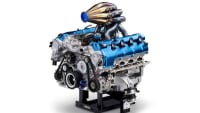
Off-Highway Engineering
MTU Training Facility Helps Keep Complex Engines up and Running
Automotive Engineering
German Spark-Ignited Compression-Ignition Research Paralleling Mazda’s SPCCI
Off-Highway Engineering
Developing an Alternative Engine Concept
NASA Spinoff
Reducing The Time And Cost Of Testing Engines
Tech Briefs
Ducted Fuel Injection for Soot Reduction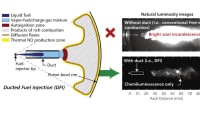
Off-Highway Engineering
Caterpillar Unveils New Stage V, Tier 4 Final Industrial Engine
Off-Highway Engineering
Kohler Extends Its Hand in Off-Highway Diesels
Tech Briefs
Electrohydraulically Actuated Valve Train
Automotive Engineering
Achates Power OP Engine Begins Real-World Test Phase
Automotive Engineering
Injecting a Sense of Urgency to Clean up Diesels
Top Stories
INSIDERManufacturing & Prototyping
 How Airbus is Using w-DED to 3D Print Larger Titanium Airplane Parts
INSIDERManned Systems
 FAA to Replace Aging Network of Ground-Based Radars
NewsTransportation
 CES 2026: Bosch is Ready to Bring AI to Your (Likely ICE-powered) Vehicle
NewsSoftware
 Accelerating Down the Road to Autonomy
EditorialDesign
 DarkSky One Wants to Make the World a Darker Place
INSIDERMaterials
 Can This Self-Healing Composite Make Airplane and Spacecraft Components Last...
Webcasts
Defense
 How Sift's Unified Observability Platform Accelerates Drone Innovation
Automotive
 E/E Architecture Redefined: Building Smarter, Safer, and Scalable...
Power
 Hydrogen Engines Are Heating Up for Heavy Duty
Electronics & Computers
 Advantages of Smart Power Distribution Unit Design for Automotive...
Unmanned Systems
 Quiet, Please: NVH Improvement Opportunities in the Early Design...
