




Electrically Conductive Adhesive

LOCTITE ABLESTIK ICP 3535M1 electrically conductive adhesive (ECA) from Henkel (Irvine, CA) provides a robust alternative to solder for many applications, lowers component assembly stress, and facilitates lead-free interconnection for regulatory compliance. Due to its versatility and proven reliability, Henkel says LOCTITE ABLESTIK ICP 3535M1 recently has been accepted at global automotive electronics manufacturers, where the material is being used successfully for the production of transmission control units and qualified for several other automotive applications. Internal and customer qualification testing have confirmed the material’s stable contact resistance and good mechanical integrity after 3000 hours of temperature and humidity testing, 3000 cycles of thermal shock evaluation and 3000 hours of heat storage. Whereas other ECAs are unable to cope with non-noble metals on component terminations, LOCTITE ABLESTIK ICP 3535M1 succeeds in delivering performance and reliability effectiveness on traditional palladium silver-, silver- and gold-finished components, as well as cost-effective tin-terminated components.
More From SAE Media Group
Aerospace & Defense Tech Briefs
How to Select the Right Silicone for Space Applications
Medical Design Briefs
New Products and Services
Tech Briefs
Henkel Solutions for Automotive Electronics
Medical Design Briefs
EP79FL Electrically Conductive Epoxy
Aerospace & Defense Tech Briefs
Beyond Boundaries: Elevating Aerospace Design with Fluorosilicones
Medical Design Briefs
Panacol-Elosol Relocates to Newly Constructed Facility
Medical Design Briefs
Adhesive Bonding of Plastics in Medical Devices, Part 2: Material Properties of Plastics
Automotive Engineering
The Inside Story on Adhesive Tapes for Automotive Heat Shielding
Tech Briefs
Q&A: Underwater Smart Glue Turns On and Off
Medical Design Briefs INSIDER
‘Smart Skin’ Monitors Biological Signals on Demand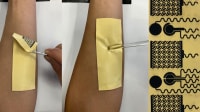
Medical Design Briefs
Factors and Requirements for Adhesive Selection in Medical Devices, Part 1
Medical Design Briefs
Vote for Medical Design Briefs Product of the Year 2021
Automotive Engineering
For Bonding Dissimilar Materials, Adhesives Can Be a Sticking Point—or Lack of It
Battery & Electrification Technology
Spray Drying Tech Used in Instant Coffee Applied to High-Capacity Battery Production
Medical Design Briefs
Medical Design Briefs: 2019 Technology Leaders
Medical Design Briefs
Product Focus: Materials
Medical Design Briefs
Biodegradable Alternative for Adhesives
Medical Design Briefs
No-Drip Adhesive

Medical Design Briefs
Video Spotlight on Products and Services

Aerospace & Defense Tech Briefs
Testing Military-Grade Adhesive in Extreme Loading Conditions
Medical Design Briefs
New Products & Services
Medical Manufacturing and Fabrication
Metallic Glue May Replace Soldering/Welding
Medical Design Briefs
ADHESIVES: The Importance of CTE for Assembly Reliability
Medical Design Briefs
Winter 2021 Resource Guide

Medical Design Briefs
The Power of the Plasma Pen
Battery & Electrification Technology
Next-Generation Elastomer Seals: Enhancing Battery Safety and Sustainability in E-Mobility
Top Stories
INSIDERManufacturing & Prototyping
 How Airbus is Using w-DED to 3D Print Larger Titanium Airplane Parts
INSIDERManned Systems
 FAA to Replace Aging Network of Ground-Based Radars
NewsTransportation
 CES 2026: Bosch is Ready to Bring AI to Your (Likely ICE-powered) Vehicle
NewsSoftware
 Accelerating Down the Road to Autonomy
EditorialDesign
 DarkSky One Wants to Make the World a Darker Place
INSIDERMaterials
 Can This Self-Healing Composite Make Airplane and Spacecraft Components Last...
Webcasts
Defense
 How Sift's Unified Observability Platform Accelerates Drone Innovation
Automotive
 E/E Architecture Redefined: Building Smarter, Safer, and Scalable...
Power
 Hydrogen Engines Are Heating Up for Heavy Duty
Electronics & Computers
 Advantages of Smart Power Distribution Unit Design for Automotive...
Unmanned Systems
 Quiet, Please: NVH Improvement Opportunities in the Early Design...
