




Dynamic Testing and Design Technology for Off-Highway Exhaust Systems
As the industry readies itself for Tier 5 emissions compliance in 2019, it makes sense to look back at recent technological milestones to plot the trajectory of future trends. In the exhaust systems arena, innovations occurring within the last decade, along with new analytical tools, will help shape the way engineers design systems in the future.

2007 EPA emission standards for on-highway vehicles and equipment required that exhaust systems be leak-free from the engine through the treatment system. As a result of the 2007 regulations the heat retention characteristics of the exhaust transmission system became important, because the treatment systems used to meet the emissions standards operate more effectively with higher exhaust stream temperatures.
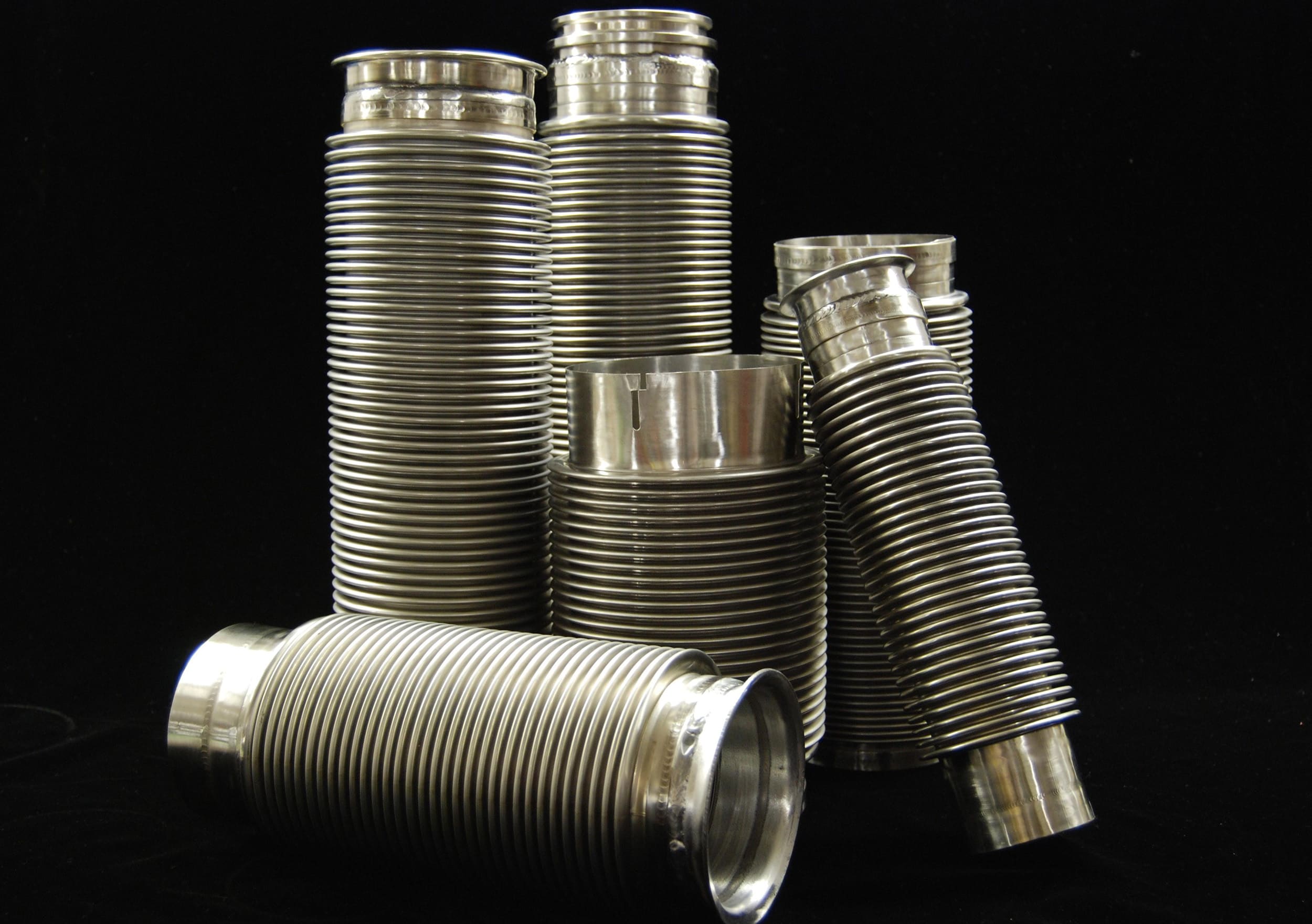
In the past, the engine outlet and the treatment system were commonly joined using a strip-wound metal hose. However, after new EPA standards were enforced, the nominal leakage rate and lack of thermal insulation associated with the original metal hose approach made it obsolete. Bellows formed from a solid steel tube were found to be the most suitable replacement.
In 2007, Tru-Flex, LLC. introduced its Internally Insulated, Torsional and Non-Torsional Bellows solutions. Several unique features of the Tru-Flex bellows allowed it to manage not only normal displacements between the engine and chassis, but also other major issues such as heat retention, torsion and high-frequency vibration. The combined result of these innovations is an exhaust component that has optimum durability and improves the overall performance of the exhaust system.
The Tru-Flex bellows design de-couples movement and vibration between the engine and the remainder of the exhaust system. This includes rotation through the long axis of the bellows (torsion), which is extremely damaging to all standard type bellows. The design provides a gas tight connection (low or zero leakage).
The de-coupling capability and extensive product array allows an exhaust system engineer complete freedom in designing an exhaust layout in a manner that works best for their particular application.

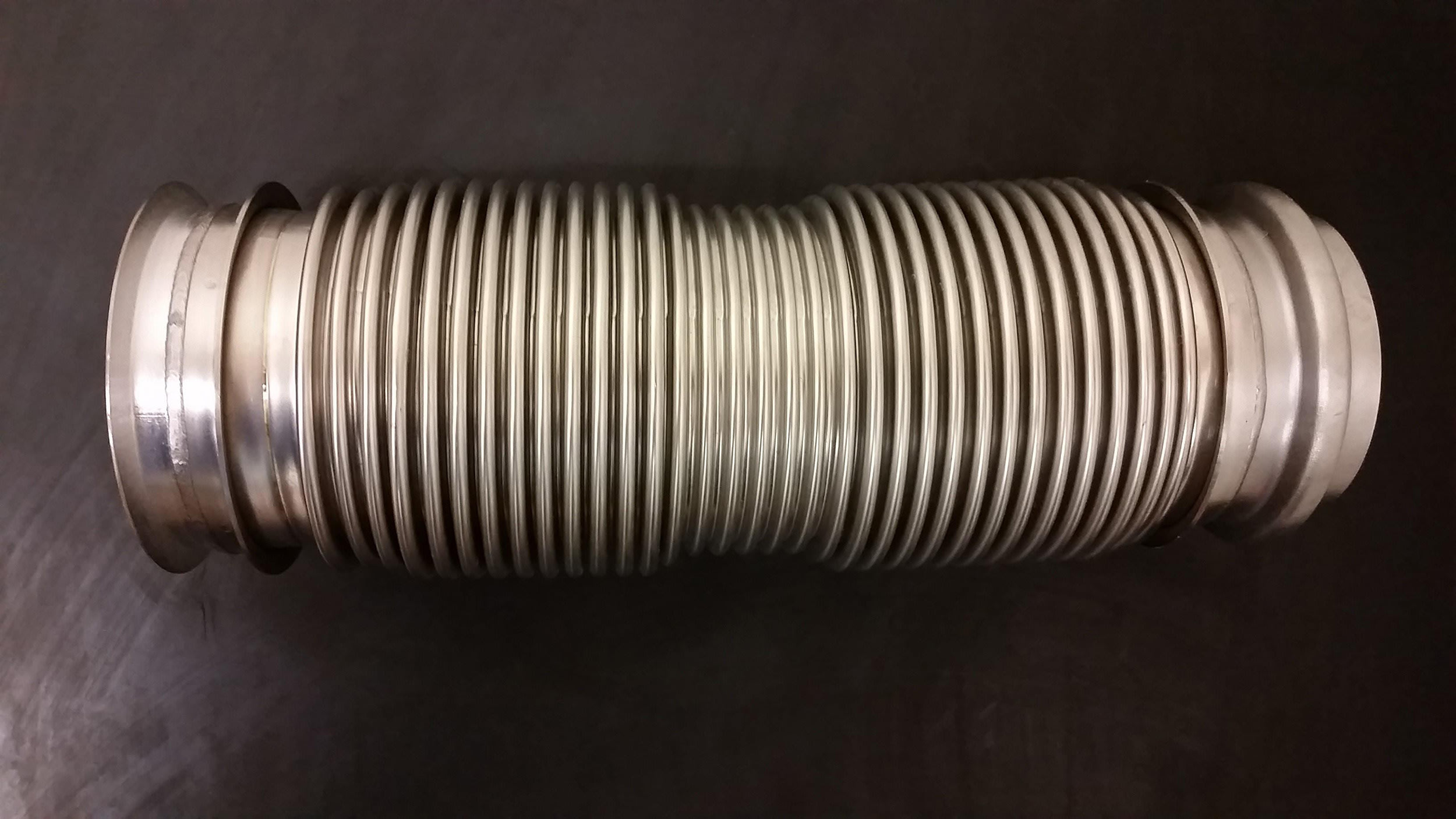
The system also allows for some positional tolerance between the engine and aftertreatment device mounting locations (misalignment). The Internally Insulated, Torsional and Non-Torsional Bellows help retain as much heat as possible to support quick light-off and optimum efficiency of the aftertreatment device. A properly designed bellows de-coupler assists with the proper and efficient operation of the engine and aftertreatment system over hundreds of thousands of miles.
Tru-Flex collects measurements via its hexapod measuring unit and can later fully replicate on-vehicle conditions with its 6-axis shaker. Our engineers have developed software that processes all channels of the measurement data into true displacement data in a format that can be provided to the customer quickly.
An ongoing collaboration with a test equipment manufacturer has resulted in a proprietary design for the 6-axis shaker, which has some unique capabilities that allow it to more fully replicate on-vehicle conditions. The equipment was designed to test for longer-term failure modes and allows us to more closely match the real-world lifecycle of its systems.
The test equipment is closely coupled with analysis software that has the capability of significantly reducing and compressing the amount of running time required to meet customers’ durability test goals. Once a customer has designed and built a test truck, Tru-Flex can accurately measure the axial, lateral, angular and torsional dynamics between the engine and treatment system with its hexapod measuring equipment. Once the field data has been gathered, engineers can replicate and accelerate those forces under laboratory conditions with the 6-axis shaker, which guides the design of an optimized, higher functioning, and longer-lasting exhaust system now and in the future.
Scott Swank, Vice President of Engineering, Tru-Flex, LLC, wrote this article for Off-Highway Engineering as part of the annual Executive Viewpoints series appearing in the June 2016 issue.
More From SAE Media Group
Tech Briefs
2025 Award Finalists
Off-Highway Engineering
Engine Developers Increase Efforts to Decrease Fuel Usage
Off-Highway Engineering
Enhanced Cat 3500 Engine Boosts Power 20%, Trims Fuel Usage by 10%

Off-Highway Engineering
MTU Training Facility Helps Keep Complex Engines up and Running
Off-Highway Engineering
Navistar Updates A26 Engine, Improves FE by 4%
Automotive Engineering
Tula DMD Aims for More-Efficient E-Machines
Automotive Engineering
UAV Turbines to Tackle 200-Hp Class UAV Engines for U.S. Army
Aerospace & Defense Tech Briefs
Engineering an Aircraft Hydrogen Powertrain
Automotive Engineering
48V Is Coming, and Not Just for EVs
Motion Design INSIDER
‘Metabots’ Shapeshift from Flat Sheets into Hundreds of Structures
Photonics & Imaging Technology
Fiber Lasers for Powertrain Welding Applications
Aerospace Manufacturing and Machining INSIDER
GE Concludes Phase 1 Testing on XA100 Adaptive Cycle Engine
Aerospace & Defense Tech Briefs
Laser Wire Additive Manufacturing System
Automotive Engineering
Schaeffler Builds an E-Motor Powerhouse

Motion Design INSIDER
Megawatt Electrical Motor Could Help Electrify Aviation
Automotive Engineering
New Ampere EV Motor Aims for Power, Torque Benchmarks
Motion Design INSIDER
Autonomous Structures Can Be Programmed to Jump Days in Advance

Off-Highway Engineering
Parker Takes Electro-Hydrostatic Approach for Electric Machines
Tech Briefs
Submarine Swims Without an Engine
Off-Highway Engineering
Cummins Goes for Big Power, Low Emissions with All-New X-Series Heavy-Duty Diesels
Aerospace INSIDER
Lattice Structure Absorbs Propeller Vibrations

Off-Highway Engineering
JCB Debuts Clean-Sheet Hydrogen Combustion Engine
Battery & Electrification Technology
The Rechargeable Renaissance
Top Stories
INSIDERManufacturing & Prototyping
 How Airbus is Using w-DED to 3D Print Larger Titanium Airplane Parts
INSIDERManned Systems
 FAA to Replace Aging Network of Ground-Based Radars
NewsTransportation
 CES 2026: Bosch is Ready to Bring AI to Your (Likely ICE-powered) Vehicle
NewsSoftware
 Accelerating Down the Road to Autonomy
EditorialDesign
 DarkSky One Wants to Make the World a Darker Place
INSIDERMaterials
 Can This Self-Healing Composite Make Airplane and Spacecraft Components Last...
Webcasts
Defense
 How Sift's Unified Observability Platform Accelerates Drone Innovation
Automotive
 E/E Architecture Redefined: Building Smarter, Safer, and Scalable...
Power
 Hydrogen Engines Are Heating Up for Heavy Duty
Electronics & Computers
 Advantages of Smart Power Distribution Unit Design for Automotive...
Unmanned Systems
 Quiet, Please: NVH Improvement Opportunities in the Early Design...
