




New York Auto Show 2016: Toyota Prius Prime Amps up Plug-In Capabilities
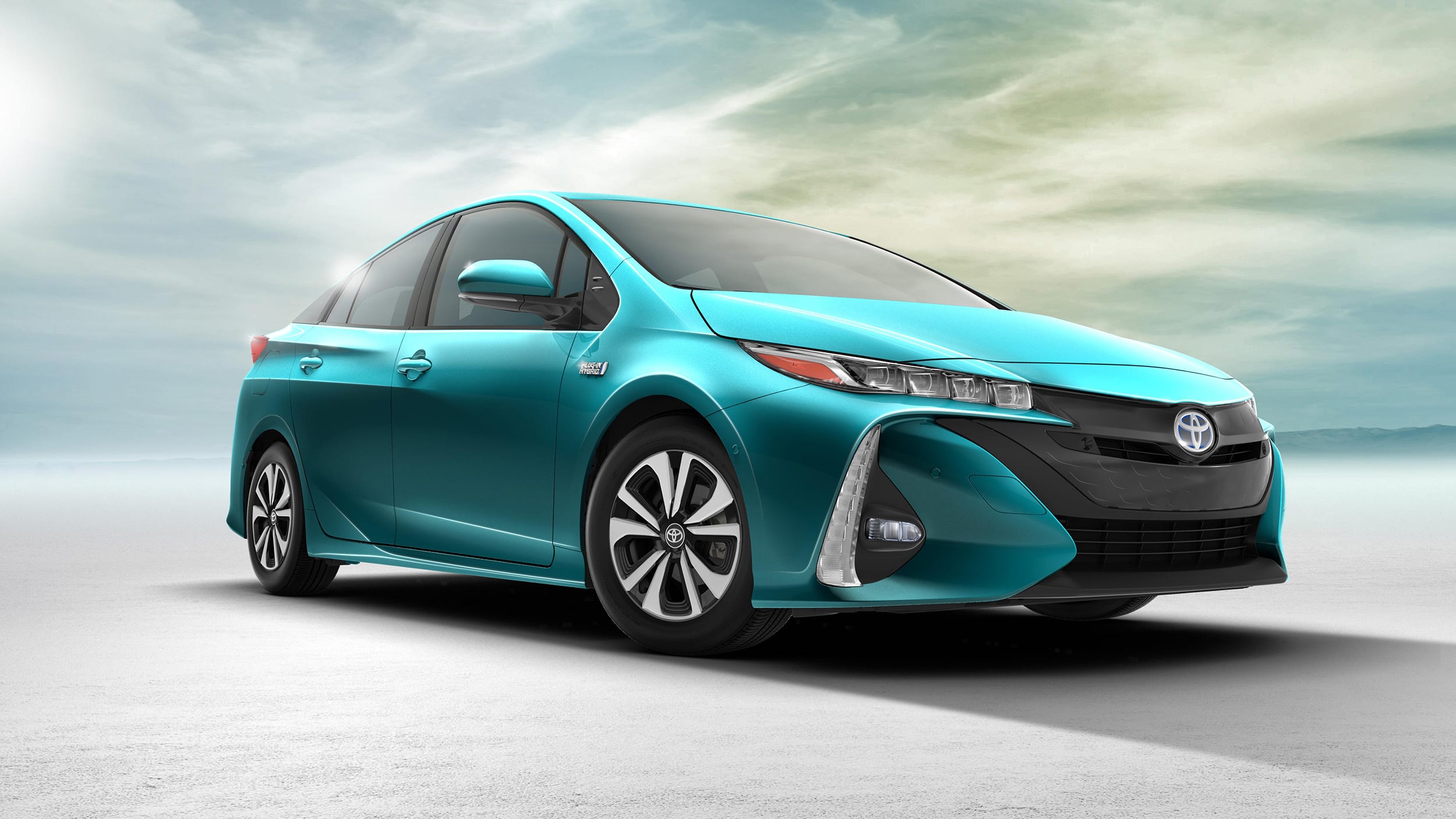
In a slight reboot of its hybrid marketing approach, Toyota used the 2016 New York auto show unveil the 2017 Prius Prime, the plug-in hybrid version of the new-generation 2016 Prius launched last year. Toyota chose to call the plug-in variant Prius Prime to further differentiate it from the “standard” Prius and to try to help customers better understand plug-in technology.
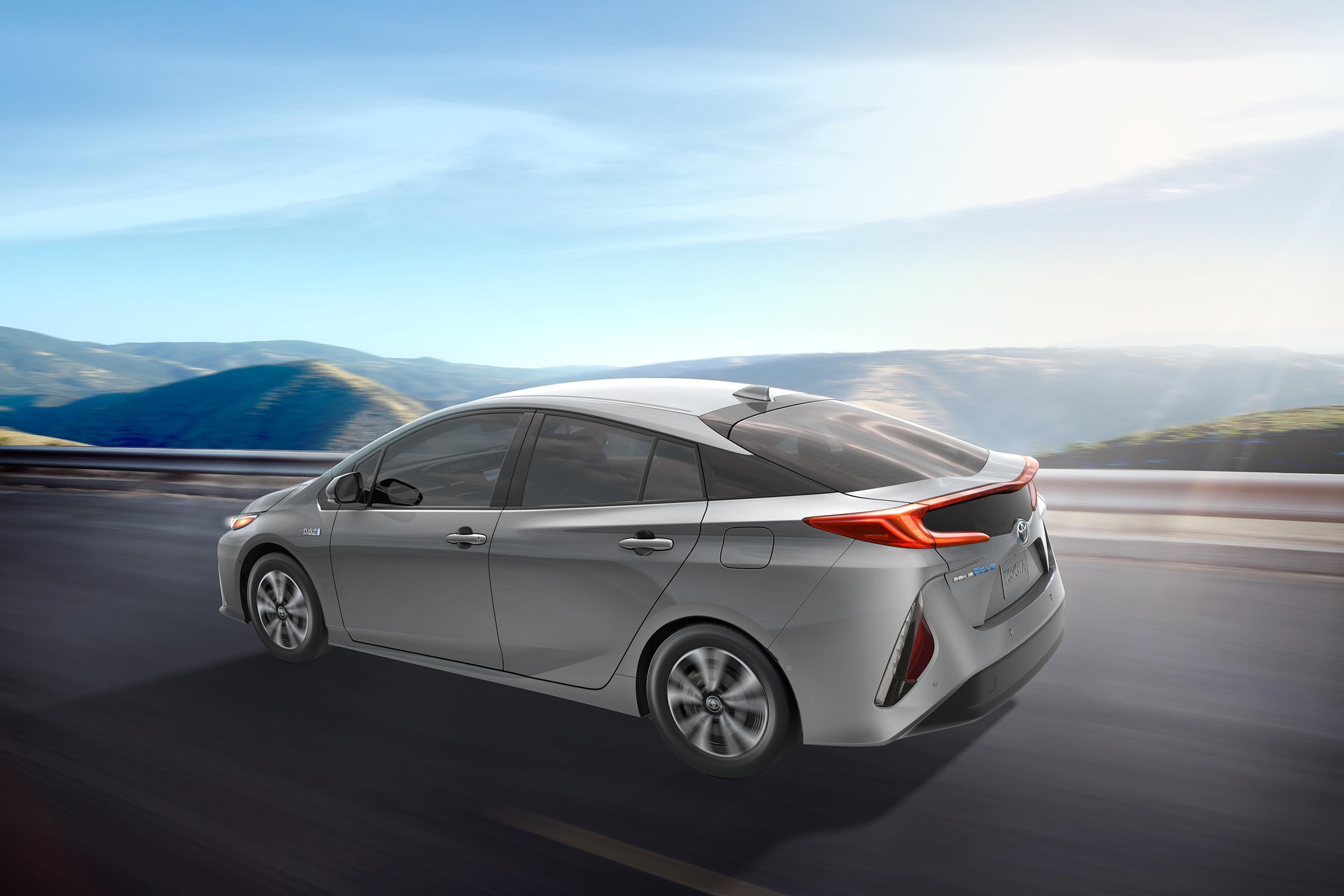
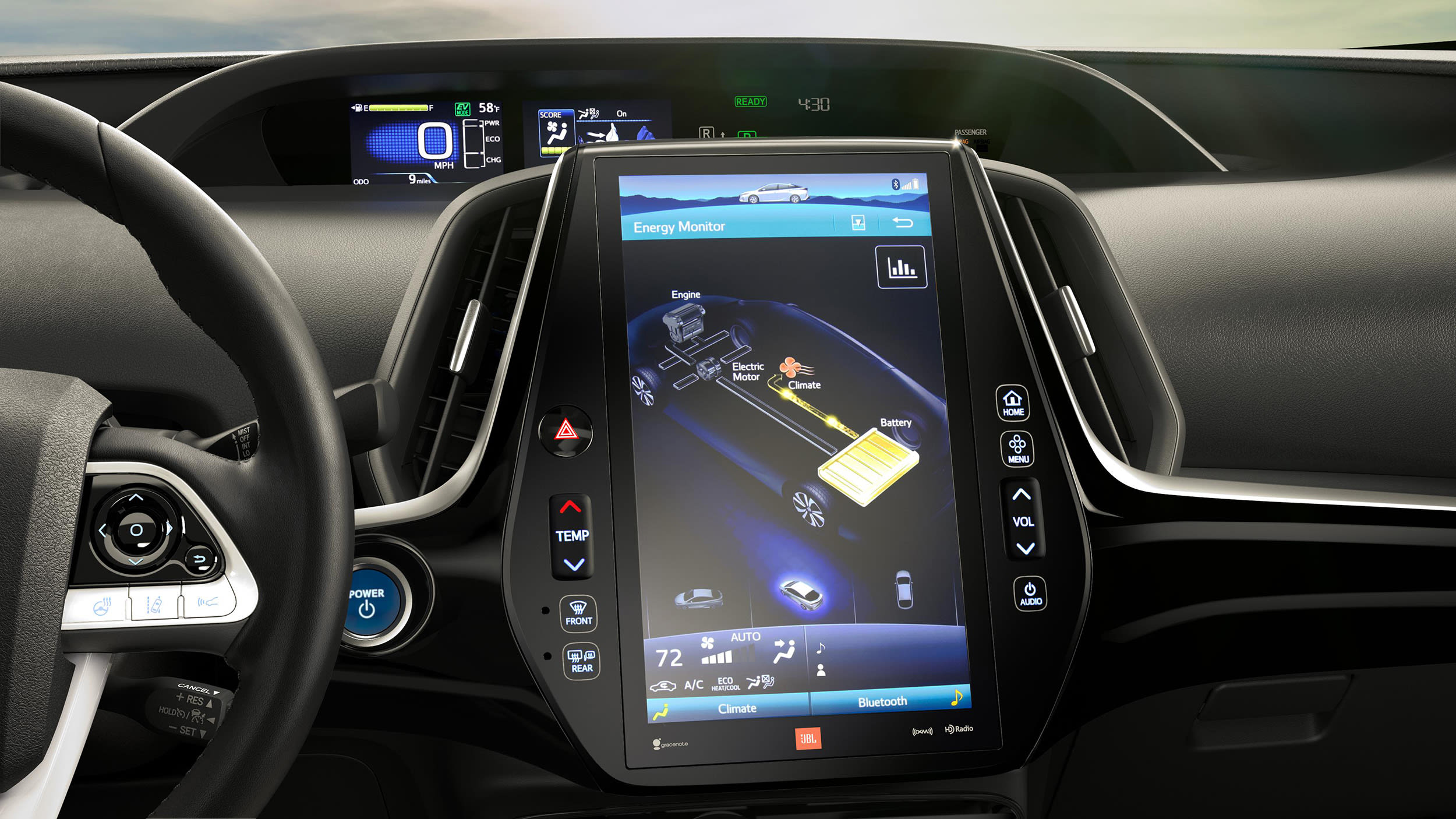
But the differentiation goes beyond marketing: Prius Prime doubles the former Prius plug-in’s electric driving range to an estimated 22 miles (35 km) and can travel on electric power up to 84 mph (135 km/h), while the Prime wears substantially revised sheetmetal compared with the Prius. The Prime also has significant interior changes, including a certain homage to efficient-car rock star Tesla with the availability of a massive 11.6-in (295-cm) center-dash high-definition touchscreen display.
Toyota also would like to differentiate the Prius Prime for another reason: sales of the Prius plug-in have not been strong, at least partly because the plug-in model costs some $5,000 more than the conventional Prius. Toyota executives said the company hopes to reduce that price delta for the new Prius Prime.
At the 2017 Prius Prime unveiling in New York, Toyota said specific fuel-economy figures are not yet available, but it expects the Prime to at least achieve the conventional Prius ratings of 54 mpg (4.4 L/100 km) city and 50 mpg (4.7 L/100 km) highway, despite the added weight of the Prius Prime’s larger 8.8 kW/h battery. Toyota estimates that the new Prius Prime will have a full-charge driving range of 600 miles (966 km) and an estimated mpg-e rating of 120 miles (95 mpg-e for the previous Prius plug-in).
The Prius Prime employs the same new Toyota global modular vehicle platform, TNGA (Toyota New Global Architecture), as the standard 2016 Prius, the first Toyota model to use the platform. The TNGA platform boasts an independent rear suspension and a lower center of gravity.
Although additional battery specifics weren’t provided, Toyota said the Prius Prime’s 8.8 kW/h lithium-ion battery pack can be fully recharged via a household 120-volt outlet in 5.5 hours; that time can halved with a 240-volt Level 2 charger. The battery’s doubled capacity combines with upgrades to the hybrid system hardware that enable both the traction motor and the generator to drive the front wheels; the company said the 2017 Prius Prime is the first Toyota hybrid to use the new dual-motor generator drive.
Also available for the new Prius Prime—which the company said will be in U.S. showrooms in late fall of 2016—will be a suite of advanced driver-assistance features that include full-range adaptive cruise control, pre-collision braking and pedestrian detection. An automatic parking function will park the Prius Prime in a parallel parking spot or back the car into a perpendicular spot. The system also will steer the car out of a tight parallel parking spot.
More From SAE Media Group
Automotive Engineering
New Zapp Electric Scooter Just 200 Pounds, 200 Components

Automotive Engineering
All-Electric Nissan Ariya Handles Ultra-Cold Temps on Pole to Pole Trek
Automotive Engineering
Mazda’s 2024 CX-90 Offers Turbo I-6, PHEV Propulsion
Automotive Engineering
Dealing with the BEV ‘Concavity’
Automotive Engineering
2022 Toyota Tundra: V8 Out, Twin-Turbo Hybrid Takes Over
Automotive Engineering
Seeking More Traction in Budding EV Market, VW Adds AWD to ID.4
Automotive Engineering
Nissan Debuts Tech-Laden 2022 Ariya EV SUV
Automotive Engineering
Engineering ‘Electron Guzzlers’
Automotive Engineering
Toyota Punches up the Prius
Off-Highway Engineering
Cummins and Isuzu Announce Battery-electric Truck Collaboration
Automotive Engineering
Battery Leasing Spurs VinFast’s EV Offensive
Automotive Engineering
Pride in Engineering the World’s Most Popular Electrified Vehicle
Automotive Engineering
Making over the World’s Leading Hybrid
Off-Highway Engineering
Mack Trucks Begins Production of LR Electric
Automotive Engineering
EV Motor Development Is on the Move
Automotive Engineering
Toyota Launches Longer-Range 2023 Prius Prime
Automotive Engineering
Ford Unveils 2021 Mustang Mach-E Electric Vehicle
Automotive Engineering
Toyota Stretches SUV Line-Up with World Debut of Grand Highlander
Automotive Engineering
Electric Radiant Heat for EV Cabin Comfort
Off-Highway Engineering
Volkswagen ID.Buzz All-electric Vans Combine Iconic Styling With Modern Technology
Automotive Engineering
The Haters Go After Toyota
Automotive Engineering
Hub-Motoring in Lordstown’s Novel Endurance
Automotive Engineering
Volvo XC90 Line-Up Keeps Hybrid Futures Safe

Automotive Engineering
BEV Streamliner Tops 350 Mph for U.S. Speed Record
Automotive Engineering
Toyota Still Favors Nickel-Metal Hydride Batteries for HEVs
Automotive Engineering
Engineering the 2022 Toyota Tundra
Automotive Engineering
Engineering Battery Packs for the ‘Underserved’ OEMs
Automotive Engineering
Elevate: Hyundai’s New Four-Wheel Drive, Four-Legged Off-Road Vehicle
Top Stories
NewsSensors/Data Acquisition
 Microvision Aquires Luminar, Plans Relationship Restoration, Multi-industry Push
INSIDERRF & Microwave Electronics
 A Next Generation Helmet System for Navy Pilots
INSIDERWeapons Systems
 New Raytheon and Lockheed Martin Agreements Expand Missile Defense Production
NewsAutomotive
 Ford Announces 48-Volt Architecture for Future Electric Truck
INSIDERAerospace
 Active Strake System Cuts Cruise Drag, Boosts Flight Efficiency
ArticlesTransportation

Webcasts
Aerospace
 Cooling a New Generation of Aerospace and Defense Embedded...
Energy
 Battery Abuse Testing: Pushing to Failure
Power
 A FREE Two-Day Event Dedicated to Connected Mobility
Automotive
 Quiet, Please: NVH Improvement Opportunities in the Early Design Cycle
Electronics & Computers
 Advantages of Smart Power Distribution Unit Design for Automotive &...
Unmanned Systems
 Sesame Solar's Nanogrid Tech Promises Major Gains in Drone Endurance