




Electrified Off-Highway Powertrains Search for Marketing Power
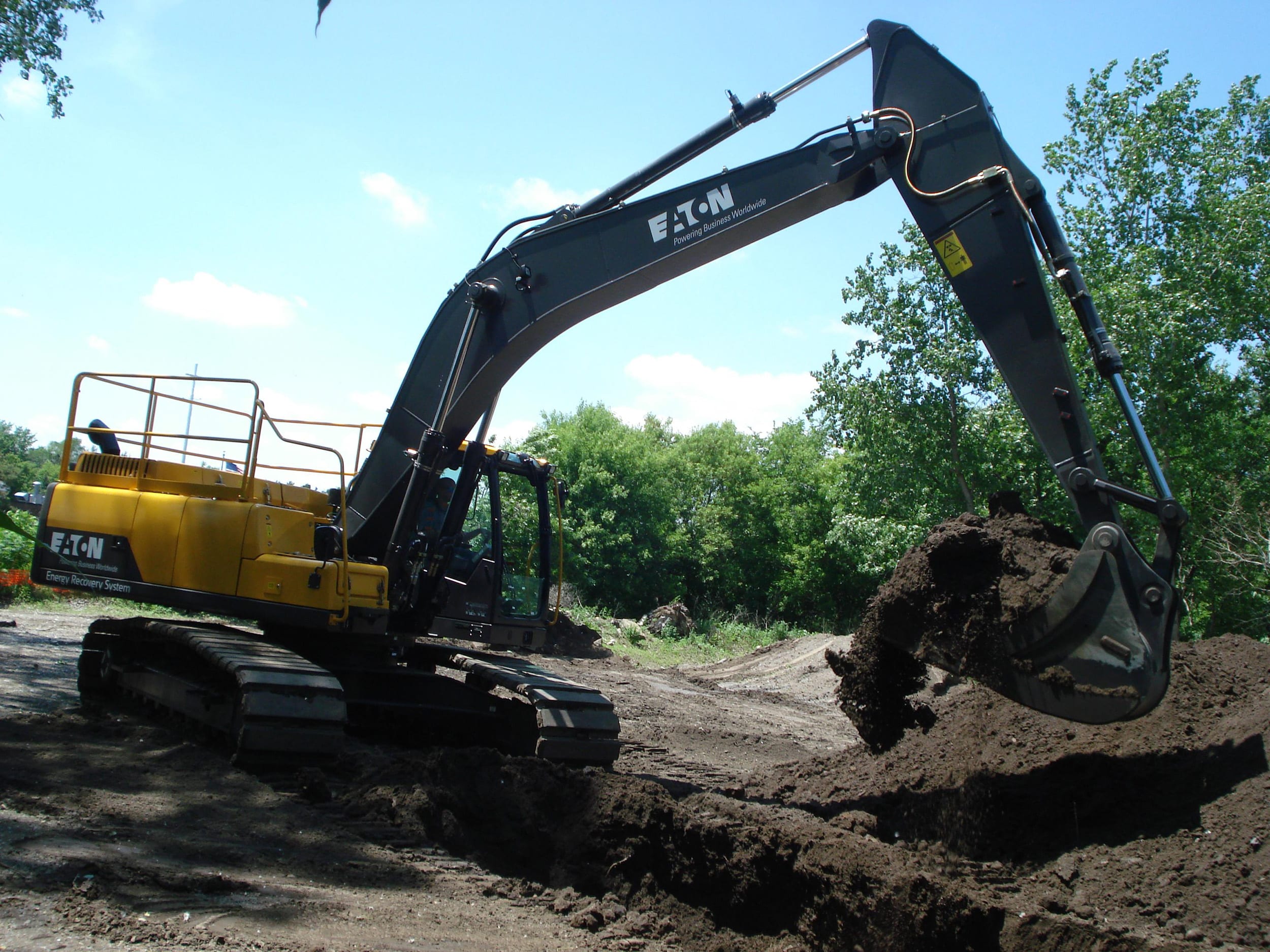
Electrified powertrains have seen success in commercial applications like buses and small vehicles, but in many fields, they’ve seen only limited success. Today’s low fuel prices are not helping marketers expand the niches where hybrids provide a cost-effective solution.
Most electric off-highway vehicles are relatively small vehicles that have small power requirements compared to some construction and agriculture behemoths. Hybrids fit more use cases.
“For non-road mobile machinery applications, a pure electric mode of operation is only relevant for small machines, less than 19 kW,” said Kiran Govindswamy, Powertrain Director at FEV North America. “Only hybrid concepts, from micro to mild and full hybrids, are considered to be feasible for most applications. This is fundamentally driven by high add-on costs for batteries as well as time needed for recharging the batteries.”
In all vehicle classes, electrified powertrains face competition from hydraulic hybrids. Battery packs take a fair amount of space compared to hydraulic components. Automotive hybrids are driving advances in batteries, but many developers feel it’s easier to use battle-tested hydraulics than to revamp systems on existing product lines.
“Adding an electric power architecture adds cost and complexity that the base machine doesn't normally have,” said Randy Peterson, Chief Engineer, Hydraulics, at Caterpillar Advanced Components & Systems Division. “The power density (size) advantage for hydraulics over electrics is still in the neighborhood of 10:1 or more, making packaging electrics a challenge.”
Many usage models require quick bursts of power that can be difficult to provide with electric motors. Battery discharge and charging rates can work against electrics in many environments.
“As battery technology continues to improve, the ability to store and use energy becomes much more attractive,” said Steve Zumbusch, Technology Development Director for Eaton’s Hydraulics Group. “If the rate of energy consumption (power) becomes high, then the battery technology becomes challenged with being able to rapidly store and discharge energy fast enough to be effective. Hydraulics on the other hand, have a very distinct advantage in using technologies such as accumulators that can be charged and discharged extremely fast, providing very high power levels.”
Though battery power has limits, its role may still expand. Advances in automotive are driving down overall system costs, and there’s no guarantee that global oil prices will remain low. Potential regulatory restrictions are also prompting a lot of research into hybrids.
“The low cost of fuel has negatively influenced the payback period,” Govindswamy said. “With the exception of large excavators, electrified powertrain payback times currently remain rather poor. Considering significantly reduced hybrid add-on costs as well as a slight increase in fuel price, hybridization with reasonable payback periods are expected to become feasible in the future.”
More From SAE Media Group
Off-Highway Engineering
Unique Hybrids Required
Off-Highway Engineering
Nikola Looks to Accelerate Production, Hydrogen Infrastructure
Off-Highway Engineering
High-voltage Hybrids
Automotive Engineering
Electrons, Combustion, and Bosch
Power Electronics INSIDER
New Microactuator Driving System Could Give Microdrones a Jump-Start
Automotive Engineering
AVL Transmission Aims at Best-In-Class PHEV Performance
Tech Briefs
Hyliion Trucks Onward
Automotive Engineering
Schaeffler Builds an E-Motor Powerhouse
Aerospace & Defense Tech Briefs
Electric Hybrid Propulsion System

Off-Highway Engineering
TARDEC Pursues Advanced Power Generation
Tech Briefs
High-Power Direct Borohydride Fuel Cells
Off-Highway Engineering
Narrower Focus, Bigger Payoff for Commercial EVs

Battery & Electrification Technology
Battery Innovation Key for Commercial and Off-Highway EVs
Tech Briefs
Charging EVs as they Travel on Highways
Off-Highway Engineering
Cummins Unveils PowerDrive Hybrid-Electrics, Euro 7 Diesel Concept
Off-Highway Engineering
Hybrid Variety in Off-Highway





Automotive Engineering
Orbis Says HaloDrive Axial-Flux Motor Available for In-Wheel, Other Uses
Automotive Engineering
Volvo XC90 Line-Up Keeps Hybrid Futures Safe
Automotive Engineering
Wide Collaborations Aim to Advance the Fuel-Cell Future

Off-Highway Engineering
Batteries Not the Only Route to EV Efficiency
Automotive Engineering
Transforming Propulsion with Tula’s Digital-Control Magic
Top Stories
INSIDERManufacturing & Prototyping
 How Airbus is Using w-DED to 3D Print Larger Titanium Airplane Parts
INSIDERManned Systems
 FAA to Replace Aging Network of Ground-Based Radars
NewsTransportation
 CES 2026: Bosch is Ready to Bring AI to Your (Likely ICE-powered) Vehicle
NewsSoftware
 Accelerating Down the Road to Autonomy
EditorialDesign
 DarkSky One Wants to Make the World a Darker Place
INSIDERMaterials
 Can This Self-Healing Composite Make Airplane and Spacecraft Components Last...
Webcasts
Defense
 How Sift's Unified Observability Platform Accelerates Drone Innovation
Automotive
 E/E Architecture Redefined: Building Smarter, Safer, and Scalable...
Power
 Hydrogen Engines Are Heating Up for Heavy Duty
Electronics & Computers
 Advantages of Smart Power Distribution Unit Design for Automotive...
Unmanned Systems
 Quiet, Please: NVH Improvement Opportunities in the Early Design...
Power

Similar Stories
NewsPropulsion
 Cummins Transitions from Diesel Engine to 'Power Technology' Company
NewsPropulsion
 Suppliers Prepare for a Drop in EV Market Share
ArticlesEnergy

NewsTransportation
 Danfoss and Sany Extend Electrification of Off-Highway Machines
Executive ViewpointsManufacturing & Prototyping
 Electric Mobile Machines Won’t Abandon Hydraulics
