




Toyota Introduces Its “Dream Team” for Vehicle Autonomy and Advanced Research

Toyota Research Institute (TRI), the automaker’s new advanced research group based in the U.S., on January 5 introduced the initial technical team that will guide the $1 billion venture into autonomous vehicle technologies, artificial intelligence, materials science, robotics, and more.

“Software and data are now central to Toyota’s mobility strategy,” said Dr. Gill Pratt, TRI’s CEO, during a press conference at the 2016 CES in Las Vegas. “The scale of Toyota’s commitment reflects our belief in the importance of developing safe and reliable automated mobility systems. Simply put, we believe we can significantly improve the quality of life for all people, regardless of age, with mobility products in all aspects of life.”
Dr. Pratt is former program manager for robotics at the U.S. Defense Advanced Research Projects Agency (DARPA). His initial technical team includes Eric Krotkov, a former Carnegie Mellon University professor and DARPA program manager who serves as Chief Operating Officer; James Kuffner, the former head of Google Robotics who wrote route-planning software for the Google car project; Larry Jackel, former Bell Labs department head and DARPA program manager; former Massachusetts Institute of Technology professor John Leonard; Brian Storey, a mechanical engineering professor from Olin College of Engineering; Russ Tedrake, an MIT associate professor of electrical engineering and computer science; and Toyota R&D Project General Manager Hiroshi Okajima, who will serve as TRI’s Executive Liaison Officer.
All six are salaried TRI employees. Leonard, Storey, and Tedrake will work part time with TRI and continue in their university roles. Dr. Pratt said more experts will be added, including those representing the public-policy and social sciences disciplines.
A separate eight-member advisory board will be chaired by John Roos, the former U.S. ambassador to Japan. The board also includes former U.S. Secretary of the Navy Richard Danzig, an expert in cybersecurity; Bran Ferren, the former President of R&D at Walt Disney Imagineering, and the directors of artificial intelligence laboratories at MIT and Stanford University.
Part of Toyota’s initial five-year, $1 billion investment in TRI includes $50 million to open two research centers located in Palo Alto, CA, and Cambridge, MA, “within a 10-minute bike ride from Stanford and MIT,” Dr. Pratt said. The initial team members will relocate to those locations.
TRI already has nearly 30 research projects underway. Dr. Pratt told Automotive Engineering that TRI’s goals include the advancement of automated-driving technologies particularly as they can help elderly and disable drivers and achieve the long-term goal of zero vehicle crashes. He also is a strong advocate for open interface standards to improve how vehicles communicate with pedestrians.
More From SAE Media Group

Automotive Engineering
SAE WCX 2022: OEM Learnings from Level 2 ADAS
Motion Design INSIDER
Eldercare Robot Helps People Sit and Stand, and Catches Them If They Fall
Autonomous Vehicle Engineering
The Future of Automated Vehicle Cabins
Robotics & Automation INSIDER
Building Bots on a Budget
Autonomous Vehicle Engineering
GM Announces Door-To-Door Ultra Cruise ADAS
Aerospace & Defense Tech Briefs
Industry Invited to Participate in AeroTech Aerospace and Defense Technical Program
Off-Highway Engineering
CV Autonomy: Picking the 'Low-Hanging Fruit'
Tech Briefs
Giving Robots the Human Touch via Listening
Autonomous Vehicle Engineering
The Mind of Argo AI
Motion Design
Tentacle Robot Can Grasp Fragile Objects
Automotive Engineering
Toyota Reinvesting in Collaborative Safety Research
Autonomous Vehicle Engineering
Making the Strategic Move into AV Testing
Electronics & Sensors INSIDER
Self-Powered Sensor Automatically Harvests Magnetic Energy
Motion Design INSIDER
Computational System Streamlines the Design of Fluidic Devices
Aerospace & Defense Tech Briefs
SAE International Extends Call for Abstracts, Seeks Submissions for AeroTech Conference

Autonomous Vehicle Engineering
Amending the Automated-Driving ‘Constitution’
Tech Briefs
Smart Walking Stick Could Aid Visually Impaired
Robotics & Automation INSIDER
New Vision-Based System Teaches Machines to Understand Their Bodies
Motion Design INSIDER
Machine Intelligence to Build Soft Machines
Tech Briefs
Making EVs Accessible for All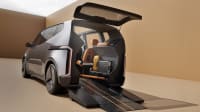
Automotive Engineering
Panasonic Augments Driver Safety with New HUD Tech
Automotive Engineering
Meet The 2020 SAE Prez
Robotics & Automation INSIDER
Artificial Tendons Give Muscle-Powered Robots a Boost
Robotics & Automation INSIDER
Bio-Hybrid Robots Turn Food Waste into Functional Machines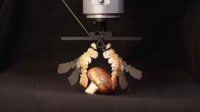
Off-Highway Engineering
Next-Gen HMI Crucial to Increasing ADAS Efficacy

Automotive Engineering
Lexus Goes All-Touch for New Infotainment System
Medical Design Briefs
Show Preview: Evolving to MedDev 2021
Top Stories
INSIDERManufacturing & Prototyping
 How Airbus is Using w-DED to 3D Print Larger Titanium Airplane Parts
INSIDERManned Systems
 FAA to Replace Aging Network of Ground-Based Radars
NewsTransportation
 CES 2026: Bosch is Ready to Bring AI to Your (Likely ICE-powered) Vehicle
NewsSoftware
 Accelerating Down the Road to Autonomy
EditorialDesign
 DarkSky One Wants to Make the World a Darker Place
INSIDERMaterials
 Can This Self-Healing Composite Make Airplane and Spacecraft Components Last...
Webcasts
Defense
 How Sift's Unified Observability Platform Accelerates Drone Innovation
Automotive
 E/E Architecture Redefined: Building Smarter, Safer, and Scalable...
Power
 Hydrogen Engines Are Heating Up for Heavy Duty
Electronics & Computers
 Advantages of Smart Power Distribution Unit Design for Automotive...
Unmanned Systems
 Quiet, Please: NVH Improvement Opportunities in the Early Design...
