




Federal-Mogul Develops New Bearing Materials for Tougher Heavy-Duty Operating Conditions
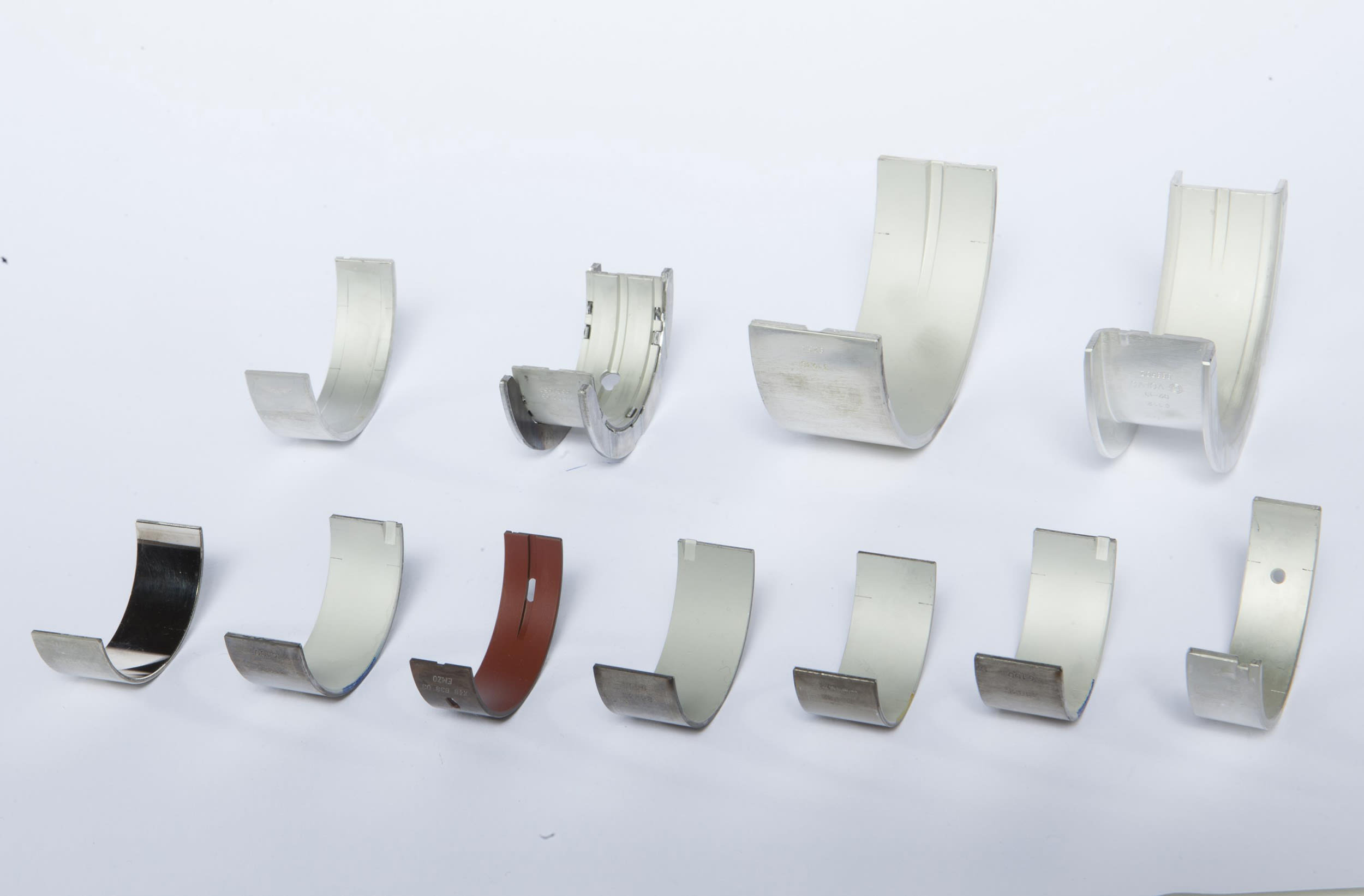
The use of lead in engine bearings for light-duty vehicles was banned in the European Union from July 1, 2011, bringing about a widespread change in the coatings used for bearings in passenger cars and light commercial vehicles up to 3500-kg (7700-lb) gross vehicle weight. Although heavy-duty engines have not yet been subject to similar legislation, Federal-Mogul believes that it is only a matter of time before they are.

In response, the company has adapted the technologies it has developed for light-duty bearings for heavy-duty engines. Factors that the company believes will drive the switch to lead-free include the need to reduce friction in engines further and the need to reduce bearing wear. As the need grows for more efficient combustion, cylinder pressures in heavy-duty diesels have risen to 250 bar (3626 psi) and higher, meaning that bearings must handle higher forces than before.
Bearing wear has also been aggravated by the introduction of stop/start systems for medium- and heavy-duty engines. Federal-Mogul suggests that a heavy-duty engine with a stop/start system may rack up 1.2 million stop/start events during its lifetime. Stop/start cycles can introduce more temperature variation in lubricants, affecting lubricity, while there has also been a trend toward lower viscosity engine oils.
Federal-Mogul’s response has been to both develop new coatings to replace lead and also introduce aluminum as a base material for heavy-duty bearings in place of bronze. The new coating material is based on iron oxide, which Federal-Mogul terms IROX. The company has developed it into a polymer-based resin coating, which is said to provide high wear resistance, help give better fatigue resistance, and optimize the interaction with lubricating oil. This is because the solid lubricants incorporated in the coating can help to optimize lubricity with the varying lubrication states that stop/start systems introduce. Wear resistance is improved by the hard particles incorporated in the lubricant coating.
One global OEM has already adopted the company’s lead-free bearings for its heavy-duty range.
“The number one thing it’s doing for us is giving us wear resistance, in particular for hybrid applications,” Richard Llope, Senior Vice President and General Manager Bearings and Ignition, told Automotive Engineering. “There are also some load-carrying advantages, even possibly some friction advantages we’re starting to see on test.”

“I would say 80 to 90% of our heavy-duty customers ask for new projects specifically in the quotations we receive,” added Gerhard Arnold, Director of Application Engineering, Powertrain Bearings. “It is no longer a question of, ‘Let’s see.’ They clearly state that they have a strategy to get rid of hazardous materials. We’re talking about lead-free for bearings now, but there are other elements that are no longer accepted from a strategic point of view, and they know from the automotive side that you cannot just make lead-free materials, you have to work specifically under the environmental conditions for lead-free, but once you have it, customers know that it works. The next step is a couple of projects where we are in mass production in heavy- and medium-duty engines. The last quotations we received specified lead-free.
“From our point of view, lead is something that will die out in the coming years on new products. Typically, nobody is working on replacement or existing engines with lead bearings.
“Typically in the past, a bearing, consisting of two half shells, would have used one material on both sides. There’s a clear trend to combine different materials with different performance benefits. On a bearing there is always a loaded side and an unloaded side. So typically, on the loaded side, we combine the higher performing materials in terms of wear and load-carrying capacity. We combine this with the lower loaded materials on the unloaded side, which have good sliding properties and can handle the dirt...Bear in mind that the oil film thickness is below one micron; you can imagine all the loads going through it.”
Arnold gave the example of an aluminum shell bearing. “This is a typical combination—an aluminum shell, generally not as good in load-carrying capacity as bronze shells but much better in debris acceptance. We have this cocktail of two materials. One positive aspect is that the uncoated aluminum shells cost less than the bronze. So we can offset the cost of the lead-free coating on the loaded side, with the cheaper coating on the unloaded side.”
More From SAE Media Group
Automotive Engineering
Sealing the Future of in-wheel Motors: Low Friction and Maximum Protection
Tech Briefs
Nanotechnology Repairs Engine Damage in Cars
Automotive Engineering
‘Retuning’ Lubricants for EV Duty
Off-Highway Engineering
Developing EV-specific Lubes
Automotive Engineering
Oiling the Way to Greater EV Efficiency
Power Electronics INSIDER
Highly Conductive Aluminum Can Equal Copper
Motion Design
Self-Lubrication Improves Standard Braking Systems
Off-Highway Engineering
NASA Highlights Material and Coating Technology Ready for Commercial Applications
Automotive Engineering
New Composites Target EV Applications
Off-Highway Engineering
Liebherr Reveals ‘Hybrid’ CFRP Cylinders and Parallel-Pump Concept
Automotive Engineering
Nanotechnology Reduces Friction in the "Film Industry"
Off-Highway Engineering
Self-Lubricating Plastic Bearing Material

Automotive Engineering
Low-Friction Techniques Push Advanced City-Car Project Toward 84-Mpg Target
Aerospace & Defense Tech Briefs
Zwick Roell Provides Flexible Materials Testing over a Wide Temperature Range
Medical Design Briefs
Low-Density Polymer Lightens the Load of Prosthetic Hand
Tech Briefs
Using 3D Printing to Strengthen Jet Engines
Tech Briefs
Shear Assisted Processing and Extrusion
Tech Briefs
2025 Award Finalists

Off-Highway Engineering
Shell Details Upcoming Engine-Oil Developments
Automotive Engineering
The Inside Story on Adhesive Tapes for Automotive Heat Shielding
Tech Briefs
Analyzing Wear and Tear of Metal
Automotive Engineering
Turbocharger Speed Sensors Aim for Light-Duty Applications
Power Electronics INSIDER
An Electrifying Improvement in Copper Conductivity
Tech Briefs
Products of Tomorrow
Automotive Engineering
Schaeffler Builds an E-Motor Powerhouse

Off-Highway Engineering
Ashok Leyland Develops Bimetal Brake Drum to Improve Heat Dissipation, Reduce Weight
Medical Design Briefs
Quiet Gears Improve Patient Comfort and Imaging Quality in Medical Equipment
Top Stories
INSIDERManufacturing & Prototyping
 How Airbus is Using w-DED to 3D Print Larger Titanium Airplane Parts
INSIDERManned Systems
 FAA to Replace Aging Network of Ground-Based Radars
NewsTransportation
 CES 2026: Bosch is Ready to Bring AI to Your (Likely ICE-powered) Vehicle
NewsSoftware
 Accelerating Down the Road to Autonomy
EditorialDesign
 DarkSky One Wants to Make the World a Darker Place
INSIDERMaterials
 Can This Self-Healing Composite Make Airplane and Spacecraft Components Last...
Webcasts
Defense
 How Sift's Unified Observability Platform Accelerates Drone Innovation
Automotive
 E/E Architecture Redefined: Building Smarter, Safer, and Scalable...
Power
 Hydrogen Engines Are Heating Up for Heavy Duty
Electronics & Computers
 Advantages of Smart Power Distribution Unit Design for Automotive...
Unmanned Systems
 Quiet, Please: NVH Improvement Opportunities in the Early Design...
