




Autonomous Vehicle Engineering - January 2020
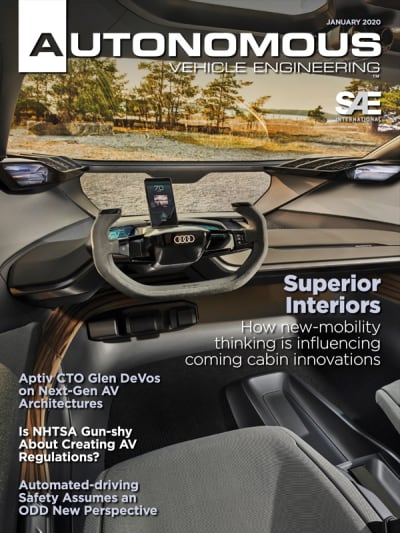
Inside this issue
Overview
The latest issue of Autonomous Vehicle Engineering delves into the rapidly evolving landscape of autonomous vehicle (AV) technology, highlighting key innovations, industry challenges, and future trends. This edition features a range of articles that explore the integration of advanced technologies, the importance of standardization, and the implications of new mobility concepts.
One of the standout features is the introduction of the LeddarEngine™, which is pivotal in enhancing automotive and mobility LiDAR technology. The magazine discusses the launch of the Leddar™ Pixell, a groundbreaking sensor designed to improve the perception capabilities of autonomous vehicles. This technology is expected to play a crucial role in enabling safer and more efficient navigation in complex driving environments.
The issue also addresses the challenges associated with wiring harnesses in AVs. As vehicles become more complex with the addition of numerous sensors and computing units, the weight and complexity of wiring harnesses increase significantly. The article emphasizes the need for a balance between centralized and distributed control units to optimize vehicle architecture. OEMs (Original Equipment Manufacturers) and Tier 1 suppliers are exploring lightweight materials and smaller wiring options to reduce harness weight, but they face hurdles in developing compatible terminals for these innovations.
In addition to hardware advancements, the magazine highlights the importance of software solutions in the development of AVs. The integration of E/E (electrical/electronic) software is crucial for optimizing module locations and facilitating rapid tradeoff studies. This digitalization effort aims to streamline the development process and enhance the overall efficiency of AV systems.
A significant focus of this issue is the need for standardization in AV technology. Bryan Salesky, CEO of Argo AI, emphasizes the demand for clearer terminology and definitions within the industry. The article discusses the role of SAE International's Standards Committees in addressing these needs, particularly in the context of micromobility devices such as e-bikes and scooters. Establishing a common language and framework is essential for fostering collaboration and innovation across the diverse ecosystem of mobility solutions.
The magazine also explores the changing dynamics of vehicle interiors influenced by new mobility concepts. The editorial discusses Audi's Trail AI quattro concept, which showcases a minimalist design approach with fewer physical controls, aiming to create a less distracting environment for drivers. This trend reflects a broader shift towards user-centric design in the automotive industry, where technology is seamlessly integrated into the driving experience.
Another article addresses the critical issue of safety in automated driving. It highlights the necessity of defining the Operational Design Domain (ODD) for AVs, which encompasses the various conditions and scenarios in which an autonomous vehicle can operate safely. The discussion underscores the importance of thorough testing and validation to ensure that AVs can handle the complexities of real-world driving.
The issue also touches on the regulatory landscape surrounding AV technology. It examines the influence of the auto industry on the National Highway Traffic Safety Administration (NHTSA) and the challenges of establishing effective regulations in a rapidly changing environment. As AV technology continues to advance, the need for adaptive regulatory frameworks becomes increasingly apparent.
In summary, this issue of Autonomous Vehicle Engineering provides a comprehensive overview of the current state of AV technology, highlighting key innovations, challenges, and the importance of standardization and safety. With contributions from industry leaders and experts, the magazine serves as a valuable resource for professionals in the automotive and mobility sectors, offering insights into the future of autonomous vehicles and the ongoing evolution of transportation. The integration of advanced technologies, coupled with a focus on user experience and safety, will shape the next generation of mobility solutions.
Articles
-
The Navigator
-
Features
The Key to Autonomous Vehicle Safety Is ODD
Aptiv Centralizing Computing Power to Speed Autonomous Vehicle Development
Who’s Making the Rules in the Fast-Moving AV Age?
New Digital Tools Driving Restructuring for Autonomy
Stories
Top Stories
INSIDERAerospace
 How Airbus is Using w-DED to 3D Print Larger Titanium Airplane Parts
NewsAutomotive
 Microvision Aquires Luminar, Plans Relationship Restoration, Multi-industry Push
INSIDERManufacturing & Prototyping
 A Next Generation Helmet System for Navy Pilots
INSIDERDefense
 New Raytheon and Lockheed Martin Agreements Expand Missile Defense Production
ArticlesAR/AI
 Accelerating Down the Road to Autonomy
Road ReadyDesign

Webcasts
Automotive
 Advantages of Smart Power Distribution Unit Design for Automotive...
Unmanned Systems
 Quiet, Please: NVH Improvement Opportunities in the Early Design...
Defense
 Cooling a New Generation of Aerospace and Defense Embedded...
Power
 Battery Abuse Testing: Pushing to Failure
Power
 A FREE Two-Day Event Dedicated to Connected Mobility
