




Making Martian Rocket Biofuel on Mars
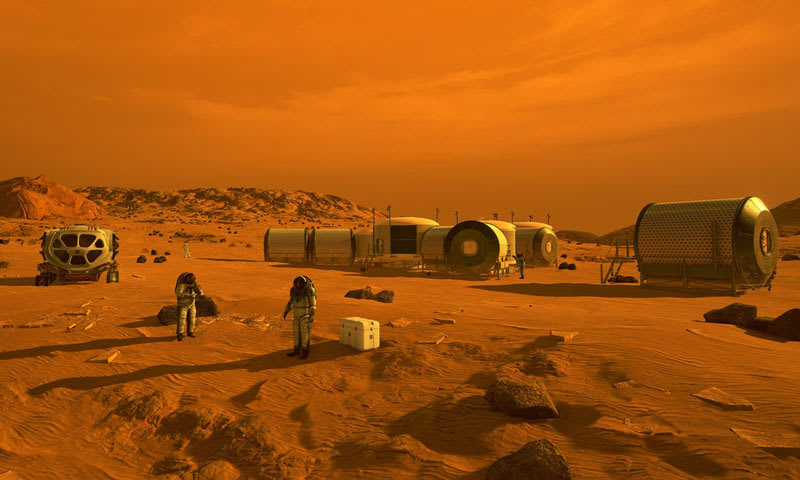
Researchers at Georgia Tech developed a concept that would make Martian rocket fuel, on Mars, that could be used to launch future astronauts back to Earth. The bioproduction process would use three resources native to the red planet: carbon dioxide, sunlight, and frozen water. It would also include transporting two microbes to Mars: algae and engineered E. coli.
The process begins by ferrying plastic materials to Mars that would be assembled into photobioreactors occupying the size of four football fields. Cyanobacteria would grow in the reactors via photosynthesis (which requires carbon dioxide). Enzymes in a separate reactor would break down the cyanobacteria into sugars, which could be fed to the E. coli to produce the rocket propellant.
The strategy uses 32% less power (but weighs three times more) than the proposed chemically enabled strategy of shipping methane from Earth and producing oxygen via chemical catalysis.
More From SAE Media Group

Aerospace Manufacturing and Machining INSIDER
RAMFIRE Project Develops, Tests 3D-Printed Aluminum Rocket Engine Nozzle

NASA Spinoff
Controlled Propulsion for Gentle Landings


Aerospace INSIDER
Breakthroughs in Testing Solid-Fuel Ramjets Advance Research
Tech Briefs
Hall Thrusters Could Be Key to Mars Exploration

Tech Briefs
5 Questions with DART's Dr. Cambioni
Aerospace INSIDER
Mars Helicopter Makes Historic First Flight
Aerospace & Defense Tech Briefs
Improving Electric Propulsion Thrusters for Future Spacecraft Missions

NASA Spinoff
Rocket Expertise Assists Transition to Green Energy
Aerospace INSIDER
Fuel-Efficient Engine for Cheaper, Lighter Spacecraft
NASA Spinoff
Water-Powered Engines Offer Satellite Mobility

Aerospace & Defense Tech Briefs
Orbex Debuts Innovative Smallsat Launch Vehicle


Motion Design INSIDER
A New Window into Earth’s Upper Atmosphere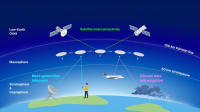
Motion Design INSIDER
MIT Engineers Develop a Fully 3D-Printed Electrospray Engine
Aerospace INSIDER
Blue Origin Rocket Reaches Intended Orbit on First Launch
Aerospace & Defense Tech Briefs
Electric Propulsion for a Nuclear-Powered Spacecraft
Aerospace INSIDER
Sticking the Landing on the Moon and Mars
Aerospace INSIDER
Orion Spacecraft Launched to Moon on Historic Artemis I Mission
Tech Briefs
Measuring Aggressive Launch Loads on Spacecraft
Top Stories
NewsRF & Microwave Electronics
 Microvision Aquires Luminar, Plans Relationship Restoration, Multi-industry Push
INSIDERAerospace
 A Next Generation Helmet System for Navy Pilots
INSIDERDesign
 New Raytheon and Lockheed Martin Agreements Expand Missile Defense Production
INSIDERMaterials
 How Airbus is Using w-DED to 3D Print Larger Titanium Airplane Parts
NewsPower
 Ford Announces 48-Volt Architecture for Future Electric Truck
ArticlesAR/AI

Webcasts
Electronics & Computers
 Cooling a New Generation of Aerospace and Defense Embedded...
Automotive
 Battery Abuse Testing: Pushing to Failure
Power
 A FREE Two-Day Event Dedicated to Connected Mobility
Unmanned Systems
 Quiet, Please: NVH Improvement Opportunities in the Early Design Cycle
Automotive
 Advantages of Smart Power Distribution Unit Design for Automotive &...
Energy
 Sesame Solar's Nanogrid Tech Promises Major Gains in Drone Endurance