




Military Aircraft Systems Technology

Bell Textron, Inc.
Fort Worth, TX
817-280-2011
www.bellflight.com
Bell Textron Inc., a Textron Inc. company, has unveiled design concepts for new aircraft systems for military applications that would use Bell’s High-Speed Vertical Take-Off and Landing (HSVTOL) technology as the company continues working toward next generation vertical lift aircraft. HSVTOL technology blends the hover capability of a helicopter with the speed, range, and survivability features of a fighter aircraft.
“Our technology investments have reduced risk and prepared us for rapid development of HSVTOL in a digital engineering environment, leveraging experience from a robust past of technology exploration and close partnerships with the Department of Defense and Research Laboratories,” said Jason Hurst, Bell's Vice President of Innovation.
Bell’s HSVTOL design concepts include the following features:
Low downwash hover capability
Jet-like cruise speeds over 400 kts
True runway independence and hover endurance
Scalability to the range of missions from unmanned personnel recovery to tactical mobility
Aircraft gross weights range from 4,000 lbs. to over 100,000 lbs.
Bell’s HSVTOL capability is critical to future mission needs offering a range of aircraft systems with enhanced runway independence, aircraft survivability, mission flexibility and enhanced performance over legacy platforms. With the convergence of tiltrotor aircraft capabilities, digital flight control advancements and emerging propulsion technologies, Bell is primed to evolve HSVTOL technology for modern military missions to serve the next generation of warfighters.
Bell has explored high-speed vertical lift aircraft technology for more than 85 years, pioneering innovative VTOL configurations like the X-14, X-22, XV-3 and XV-15 for NASA, the U.S Army and U.S. Air Force. The lessons learned from the XV-3 and XV-15 supported the development of the Bell-Boeing V-22 Osprey tiltrotor, a platform that changed the way the U.S. military conducts amphibious assault, long range infiltration and exfiltration, and resupply with a cruise speed and range twice that of the helicopters it replaced.
For Free Info Visit Here
More From SAE Media Group
Aerospace & Defense Tech Briefs
Air Force eVTOL Research and Development Programs Make Remote Pilot Progress
Aerospace & Defense Tech Briefs
High-Speed Vertical Take-Off and Landing Craft
Tech Briefs
Algorithms Improve Quadrotor Drone Performance
Aerospace & Defense Tech Briefs
Tiltrotor Aircraft: The CMV-22B Osprey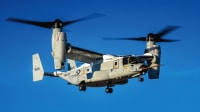
Aerospace & Defense Tech Briefs
Bell V-280 Valor, V-247 Vigilant Will Be Engined by Rolls-Royce
Aerospace & Defense Tech Briefs
Future Vertical Lift Aircraft
Aerospace & Defense Tech Briefs
Vertical Takeoff and Landing Drone
Aerospace & Defense Tech Briefs
Personal Aerial Vehicle Pilot Training
Aerospace & Defense Tech Briefs
MUSHER Demonstrates Manned-Unmanned Aircraft Teaming Applications
Tech Briefs
Anti-Phase Noise Suppression Rotor Technologies
Aerospace & Defense Tech Briefs
Autonomous Collaborative Platform
Aerospace & Defense Tech Briefs
Lockheed Martin’s Next-Gen, 360-Degree Vision System Flies on the Bell V-280 Valor
Aerospace & Defense Tech Briefs
Airbus to Fly Prototype eVTOL This Year
Aerospace & Defense Tech Briefs
MTSI’s Latest Project Gives Fixed-Wing Aircraft Vertical Cargo Lift Capabilities
Tech Briefs
Fixed-Wing Angle eVTOL
Aerospace & Defense Tech Briefs
Advanced Assembly Solutions for the Airbus RACER Joined-Wing Configuration
Aerospace & Defense Tech Briefs
Boeing to Modernize Spanish Chinook Fleet with Autonomous-Ready Avionics and Flight Control Systems

Aerospace & Defense Tech Briefs
Fabrication and Testing of High-Speed Single-Rotor and Compound-Rotor Systems
Tech Briefs
Aircraft Vertical Takeoff and Landing
Aerospace & Defense Tech Briefs
Small UAV Satcom System
Aerospace & Defense Tech Briefs
Light Attack Reconnaissance Helicopter Secures Vertical Lift Dominance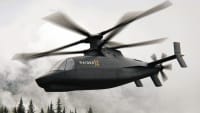
Aerospace & Defense Tech Briefs
Air Force Receives First Joby eVTOL
Aerospace & Defense Tech Briefs
Next Generation Airborne Navigation System
Aerospace & Defense Tech Briefs
Artificial Intelligence Could Reduce CV-22 Osprey Maintenance
Aerospace & Defense Tech Briefs
Design Software
Aerospace & Defense Tech Briefs
Multispectral Airborne Reconnaissance System
Aerospace & Defense Tech Briefs
Vertical Take-Off and Landing UAV
Aerospace & Defense Tech Briefs
Autonomous Black Hawk Helicopter
Top Stories
INSIDERManufacturing & Prototyping
 How Airbus is Using w-DED to 3D Print Larger Titanium Airplane Parts
NewsUnmanned Systems
 Microvision Aquires Luminar, Plans Relationship Restoration, Multi-industry Push
INSIDERAerospace
 A Next Generation Helmet System for Navy Pilots
ArticlesTransportation
 CES 2026: Bosch is Ready to Bring AI to Your (Likely ICE-powered) Vehicle
Road ReadyTransportation
 2026 Nissan Sentra Review: Putting the Pieces Together
NewsTransportation

Webcasts
Automotive
 Hydrogen Engines Are Heating Up for Heavy Duty
Automotive
 Advantages of Smart Power Distribution Unit Design for Automotive...
Automotive
 Quiet, Please: NVH Improvement Opportunities in the Early Design...
Energy
 Battery Abuse Testing: Pushing to Failure
Internet of Things
 A FREE Two-Day Event Dedicated to Connected Mobility
Defense
 SiPhog Technology: Enabling GPS‑Independent Flight for Uncrewed Aerial...