




Novel Method De-Ices Planes on the Fly
 How do you control ice formation on a plane, even when it’s in flight? A de-icing method exploits how frost grows on pillar structures to suspend ice as it forms into a layer that’s easier to remove.
The new water-repellent surface doesn’t require chemical coatings; instead, it uses a simple and durable structure in the form of aluminum, millimeter-sized pillars. Frost grows on top of the pillars, creating tiny “ice bridges” that trap air pockets underneath. These trapped air gaps cause the ice sheet to be suspended, lowering the amount of adhesion ice has to the surface.
More From SAE Media Group
Tech Briefs
Method Enables Wings to be De-Iced in Flight
Tech Briefs
Copolyimide Surface-Modifying Coating

Aerospace & Defense Tech Briefs
Cold Spray Technology
Aerospace INSIDER
New Coating Repels Ice from Any Surface
Aerospace INSIDER
Dual-Function Aircraft De-Icer Also Prevents Freezing
Aerospace & Defense Tech Briefs
Plasma Electrolytic Oxidation: The Future of Lightweight Designs in Aerospace and Defense
Tech Briefs
New Coatings Reduce Impact Ice Adhesion Strength

Tech Briefs
5 Ws of Ice-Shedding Coating

Photonics & Imaging Technology
Large Format Windows: From Material to Mission


Aerospace & Defense Tech Briefs
Progress on Zirconia-Polyurea Matrix Hybrid Composites
Medical Design Briefs
OEM Toll Processing Advances High-Value Products

Medical Design Briefs
Product Focus: Materials
Aerospace INSIDER
New Material Eliminates the Need for Aircraft Deicers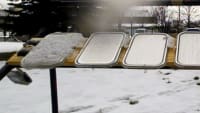
Aerospace INSIDER
3D-Printed Catalysts Propel Hypersonic Flight
Aerospace INSIDER
New Ice-Repellant Material Could Improve Aviation Safety
Aerospace & Defense Tech Briefs
Cold Sprayed Coatings with Dual Nanoparticle Reinforcements for Wear and Corrosion Protection

Aerospace & Defense Tech Briefs
Designing Sensory and Adaptive Composite Materials

Medical Design Briefs
Silicone Coating
Top Stories
INSIDERManufacturing & Prototyping
 How Airbus is Using w-DED to 3D Print Larger Titanium Airplane Parts
INSIDERManned Systems
 FAA to Replace Aging Network of Ground-Based Radars
NewsTransportation
 CES 2026: Bosch is Ready to Bring AI to Your (Likely ICE-powered) Vehicle
NewsSoftware
 Accelerating Down the Road to Autonomy
EditorialDesign
 DarkSky One Wants to Make the World a Darker Place
INSIDERMaterials
 Can This Self-Healing Composite Make Airplane and Spacecraft Components Last...
Webcasts
Defense
 How Sift's Unified Observability Platform Accelerates Drone Innovation
Automotive
 E/E Architecture Redefined: Building Smarter, Safer, and Scalable...
Power
 Hydrogen Engines Are Heating Up for Heavy Duty
Electronics & Computers
 Advantages of Smart Power Distribution Unit Design for Automotive...
Unmanned Systems
 Quiet, Please: NVH Improvement Opportunities in the Early Design...
