




Cyber Risk Assessment and Scoring Model for Small Unmanned Aerial Vehicles
Based on lessons learned from similar domains of aircraft operation, information technologies, cyber-physical systems, and cyber insurance, a cyber risk assessment methodology tailored for small UAVs is developed.
The desire of man to fly is almost as old as time itself. Since the dawn of flight, aircraft have evolved to meet new demands and innovations, through the 20th century and into the 21st. While UAVs have been around since the earliest days of aircraft, technology in the last two decades has allowed an explosion of options that allow for militaries and commercial organizations alike to consider the aerial automation of missions like never before. In particular, small UAVs provide a lower cost of entry and less overhead, with much of the same aerial advantages as larger vehicles.
As with all computer devices, small UAVs come with risks associated with their missions, both physical and cyber related. The physical risks of collisions and damage to structures or people is reflected in United States government regulations and licensing through the Federal Aviation Administration (FAA). In contrast, the cyber risks accepted by organizations and individuals has received very little attention and over-sight by regulators. Most organizations do incorporate some sort of cyber risk framework to manage risks, but these frameworks are reliant on lackluster risk assessments for small UAVs.
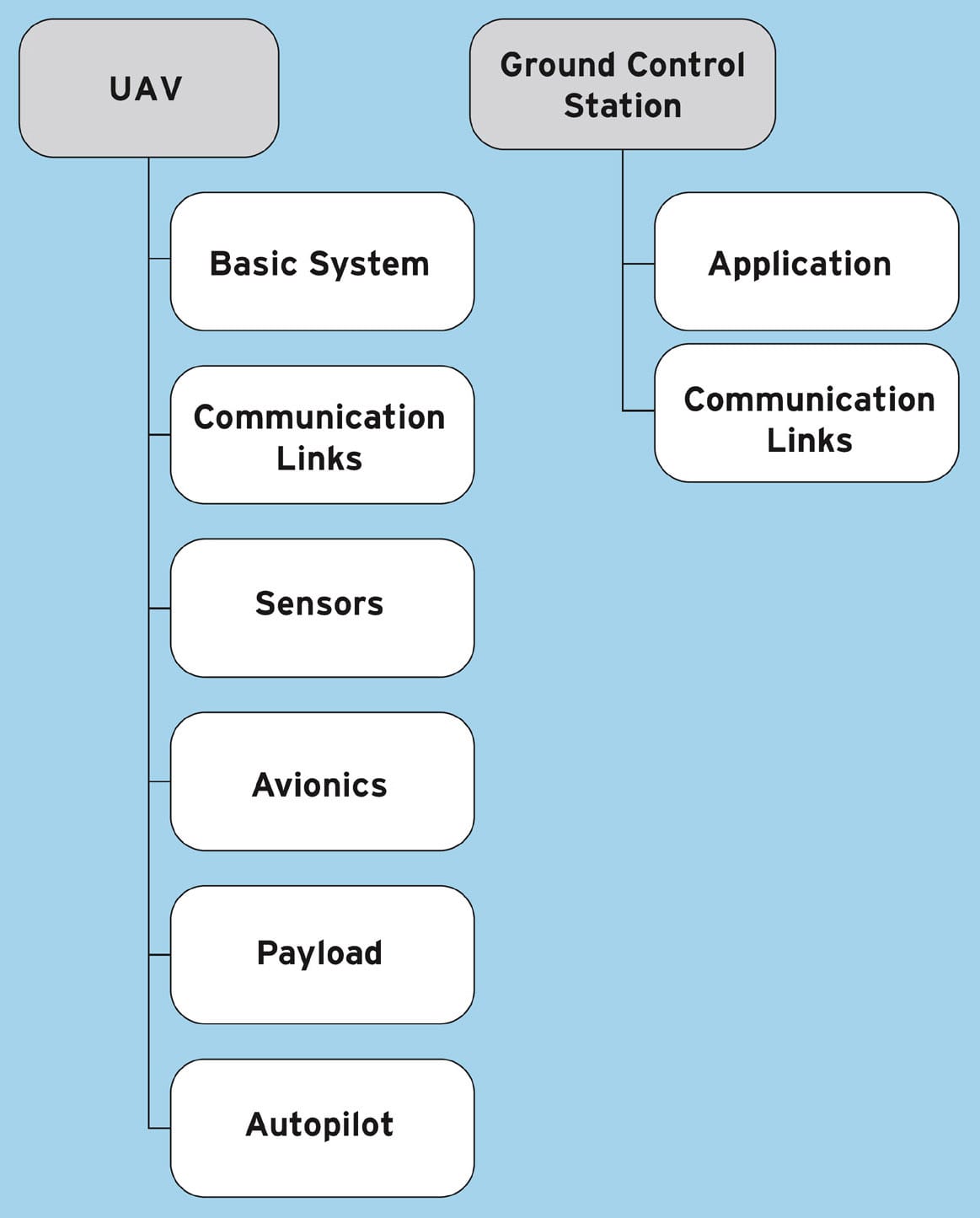
In some sense, manufacturers currently control small UAVs’ cyber security standards by setting their own levels of protection, which may not be acceptable with consumers. Organizations have little measurement or insight into the risks accepted with purchasing and operating these vehicles as there is no formal method of comparison, as may be seen with other vehicle safety. Additionally, while manufacturers may have a vested interest in protecting their devices from outside compromise, the cost of cyber security efforts and overhead of components and software compete with financial and physical constraints.
This research defines a new cyber risk assessment for small UAVs using the lessons learned from assessments in related systems and then tests and analyzes this new scoring system by presenting case studies that represent the breadth of models and mission scenarios for small UAVs. The research objectives of this work are as follows:
Assess whether any cyber or physical risk assessments of similar domains accurately quantify the cyber risk of small UAVs.
Determine the success criteria a small UAV cyber risk assessment should meet, based on similar domain assessments.
Define a new small UAV cyber risk assessment tool (assuming none exists).
Establish the objectives a hardware-in-the-loop simulation of a small UAV should meet to best bring awareness to potential vulnerabilities.
The hypothesis of this research is that no cyber risk assessment tool currently exists and no similar domain assessment accurately portrays the risk of small UAVs to its operators/owners. If none exist, a new tool will need to be built using the lessons learned and scoring models of similar domains that have seen success.
The approach consists of first analyzing and comparing many of the similar domains’ risk assessments for applicability to small UAVs and defining the best set of objectives for a new risk assessment based on the unique characteristics. Utilizing the closest risk assessment to the required need, a new cyber risk assessment specific to small UAVs will be defined with as little deviance from the scoring model as possible to maximize the value of the chosen tool’s lessons learned. The new tool will then be analyzed against a multitude of case studies to verify its ability to easily and accurately quantify associated risk of the vehicles to mission scenarios. Lastly, from the analysis of the case studies, a proposal for objectives that a hardware-in-the-loop simulation for small UAVs must meet will be presented.
The analysis of similar domains’ risk assessments assumes that all practical assessments have been discovered. It is expected that there are many risk assessments that are not public domain or unclassified that may relate to this research. This research also assumes that all publicly available specifications and configurations of utilized small UAVs (under 55 pounds per FAA regulations) are correct. This research is limited to risk assessments for only small UAV platforms due to the unique characteristics, though there may be benefits or applicability of the new tool to larger UAVs.
This work was done by Dillon M. Pettit for the Air Force Institute of Technology. For more information, download the Technical Support Package below. AFIT-0001
This Brief includes a Technical Support Package (TSP).
Cyber Risk Assessment and Scoring Model for Small Unmanned Aerial Vehicles
(reference AFIT-0001) is currently available for download from the TSP library.
Don't have an account?
More From SAE Media Group

Aerospace & Defense Tech Briefs
SAE Course Delivers an Introduction to the Latest Aviation Cybersecurity Essentials
Aerospace & Defense Tech Briefs
Assessment of Noncommercial Icing Prediction Capabilities for Army Applications
Tech Briefs
Air Traffic Simulation Tool
Aerospace & Defense Tech Briefs
Validation of Architecture Models for Coordination of Unmanned Air and Ground Vehicles via Experimentation
Tech Briefs
Algorithms Improve Quadrotor Drone Performance

Aerospace & Defense Tech Briefs
Navigating Regulatory Compliance for UAV Electronics Development
Aerospace & Defense Tech Briefs
Playing Defense — Uncertain Regulations Stall the Implementation of Counter-UAS Technology in The U.S.
Aerospace & Defense Tech Briefs
Unmanned Aircraft Must Rise Above Barriers for Commercial Applications
Aerospace & Defense Tech Briefs
AIA Predicts Flying Air Taxis, Supersonic Air Travel, and Space Industry for 2050
Aerospace & Defense Tech Briefs
The Role of Engineering Simulation in the Evolution of Unmanned Aircraft Systems
Software Tech Briefs
I-FORCAST: Rapid Flight Planning Tool
Aerospace & Defense Tech Briefs
New Method to Measure Wind Speed Could Unlock Drones’ Potential
Aerospace & Defense Tech Briefs
Improving Low-Altitude UAS Navigation
Aerospace & Defense Tech Briefs
Advancing Metrology at Mach Speed
Motion Design INSIDER
AI-Powered Vision System Helps Drones Navigate Safely
Aerospace & Defense Tech Briefs
Industry Invited to Participate in AeroTech Aerospace and Defense Technical Program
Aerospace & Defense Tech Briefs
Digital Twins: How The Digital Replica Concept Is Used By Robotic Systems
Aerospace & Defense Tech Briefs
New University-Led Air Force Center of Excellence Focuses on Securing Autonomous Systems Operating in Contested Environments
Aerospace & Defense Tech Briefs
Hybrid-Powered Unmanned Helicopter
Off-Highway Engineering
Addressing Electromagnetic Compatibility in the Context of Aircraft Electrification
Aerospace & Defense Tech Briefs
SAE International Launches Aerospace Technology Symposium at Japan Aerospace 2018
Aerospace & Defense Tech Briefs
Militaries Choose Marvin Test Solutions MTS-3060A with Enhanced Flight-Line Test Capabilities, Cybersecurity
Aerospace & Defense Tech Briefs
MUSHER Demonstrates Manned-Unmanned Aircraft Teaming Applications
Aerospace & Defense Tech Briefs
Unmanned Aircraft Systems to Support Environmental Applications within USACE Civil Works


Overview
The document is a master's thesis titled "Cyber Risk Assessment and Scoring Model for Small Unmanned Aerial Vehicles" authored by Captain Dillon M. Pettit, USAF, and completed at the Air Force Institute of Technology. The research addresses the increasing vulnerabilities associated with small unmanned aerial vehicles (UAVs), which are characterized by their small radar cross sections, low heat signatures, and diverse sensor capabilities. Despite their growing use in various applications, the security of these UAVs is often neglected, leaving consumers without adequate information regarding the hardware and software protections in place.
The thesis identifies a significant gap in the market: the absence of a standardized risk index for small UAVs. To fill this void, the author proposes a tailored cyber risk assessment methodology that draws from established practices in aircraft operation and information technology. This methodology aims to provide organizations with a means to evaluate the cybersecurity posture of small UAVs before acquisition, enabling them to make informed decisions based on a quantitative assessment of risk.
The research is structured around case studies of popular UAV models and various mission-environment scenarios, demonstrating the proposed assessment's effectiveness in meeting three key objectives: ease of use, breadth of application, and readability. By implementing this cyber risk assessment model, organizations can better compare and select UAVs that align with their operational needs while mitigating potential cybersecurity threats.
The document also discusses the broader implications of UAV security, emphasizing the need for increased awareness and proactive measures in the development and deployment of these technologies. The findings contribute to the ongoing discourse on cybersecurity in the context of emerging technologies, particularly in the realm of cyber-physical systems.
In conclusion, Captain Pettit's thesis provides a valuable framework for assessing the cyber risks associated with small UAVs, highlighting the importance of security in the rapidly evolving landscape of unmanned aerial systems. The proposed model not only addresses current vulnerabilities but also sets the stage for future research and development in UAV cybersecurity, ultimately enhancing the safety and reliability of these systems in various applications.
Top Stories
INSIDERManufacturing & Prototyping
 How Airbus is Using w-DED to 3D Print Larger Titanium Airplane Parts
INSIDERManned Systems
 FAA to Replace Aging Network of Ground-Based Radars
NewsTransportation
 CES 2026: Bosch is Ready to Bring AI to Your (Likely ICE-powered) Vehicle
NewsSoftware
 Accelerating Down the Road to Autonomy
EditorialDesign
 DarkSky One Wants to Make the World a Darker Place
INSIDERMaterials
 Can This Self-Healing Composite Make Airplane and Spacecraft Components Last...
Webcasts
Defense
 How Sift's Unified Observability Platform Accelerates Drone Innovation
Automotive
 E/E Architecture Redefined: Building Smarter, Safer, and Scalable...
Power
 Hydrogen Engines Are Heating Up for Heavy Duty
Electronics & Computers
 Advantages of Smart Power Distribution Unit Design for Automotive...
Unmanned Systems
 Quiet, Please: NVH Improvement Opportunities in the Early Design...
