




Aerospace & Defense Technology - February 2016
Inside this issue
Overview
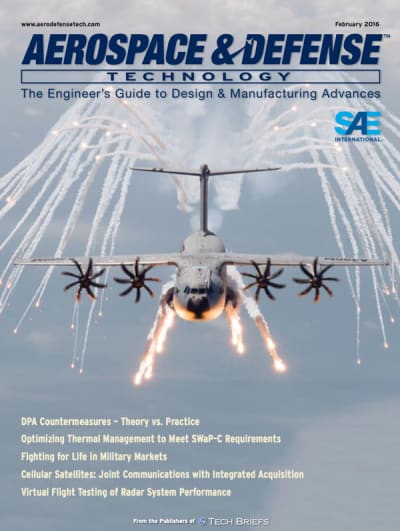
The February 2016 issue of Aerospace & Defense Technology presents a comprehensive exploration of current trends, technologies, and challenges in the aerospace and defense sectors. This edition is designed to inform industry professionals about the latest advancements and practices that are shaping the future of these critical fields.
Key Articles and Topics
-
DPA Countermeasures – Theory vs. Practice: This article delves into the complexities of Digital Precedence Access (DPA) countermeasures, examining the theoretical frameworks and practical applications. It discusses the importance of DPA in modern military operations, highlighting how effective countermeasures can enhance operational security and effectiveness. The piece emphasizes the need for continuous adaptation and innovation in countermeasure strategies to keep pace with evolving threats.
-
Optimizing Thermal Management to Meet SWaP-C Requirements: As systems in aerospace and defense become more compact and integrated, managing thermal performance is crucial. This article addresses the challenges of thermal management in the context of Size, Weight, Power, and Cost (SWaP-C) requirements. It explores innovative materials and technologies that can help engineers design systems that not only meet performance standards but also adhere to stringent SWaP-C criteria. The discussion includes case studies and examples of successful thermal management solutions in various applications.
-
Fighting for Life in Military Markets: This piece focuses on the competitive landscape of military markets, where companies vie for contracts and partnerships. It highlights the strategies that businesses are employing to secure their positions, including innovation, collaboration, and understanding the unique needs of military clients. The article also discusses the impact of budget constraints and shifting defense priorities on market dynamics, urging companies to remain agile and responsive to changes in demand.
-
Cellular Satellites: Joint Communications with Integrated Acquisition: The integration of cellular satellite technology into military communications is a game-changer. This article examines how cellular satellites can enhance joint communications capabilities, providing reliable and secure connections for military operations. It discusses the technical aspects of integrating these systems and the benefits they offer, such as improved data transmission rates and reduced latency. The potential for cellular satellites to support real-time decision-making in the field is a key focus.
-
Virtual Flight Testing of Radar System Performance: With advancements in simulation technology, virtual flight testing has emerged as a vital tool for evaluating radar system performance. This article explores the methodologies and technologies used in virtual testing environments, emphasizing their advantages over traditional testing methods. It discusses how virtual flight testing can reduce costs, accelerate development timelines, and improve the accuracy of performance assessments. The piece also highlights case studies where virtual testing has successfully replaced or supplemented physical flight tests.
Editorial Insights
The editorial section features contributions from key figures in the industry, including William Visnic, Bruce A. Bennett, and others. They provide insights into the overarching trends affecting the aerospace and defense sectors, such as the increasing reliance on technology, the importance of cybersecurity, and the need for sustainable practices. The editors stress the importance of innovation and collaboration among industry stakeholders to address the challenges posed by rapid technological advancements and changing geopolitical landscapes.
Industry Trends and Future Directions
Throughout the issue, several recurring themes emerge, reflecting the current state and future directions of the aerospace and defense industries:
-
Innovation and Technology Integration: The need for continuous innovation is paramount, as companies strive to integrate new technologies into existing systems. This includes advancements in materials science, data analytics, and communication technologies.
-
Cost Efficiency and SWaP-C Optimization: As budgets tighten, there is a growing emphasis on developing systems that are not only effective but also cost-efficient. The SWaP-C framework is increasingly guiding design and engineering decisions.
-
Collaboration and Partnerships: The complexity of modern military operations necessitates collaboration between various stakeholders, including government agencies, private companies, and international partners. Building strong partnerships is essential for success in this competitive landscape.
-
Cybersecurity: With the increasing digitization of military systems, cybersecurity has become a critical concern. The issue highlights the need for robust security measures to protect sensitive data and ensure operational integrity.
Conclusion
The February 2016 issue of Aerospace & Defense Technology serves as a vital resource for professionals in the aerospace and defense sectors. By addressing key challenges, showcasing innovative solutions, and providing insights into industry trends, this edition equips readers with the knowledge needed to navigate the complexities of these dynamic fields. As the industry continues to evolve, staying informed and adaptable will be crucial for success.
Features
-
Application Briefs
-
Technologies
Aerion Progresses on the Supersonic AS2 with Help From Airbus
Uncovering Safer Solutions for Aircraft Corrosion Prevention
GE’s Clean-Sheet Turboprop Engine to Launch with Textron Aviation
-
Articles
DPA Countermeasures — Theory vs. Practice
A Hardware-Centric Approach to Countering Side-Channel Threats
Optimizing Thermal Management to Meet SWaP-C Requirements
Fighting for Life in Military Markets
Clamoring for More Entertainment
Cellular Satellites: Joint Communications with Integrated Acquisition
Tech Briefs
-
Bio-Medical
-
Information Sciences
Multi-Temporal Analysis of Underbody IED Theater Events on Ground Vehicles
Products
Top Stories
INSIDERManufacturing & Prototyping
 How Airbus is Using w-DED to 3D Print Larger Titanium Airplane Parts
INSIDERManned Systems
 FAA to Replace Aging Network of Ground-Based Radars
NewsTransportation
 CES 2026: Bosch is Ready to Bring AI to Your (Likely ICE-powered) Vehicle
NewsSoftware
 Accelerating Down the Road to Autonomy
EditorialDesign
 DarkSky One Wants to Make the World a Darker Place
INSIDERMaterials
 Can This Self-Healing Composite Make Airplane and Spacecraft Components Last...
Webcasts
Defense
 How Sift's Unified Observability Platform Accelerates Drone Innovation
Automotive
 E/E Architecture Redefined: Building Smarter, Safer, and Scalable...
Power
 Hydrogen Engines Are Heating Up for Heavy Duty
Electronics & Computers
 Advantages of Smart Power Distribution Unit Design for Automotive...
Unmanned Systems
 Quiet, Please: NVH Improvement Opportunities in the Early Design...
