




Nontoxic, Salt-Based Propellant Could Power Rockets
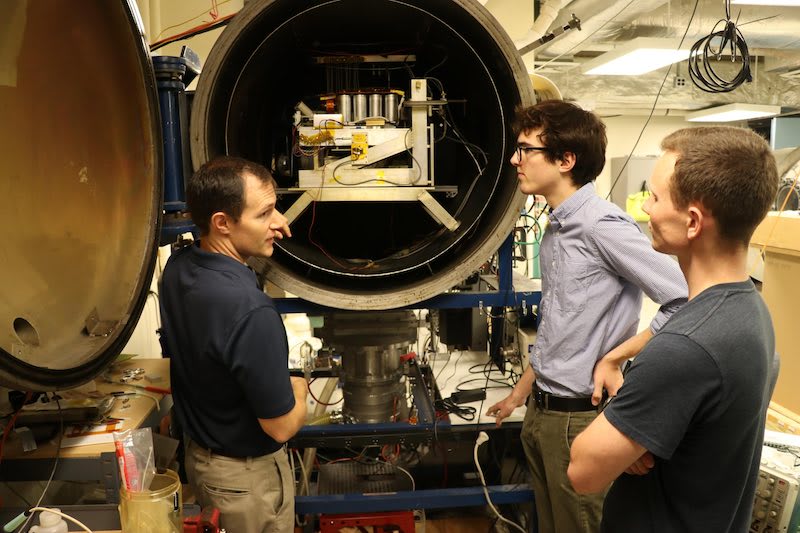
In smaller spacecraft such as CubeSat satellites, a salt-based monopropellant is showing promise. The propellant, called FAM-110A, is a mixture of two commercially available salts. It can be used in a combined chemical-electric thruster.
A rocket engine using the propellant could be practical at almost any pressure level; however, it also leaves a significant amount of liquid residue after it burns. This is undesirable because it means that the combustion is incomplete. The formulation requires changes in order to improve efficiency of its combustion.
More From SAE Media Group
Aerospace INSIDER
Safer Electric Solid Propellants for Rocket Engines
Aerospace & Defense Tech Briefs
Electric Propulsion for a Nuclear-Powered Spacecraft
NASA Spinoff
Water-Powered Engines Offer Satellite Mobility
Aerospace & Defense Tech Briefs
Prototype Hypersonic Defense Engine

Aerospace INSIDER
Firefly Alpha Rocket Loses Engine Nozzle During Launch
Aerospace & Defense Tech Briefs
A New Clean Room for Missile and Satellite Propulsion Components
Aerospace & Defense Tech Briefs
Thrust in Space - The Nuances of Thruster Valve Design

Aerospace INSIDER
Mission Will Test Drag Sail to Bring Rocket Back to Earth
Aerospace INSIDER
Safe, Inexpensive Way to Propel CubeSats
Aerospace Manufacturing and Machining INSIDER
3D Printed Rocket Engine Parts Survive 23 Hot-Fire Tests
Aerospace INSIDER
NASA Tests New Green Propellants for Satellites
Motion Design INSIDER
MIT Engineers Develop a Fully 3D-Printed Electrospray Engine
Aerospace Manufacturing and Machining INSIDER
Advanced Manufactured Solid Rocket Motor Completes Latest Flight Test
Tech Briefs
Spacecraft Propulsion via Nuclear Power
Tech Briefs
A New Way to Launch Rockets: Microwave Power

Motion Design INSIDER
Plasma Thrusters Used on Satellites Could be Much More Powerful
NASA Spinoff
Controlled Propulsion for Gentle Landings
Aerospace & Defense Tech Briefs
Hybrid Propulsion Systems
Aerospace INSIDER
Fuel-Efficient Engine for Cheaper, Lighter Spacecraft
Test & Measurement/Sensors INSIDER
NASA Tests 3D-Printed Rocket Fuel Pump
Aerospace Manufacturing and Machining INSIDER
Sentinel Missile Design and Manufacturing Processes Validated
Tech Briefs INSIDER
The Newest Way to Propel Nanosatellites? Water.
Podcasts
Rockets
Top Stories
INSIDERManned Systems
 How Airbus is Using w-DED to 3D Print Larger Titanium Airplane Parts
INSIDERAerospace
 FAA to Replace Aging Network of Ground-Based Radars
NewsUnmanned Systems
 Microvision Aquires Luminar, Plans Relationship Restoration, Multi-industry Push
NewsDesign
 CES 2026: Bosch is Ready to Bring AI to Your (Likely ICE-powered) Vehicle
NewsSoftware
 Accelerating Down the Road to Autonomy
INSIDERManned Systems
 Can This Self-Healing Composite Make Airplane and Spacecraft Components Last...
Webcasts
Power
 Hydrogen Engines Are Heating Up for Heavy Duty
Transportation
 Advantages of Smart Power Distribution Unit Design for Automotive...
Automotive
 Quiet, Please: NVH Improvement Opportunities in the Early Design...
Power
 A FREE Two-Day Event Dedicated to Connected Mobility
Connectivity
 E/E Architecture Redefined: Building Smarter, Safer, and Scalable Vehicles
Manufacturing & Prototyping
 How Sift's Unified Observability Platform Accelerates Drone Innovation