




Aerospace & Defense Technology - April 2020
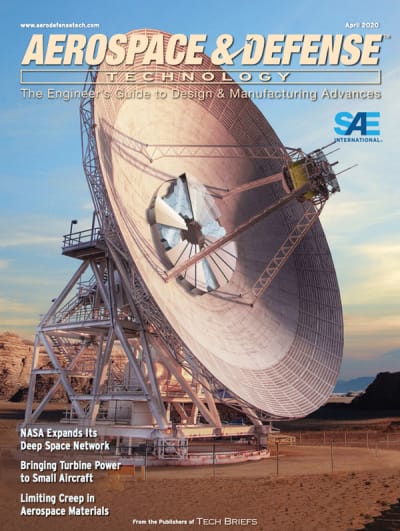
Inside this issue
Overview
The April 2020 issue of Aerospace & Defense Technology presents a comprehensive overview of significant advancements and topics within the aerospace and defense sectors. This edition highlights key innovations, industry trends, and technological developments that are shaping the future of aerospace engineering and defense capabilities.
Key Features and Articles
-
NASA Expands Its Deep Space Network: This article discusses NASA's ongoing efforts to enhance its Deep Space Network (DSN), which is crucial for communication with spacecraft exploring the solar system. The expansion aims to improve data transmission rates and increase the reliability of communications with missions such as Mars rovers and interplanetary probes. The DSN's upgrades include new antennas and advanced technology to support future missions, ensuring that NASA can maintain contact with its farthest-reaching spacecraft.
-
Bringing Turbine Power to Small Aircraft: The issue explores the integration of turbine engines in small aircraft, a shift that promises to enhance performance and efficiency. Turbine engines are known for their reliability and power-to-weight ratio, making them an attractive option for general aviation. The article examines the benefits of turbine technology, including reduced maintenance costs and improved fuel efficiency, as well as the challenges of retrofitting existing aircraft and the regulatory landscape surrounding this transition.
-
Limiting Creep in Aerospace Materials: Creep, the tendency of materials to deform permanently under the influence of mechanical stress, is a critical concern in aerospace applications where materials are subjected to high temperatures and loads. This article delves into innovative materials and engineering techniques designed to mitigate creep. It discusses the development of advanced alloys and composites that can withstand extreme conditions, thereby enhancing the longevity and safety of aerospace components.
Simulation Tools for Design Optimization: The issue highlights the role of simulation tools, such as COMSOL Multiphysics®, in optimizing aerospace designs. These tools allow engineers to model complex physical phenomena and predict how designs will perform under various conditions. The article emphasizes the importance of simulation in reducing development time and costs, enabling more efficient design processes, and improving overall product performance.
-
Industry Insights and Trends: The magazine also features insights from industry experts on current trends affecting the aerospace and defense sectors. Topics include the impact of emerging technologies like artificial intelligence and machine learning on defense systems, the growing importance of cybersecurity in aerospace applications, and the shift towards sustainable aviation practices. These discussions provide a broader context for understanding the challenges and opportunities facing the industry.
-
Profiles of Key Players: The issue includes profiles of influential companies and individuals in the aerospace and defense fields. These profiles highlight their contributions to innovation, research, and development, showcasing how they are driving progress in the industry. The magazine emphasizes collaboration among various stakeholders, including government agencies, private companies, and research institutions, as essential for advancing aerospace technology.
Subscription and Access Information
The magazine is published by Tech Briefs Media Group, an SAE International Company, and is available in both print and digital formats. Subscriptions are free for qualified subscribers, while non-qualified subscribers can access the magazine for a fee. The digital edition offers additional features, such as easy navigation and access to past issues.
Conclusion
The April 2020 issue of Aerospace & Defense Technology serves as a valuable resource for professionals, researchers, and enthusiasts in the aerospace and defense sectors. With its focus on cutting-edge technology, industry trends, and expert insights, the magazine provides a comprehensive look at the current state and future direction of aerospace engineering. Readers can expect to gain a deeper understanding of the challenges and innovations that are shaping the industry, making it an essential read for anyone interested in the field.
Features
-
Application Briefs
40 Unmanned Aircraft System Offers Superior Surveillance Imagery
42 Battle Tank Protection Systems Outfit Four Brigades of Army Tanks
42 Secure Optical Mobile Local Communications Systems Support Royal Navy
43 Lethal Loitering System Meets U.S. Military Requirements
44 Light Attack Reconnaissance Helicopter Secures Vertical Lift Dominance
-
Articles
6 How to Install Coiled Spring Pins
10 Ruggedizing Coaxial and Fiber Optic Cable Assemblies from Mechanical Strain
16 Bringing Turbine Power to Small Aircraft
21 Limiting Creep in Aerospace Materials
29 NASA Prepares for the Moon and Mars with Expanded Deep Space Network
Tech Briefs
-
Sensors
32 Deformation Sensing in Soft Bio-Surrogate Materials
34 Real Time Physiological Status Monitoring
38 Agile Robust Autonomy: Inspired by Connecting Natural Flight and Biological Sensors
-
Semiconductors & ICs
Products
Top Stories
NewsSensors/Data Acquisition
 Microvision Aquires Luminar, Plans Relationship Restoration, Multi-industry Push
INSIDERRF & Microwave Electronics
 A Next Generation Helmet System for Navy Pilots
INSIDERWeapons Systems
 New Raytheon and Lockheed Martin Agreements Expand Missile Defense Production
NewsAutomotive
 Ford Announces 48-Volt Architecture for Future Electric Truck
INSIDERAerospace
 Active Strake System Cuts Cruise Drag, Boosts Flight Efficiency
ArticlesTransportation

Webcasts
Aerospace
 Cooling a New Generation of Aerospace and Defense Embedded...
Energy
 Battery Abuse Testing: Pushing to Failure
Power
 A FREE Two-Day Event Dedicated to Connected Mobility
Automotive
 Quiet, Please: NVH Improvement Opportunities in the Early Design Cycle
Electronics & Computers
 Advantages of Smart Power Distribution Unit Design for Automotive &...
Unmanned Systems
 Sesame Solar's Nanogrid Tech Promises Major Gains in Drone Endurance