




Aerospace & Defense Technology - February 2015
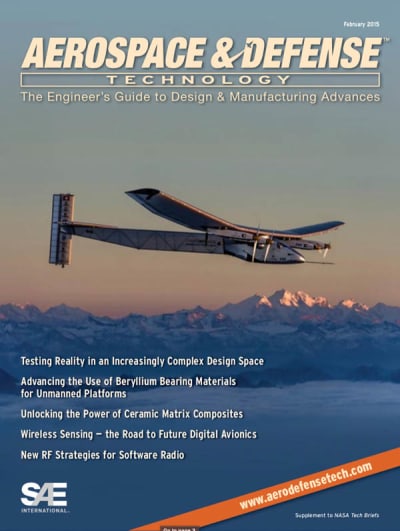
Inside this issue
Overview
The February 2015 issue of Aerospace & Defense Technology presents a comprehensive exploration of advancements and innovations in the aerospace and defense sectors. This edition features a variety of articles that delve into cutting-edge technologies, materials, and methodologies that are shaping the future of these industries.
Key Highlights:
-
Advancing the Use of Beryllium Bearing Materials for Unmanned Platforms: This article discusses the significant role of beryllium bearing materials in enhancing the performance and reliability of unmanned aerial vehicles (UAVs). Beryllium's unique properties, such as its lightweight nature and high stiffness, make it an ideal choice for components that require durability and precision. The article outlines the challenges and solutions in integrating these materials into UAV designs, emphasizing their potential to improve operational efficiency and extend mission capabilities.
-
Unlocking the Power of Ceramic Matrix Composites: Ceramic matrix composites (CMCs) are highlighted for their exceptional thermal resistance and lightweight characteristics, making them suitable for high-performance aerospace applications. The article explores the manufacturing processes of CMCs, their advantages over traditional materials, and their applications in turbine engines and other critical components. The potential for CMCs to reduce weight while maintaining structural integrity is a focal point, showcasing their importance in the quest for more efficient aircraft.
-
Wireless Sensing — The Road to Future Digital Avionics: This piece examines the evolution of wireless sensing technologies and their implications for digital avionics systems. The integration of wireless sensors can lead to significant improvements in data collection, system monitoring, and overall aircraft performance. The article discusses the challenges of implementing wireless technologies in aviation, including issues of reliability, security, and data integrity, while also highlighting successful case studies and future trends in this area.
New RF Strategies for Software Radio: The article on RF strategies for software-defined radio (SDR) addresses the growing need for flexible and adaptable communication systems in defense applications. SDR technology allows for the reconfiguration of radio systems to meet varying operational requirements, enhancing communication capabilities in dynamic environments. The article outlines the latest advancements in RF design and the importance of software algorithms in optimizing radio performance.
-
Supplement to NASA Tech Briefs: This issue includes a supplement featuring insights from NASA Tech Briefs, which provides a glimpse into the latest research and technological developments emerging from NASA. The supplement highlights innovations that could have far-reaching implications for both aerospace and defense applications, showcasing the collaborative efforts between government agencies and private industry.
-
Product Innovations: The magazine also features a range of product innovations relevant to the aerospace and defense sectors. Notable mentions include advancements in simulation software, materials testing equipment, and manufacturing technologies that are designed to enhance the efficiency and effectiveness of aerospace operations. These products are essential for engineers and designers looking to stay at the forefront of technology in their respective fields.
-
Expert Insights and Editorial Contributions: The editorial team, led by Kevin Jost, provides expert insights into the current state of the aerospace and defense industries. The issue includes contributions from various editors and industry experts, offering diverse perspectives on the challenges and opportunities facing the sector. Their analyses help contextualize the technological advancements discussed throughout the magazine.
-
Navigational Features: The magazine is designed for easy navigation, with a user-friendly interface that allows readers to quickly access different sections, including the table of contents, specific articles, and additional resources. This enhances the reading experience, making it easier for professionals to find relevant information efficiently.
In summary, the February 2015 issue of Aerospace & Defense Technology serves as a vital resource for industry professionals, providing in-depth analyses of emerging technologies and materials that are set to revolutionize the aerospace and defense landscapes. With a focus on innovation, this edition not only highlights current advancements but also sets the stage for future developments that will shape the industry for years to come. Whether it's through the use of advanced materials like beryllium and ceramic composites or the integration of wireless sensing and software-defined radio technologies, the magazine underscores the importance of staying informed and adaptable in a rapidly evolving field.
Features
-
Application Briefs
Tracking WiFi Signals to Passively See Through Walls
-
Technologies
Toho Tenax Develops 'Super-Heat-Resistant' Prepreg for Engine Apps
Sikorsky’s All-New Raider Helicopter Prototype is Ready to Fly
-
Articles
Advancing the Use of Beryllium Bearing Materials for Unmanned Platforms
Testing Reality in an Increasingly Complex Design Space
Unlocking the Power of Ceramic Matrix Composites
Tech Briefs
-
Information Sciences
Products
Top Stories
NewsSensors/Data Acquisition
 Microvision Aquires Luminar, Plans Relationship Restoration, Multi-industry Push
INSIDERRF & Microwave Electronics
 A Next Generation Helmet System for Navy Pilots
INSIDERWeapons Systems
 New Raytheon and Lockheed Martin Agreements Expand Missile Defense Production
NewsAutomotive
 Ford Announces 48-Volt Architecture for Future Electric Truck
INSIDERAerospace
 Active Strake System Cuts Cruise Drag, Boosts Flight Efficiency
ArticlesTransportation

Webcasts
Aerospace
 Cooling a New Generation of Aerospace and Defense Embedded...
Energy
 Battery Abuse Testing: Pushing to Failure
Power
 A FREE Two-Day Event Dedicated to Connected Mobility
Automotive
 Quiet, Please: NVH Improvement Opportunities in the Early Design Cycle
Electronics & Computers
 Advantages of Smart Power Distribution Unit Design for Automotive &...
Unmanned Systems
 Sesame Solar's Nanogrid Tech Promises Major Gains in Drone Endurance