




Learning-Based Controller Uses AI to Land Multi-Rotor Drones

Landing multi-rotor drones smoothly is difficult. Complex turbulence is created by the airflow from each rotor bouncing off the ground as the ground grows closer during descent. Drones typically wobble and inch slowly toward a landing until power is finally cut and they drop the remaining distance to the ground.
Caltech artificial intelligence experts developed the Neural Lander, a learning-based controller that helps drones fly more smoothly and safely, especially in the presence of unpredictable wind gusts. It also helps reduce battery power since drones can land more quickly.
More From SAE Media Group
Tech Briefs
AFRL’s Autonomous Aircraft Experimentation
Tech Briefs
AUVSI XPONENTIAL 2019: Air Force Technology
Aerospace INSIDER
Engineers Assess Flow Quality in Wind Tunnel Test Facility
Tech Briefs
Bio-Inspired Wing Design for Small Drones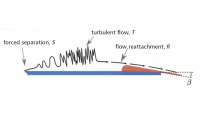

Aerospace & Defense Tech Briefs
Uncrewed Solar Aircraft Passes Key Ground Tests
Tech Briefs
Fluid Mechanics Comes to Life in 3D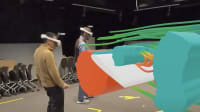
Motion Design INSIDER
Helping Robots Make Good Decisions in Real Time
Aerospace & Defense Tech Briefs
Helsing’s New CA-1 Europa Autonomous Fighter Jet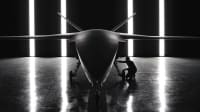
Aerospace & Defense Tech Briefs
Digital Twins: How The Digital Replica Concept Is Used By Robotic Systems
NASA Spinoff
Biometric Sensors Optimize Workouts
Aerospace & Defense Tech Briefs
AI Algorithms Pilot X-62A in First Aerial Dogfight
Aerospace & Defense Tech Briefs
Counter-Drone Technology

Aerospace & Defense Tech Briefs
AI Co-Pilot Enhances Human Precision for Safer Aviation
Aerospace & Defense Tech Briefs
Will Generative AI Transform Robotics?


Aerospace INSIDER
Bird-Inspired Unmanned Aircraft Show Higher Efficiency and Endurance
Aerospace & Defense Tech Briefs
Educating UGVs
Robotics & Automation INSIDER
Innovative Robot Navigation Inspired by Brain Function Boosts Efficiency and Accuracy
Aerospace & Defense Tech Briefs
AI Algorithms Fly Valkyrie XQ-58A
Aerospace & Defense Tech Briefs
The Future of Automated Guided Vehicles for Aerospace and Defense
Aerospace & Defense Tech Briefs
VISTA X-62
Aerospace & Defense Tech Briefs
Influence of Leading-Edge Oscillatory Blowing on Time-Accurate Dynamic Store Separation
Aerospace INSIDER
Air Force Launches New NIPRGPT Generative AI Tool
Top Stories
INSIDERManufacturing & Prototyping
 How Airbus is Using w-DED to 3D Print Larger Titanium Airplane Parts
INSIDERManned Systems
 FAA to Replace Aging Network of Ground-Based Radars
NewsTransportation
 CES 2026: Bosch is Ready to Bring AI to Your (Likely ICE-powered) Vehicle
NewsSoftware
 Accelerating Down the Road to Autonomy
EditorialDesign
 DarkSky One Wants to Make the World a Darker Place
INSIDERMaterials
 Can This Self-Healing Composite Make Airplane and Spacecraft Components Last...
Webcasts
Defense
 How Sift's Unified Observability Platform Accelerates Drone Innovation
Automotive
 E/E Architecture Redefined: Building Smarter, Safer, and Scalable...
Power
 Hydrogen Engines Are Heating Up for Heavy Duty
Electronics & Computers
 Advantages of Smart Power Distribution Unit Design for Automotive...
Unmanned Systems
 Quiet, Please: NVH Improvement Opportunities in the Early Design...
