




Optimizing Winglets for More Efficient Flight

Airplane winglets reduce drag, which can translate to higher speed or to allow a pilot to throttle back and save fuel. It also helps to reduce wingtip vortices that can be problematic for airplanes flying in their wake. Although winglets have been around since the mid-1970s, there is still a wide variety of shapes, sizes, and angles.
Researchers developed an algorithm that generates a wing that has the minimum drag, and ultimately will be more efficient. The integrated optimization framework will assist the current state of low-speed wing design and may also result in an improvement over the current conventional wing designs.
More From SAE Media Group
Tech Briefs
Winglet with Injected Flow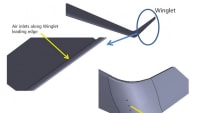
Tech Briefs
Algorithms Improve Quadrotor Drone Performance
Aerospace INSIDER
Turbulence Model Could Enhance Rotorcraft
Aerospace INSIDER
Slim Wing Can Reduce Aircraft Fuel Use and Emissions by 50%
Autonomous Vehicle Engineering
The Electric, Autonomous Revolution Lifts Off

Aerospace INSIDER
New DARPA X-Plane Will Have No Moving Control Surfaces
Aerospace & Defense Tech Briefs
Designing a High-Speed Decoy Unmanned Aerial Vehicle (UAV)
Aerospace INSIDER
Study Could Help Aircraft Avoid Dynamic Stall

Aerospace INSIDER
"Fused Reality" Combines Simulation and Flying to Train Pilots
Aerospace Manufacturing and Machining INSIDER
Virtual Flight-Test Campaign Paving Way for A321XLR’s First Flight
Aerospace INSIDER
NASA Tests Aircraft Wing Coatings that Slough Bug Guts

Aerospace INSIDER
Production Ready B-21 Bomber on Track for First Flight This Year
Aerospace INSIDER
Memory Metals Shape the Evolution of Aviation
Tech Briefs
Wing Shape Design Reduces Vortex and Wake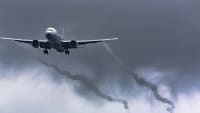
Aerospace INSIDER
Ducted Fans for Aircraft Propulsion
Aerospace INSIDER
NASA Test Flights Will Study Improved Efficiency of Supersonic Aircraft
Aerospace INSIDER
Accelerating Climate-Compatible Aircraft Design with AI
Aerospace & Defense Tech Briefs
How to Get Advanced Air Mobility into the Sky
Aerospace INSIDER
NASA Tests Green Aviation Technology
Aerospace INSIDER
NASA Alloy Could Fold Wings in Flight
Motion Design INSIDER
Tailless Jet Flies Free with Novel Control Technique

Aerospace & Defense Tech Briefs
MUSHER Demonstrates Manned-Unmanned Aircraft Teaming Applications
Aerospace INSIDER
Shape-Changing Wing Flap Reduces Drag and Noise
Aerospace Manufacturing and Machining INSIDER
Collins Aerospace Builds $18M Ram Air Turbine Wind Tunnel Test Facility
Top Stories
INSIDERManufacturing & Prototyping
 How Airbus is Using w-DED to 3D Print Larger Titanium Airplane Parts
INSIDERManned Systems
 FAA to Replace Aging Network of Ground-Based Radars
NewsTransportation
 CES 2026: Bosch is Ready to Bring AI to Your (Likely ICE-powered) Vehicle
NewsSoftware
 Accelerating Down the Road to Autonomy
EditorialDesign
 DarkSky One Wants to Make the World a Darker Place
INSIDERMaterials
 Can This Self-Healing Composite Make Airplane and Spacecraft Components Last...
Webcasts
Defense
 How Sift's Unified Observability Platform Accelerates Drone Innovation
Automotive
 E/E Architecture Redefined: Building Smarter, Safer, and Scalable...
Power
 Hydrogen Engines Are Heating Up for Heavy Duty
Electronics & Computers
 Advantages of Smart Power Distribution Unit Design for Automotive...
Unmanned Systems
 Quiet, Please: NVH Improvement Opportunities in the Early Design...
