




De-Icing Without Power or Chemicals
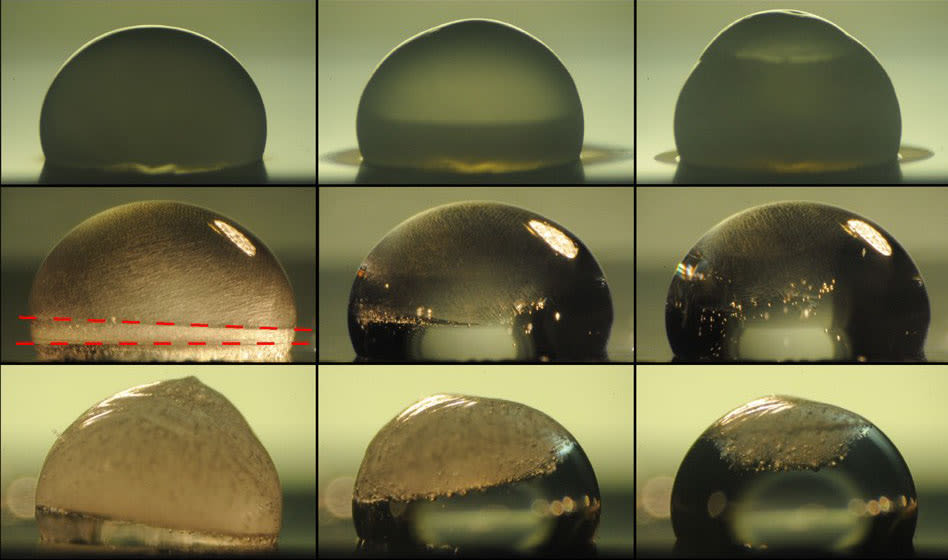
A buildup of ice on an airplane wing can cause catastrophic failure. But preventing that buildup usually requires energy-intensive heating systems or chemical sprays that are environmentally harmful. A new system, based on a three-layered material, collects solar radiation, converts it to heat, and spreads that heat around so that the melting is not just confined to the areas exposed directly to the sunlight.
Once applied, it requires no further action or power source. It can even do its de-icing work at night using artificial lighting. The three layers, all made of inexpensive commercially available material, are bonded together, and then bonded to the surface that needs to be protected.
More From SAE Media Group
Tech Briefs
Method Enables Wings to be De-Iced in Flight
Tech Briefs
5 Ws of Ice-Shedding Coating
Aerospace INSIDER
Novel Method De-Ices Planes on the Fly
Aerospace INSIDER
Wing Anti-Frosting Fights Ice with Ice
Aerospace INSIDER
Dual-Function Aircraft De-Icer Also Prevents Freezing
Aerospace INSIDER
New Material Eliminates the Need for Aircraft Deicers

Aerospace & Defense Tech Briefs
Beyond Boundaries: Elevating Aerospace Design with Fluorosilicones

Aerospace INSIDER
New Ice-Repellant Material Could Improve Aviation Safety
Tech Briefs
Leaf-Inspired Surface Prevents Frost Formation
Tech Briefs
Copolyimide Surface-Modifying Coating


Aerospace & Defense Tech Briefs
Controlling Heat Spikes in Electric Aircraft at Takeoff
Tech Briefs
Aerogel-Reinforced Composites
Aerospace INSIDER
3D-Printed Catalysts Propel Hypersonic Flight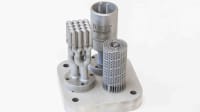
Tech Briefs
Advanced Supercritical Water Oxidation Reactor

Aerospace & Defense Tech Briefs
Physics-Guided Neural Network for Regularization and Learning Unbalanced Data Sets
Tech Briefs
Shape Memory Alloy Art (SMArt)
Aerospace & Defense Tech Briefs
New Cryogenic Shape Memory Alloy Designed for Outer Space
Aerospace INSIDER
Breaking the Temperature Barrier in Aerospace Materials Testing
Aerospace Manufacturing and Machining INSIDER
Can This Self-Healing Composite Make Airplane and Spacecraft Components Last for Centuries?
Aerospace & Defense Tech Briefs
Acceleration Resistant HiK Heat Spreader
Top Stories
INSIDERManufacturing & Prototyping
 How Airbus is Using w-DED to 3D Print Larger Titanium Airplane Parts
INSIDERManned Systems
 FAA to Replace Aging Network of Ground-Based Radars
NewsTransportation
 CES 2026: Bosch is Ready to Bring AI to Your (Likely ICE-powered) Vehicle
NewsSoftware
 Accelerating Down the Road to Autonomy
EditorialDesign
 DarkSky One Wants to Make the World a Darker Place
INSIDERMaterials
 Can This Self-Healing Composite Make Airplane and Spacecraft Components Last...
Webcasts
Defense
 How Sift's Unified Observability Platform Accelerates Drone Innovation
Automotive
 E/E Architecture Redefined: Building Smarter, Safer, and Scalable...
Power
 Hydrogen Engines Are Heating Up for Heavy Duty
Electronics & Computers
 Advantages of Smart Power Distribution Unit Design for Automotive...
Unmanned Systems
 Quiet, Please: NVH Improvement Opportunities in the Early Design...
