




NASA, Boeing Test Synthetic Vision

NASA and Boeing are working together under a new Space Act Agreement to improve flight training and aviation safety using NASA’s synthetic vision technologies and Boeing’s 787 simulators. Synthetic vision technologies are essentially weather-immune displays that allow pilots to see what the world looks like in perfect weather conditions all the time.
It’s a powerful tool that can effectively negate the visual penalties associated with even severe weather in a clear, intuitive manner. The technology offers the potential to improve aviation system safety and increase the efficiency of aircraft operations. Testing at Boeing’s Miami training facilities will begin in late 2017.
Source
More From SAE Media Group
Aerospace INSIDER
New Displays Could Lower Risk of Small Aircraft Midair Collisions

Aerospace INSIDER
"Fused Reality" Combines Simulation and Flying to Train Pilots

NASA Spinoff
Flying (Not Quite) Blind
Aerospace INSIDER
NASA Works with Airline to Improve Pilot Training and Cockpit Displays

Aerospace INSIDER
NASA System Would Enable Unmanned Aircraft to Fly in US Airspace

Aerospace INSIDER
Aircraft Arrival Technology Will Reduce Flight Delays
Aerospace & Defense Tech Briefs
Lockheed Martin’s Next-Gen, 360-Degree Vision System Flies on the Bell V-280 Valor

Aerospace & Defense Tech Briefs
F-16 Full Mission Trainers
Aerospace INSIDER
Are Boeing 737 Rudder Control Systems at Risk of Malfunctioning?
Aerospace & Defense Tech Briefs
T-45 Virtual/Augmented Reality Training Technology
NASA Spinoff
Artificial Eyes Give Pilots a New Worldview
Aerospace INSIDER
Virtual Runway, Real Pilot Practice
Tech Briefs
Equivalent Visual Operations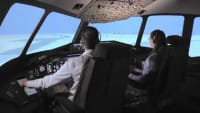
Aerospace INSIDER
Autonomy Architecture Prevents Aviation Accidents
Aerospace & Defense Tech Briefs
G5000 Prime Flight Deck
Aerospace Manufacturing and Machining INSIDER
FAA Expands Boeing 737 Investigation to Manufacturing and Production Lines

Aerospace INSIDER
NASA and Boeing Partner to Advance Aviation

Aerospace INSIDER
NASA Brings Airport Communications into the Digital Age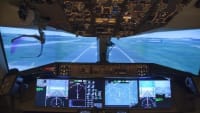
Aerospace & Defense Tech Briefs
Industry Invited to Participate in AeroTech Aerospace and Defense Technical Program
Aerospace INSIDER
F-35 Crash Caused by Wake Turbulence and Flight Control System Error
Automotive Engineering
Airbus’ Connected Cabin Concept Is Materializing with First Round of Partnerships
Transcript
00:00:02 We've done a good job of advancing the efficiency and the safety of commercial flight systems. We've created a very safe system in the air transportation system. But the airspace that we're actually living in today, you're seeing increased levels of traffic. You're seeing aircraft fly through different varieties of weather. You're just seeing all these new and complex situations that pilots are faced with, and we want to equip them with the greatest intelligent flight system available. One example of that is actually synthetic vision systems. What we mean by that is a virtual representation of what the world looks like outside the windows even though weather is a problem and you have
00:00:43 really dense fog, for example, and you cannot see outside the window of the aircraft. You can actually use these synthetic vision systems just as... it's clear as day. So the idea is that we've developed a technology that allows us to be 'weather independent,' and so we can actually just look at the display and not have to worry about what the weather is outside the aircraft. The case of synthetic vision systems, airlines are taking technology that NASA's developed, putting it onboard their flight decks of today, and using that to improve the safety and even the efficiency which has an economic impact of flight operations in today's airspace.
Top Stories
INSIDERManufacturing & Prototyping
 How Airbus is Using w-DED to 3D Print Larger Titanium Airplane Parts
INSIDERManned Systems
 FAA to Replace Aging Network of Ground-Based Radars
NewsTransportation
 CES 2026: Bosch is Ready to Bring AI to Your (Likely ICE-powered) Vehicle
NewsSoftware
 Accelerating Down the Road to Autonomy
EditorialDesign
 DarkSky One Wants to Make the World a Darker Place
INSIDERMaterials
 Can This Self-Healing Composite Make Airplane and Spacecraft Components Last...
Webcasts
Defense
 How Sift's Unified Observability Platform Accelerates Drone Innovation
Automotive
 E/E Architecture Redefined: Building Smarter, Safer, and Scalable...
Power
 Hydrogen Engines Are Heating Up for Heavy Duty
Electronics & Computers
 Advantages of Smart Power Distribution Unit Design for Automotive...
Unmanned Systems
 Quiet, Please: NVH Improvement Opportunities in the Early Design...
