




Discovery Could Lead to Cleaner, More Efficient Jet Engines
 Researchers at The Ohio State University found a way to improve the high-temperature properties of superalloys used in jet engines. The method tailors an alloy’s composition and exposes it to high heat and pressure to prevent microscopic defects from forming, actually making the alloy stronger. This “phase transformation strengthening” eliminates the formation of defects and decreases alloy deformation by half. When an engine can run at very high temperatures, it consumes its fuel more thoroughly and produces lower emissions.
The researchers combined atomic-level imaging and high-end computing to study phase transformation strengthening to see if tailoring the alloy compositions in different ways might enhance the effect.
More From SAE Media Group
Tech Briefs
High-Temperature Ni-Based Superalloy Composition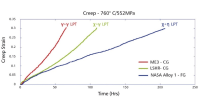
Tech Briefs
Self-Healing, Recyclable, Shape Memory Polymers

Tech Briefs
Thin Heat Shield for Superfast Aircraft

Aerospace INSIDER
Aircraft Engine Coating Could Triple Service Life and Save Fuel
Aerospace & Defense Tech Briefs
Limiting Creep in Aerospace Materials
Aerospace & Defense Tech Briefs
Novel Chromium–Molybdenum Metal Alloy Withstands Extreme Conditions
Aerospace & Defense Tech Briefs
Evaluation of the Effects of Hydrogen Peroxide on Common Aircraft Electrical Materials
Tech Briefs
Compact, Lightweight, CMC-Based Acoustic Liner
Off-Highway Engineering
NASA Highlights Material and Coating Technology Ready for Commercial Applications
Aerospace INSIDER
Researchers Turn to Carbon Nanotubes to Build Better Heat Shields
Tech Briefs
Products of Tomorrow
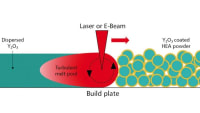

Tech Briefs
Fabrication of Multilayer Ferritin Arrays
Aerospace & Defense Tech Briefs
Cold Spray Technology
Aerospace INSIDER
Controlling Heat Spikes in Electric Aircraft at Takeoff
Tech Briefs
Electronics Withstand Extreme Heat

Aerospace & Defense Tech Briefs
The Challenge of Replacing Hard Chrome
Tech Briefs
Method Enables Wings to be De-Iced in Flight


NASA Spinoff
3D Printer Aims to Accelerate Materials Development
Aerospace INSIDER
A New Platform for Developing Advanced Aerospace Metals at Scale



Top Stories
INSIDERManufacturing & Prototyping
 How Airbus is Using w-DED to 3D Print Larger Titanium Airplane Parts
INSIDERManned Systems
 FAA to Replace Aging Network of Ground-Based Radars
NewsTransportation
 CES 2026: Bosch is Ready to Bring AI to Your (Likely ICE-powered) Vehicle
NewsSoftware
 Accelerating Down the Road to Autonomy
EditorialDesign
 DarkSky One Wants to Make the World a Darker Place
INSIDERMaterials
 Can This Self-Healing Composite Make Airplane and Spacecraft Components Last...
Webcasts
Defense
 How Sift's Unified Observability Platform Accelerates Drone Innovation
Automotive
 E/E Architecture Redefined: Building Smarter, Safer, and Scalable...
Power
 Hydrogen Engines Are Heating Up for Heavy Duty
Electronics & Computers
 Advantages of Smart Power Distribution Unit Design for Automotive...
Unmanned Systems
 Quiet, Please: NVH Improvement Opportunities in the Early Design...
