




‘Nano-Kebab’ Fabric Breaks Down Chemical Warfare Agents

Researchers have created a fabric material containing nanoscale fibers that are capable of degrading chemical warfare agents (CWAs). Uniform coatings of metal-organic frameworks (MOFs) were synthesized on top of the nanofibers, forming unique kebab-like structures. These MOFs are what break down the CWAs, rendering them harmless.
“Current technologies for addressing CWAs rely on carbon-based materials – but these carbon materials can only adsorb hazardous compounds, they can’t degrade them,” says Junjie Zhao, a former Ph.D. student at North Carolina State University and lead author of a paper on the work. “Our goal was to develop new materials that can detoxify these CWA compounds, and we’ve been successful.” The CWA degradation research was conducted by researchers in Gregory Parsons’ group at NC State, and co-workers at RTI International and the Edgewood Chemical Biological Center.
“Previous research had found that MOFs can be effective at degrading CWAs,” Zhao says. “However, MOFs normally come in the form of a powder. We wanted to see if we could grow MOFs as functional coatings onto fibers, so that they could be used in masks, filters and protective garments.”
The researchers begin by depositing a thin film of titanium oxide onto a fabric made of nanoscale fibers using a vapor-phase technology called atomic layer deposition. The titanium oxide serves as a nucleation layer, which enables the researchers to apply various zirconium-based MOFs onto the nanofibers in an evenly distributed way.
“We found that the MOFs formed on the nanofibers in a kebab-like structure, with the MOFs uniformly covering the entire nanofibers, like meatballs on a skewer,” Zhao says.
The researchers then tested the MOF-functionalized fabric against both a CWA simulant and the nerve agent soman. They found that, when exposed to the nano-kebab fabric, the half-life of the CWA simulant was as brief as 7.3 minutes. The half-life of the soman was as short as 2.3 minutes.
“This is a big step forward for materials designed for CWA protection” says Christopher Oldham, a senior research scholar at NC State and co-author of this paper. “The next steps include integration of the MOF-nanofiber kebab structures into currently fielded garment and suit materials, and evaluating the durability of the materials in various conditions. Currently, field chemical suits are heavy and require a lot of energy for the soldier to wear. If we can integrate the MOF-coated nanfibers into outer layers of the chemical suit, inner layers of the suit might be removed. Ultimately this may translate to a suit that potentially behaves and feels more like a piece of athletic wear than a garbage bag.”
More From SAE Media Group
Tech Briefs
High Atomic Number Coatings for Fabrics
Defense INSIDER
Scientists Explore Nanoparticles for Future Weapon Systems


Aerospace Manufacturing and Machining
Optimizing Plasma Treatments to RESOLVE Challenging Adhesion Issues
Medical Design Briefs
Tubing Coated with Light-Powered Catalysts Aids Drug Manufacturing

Photonics & Imaging Technology INSIDER
Transparent Graphene Electrodes Might Lead to New Generation of Solar Cells
Tech Briefs
Conductive Carbon Fiber Polymer Composite




Air Force Research Laboratory Technology Horizons
Conductive Polymeric Nanocomposite Materials
Tech Briefs
Directed Growth of Carbon Nanotubes Across Gaps
Tech Briefs
Advanced, Liquid-Repellent Nanoscale Coating
Tech Briefs
How Much Do You Know About Materials?
Aerospace Manufacturing and Machining INSIDER
Can This Self-Healing Composite Make Airplane and Spacecraft Components Last for Centuries?
Tech Briefs
Products of Tomorrow
Aerospace INSIDER
A New Quantum Materials Research System
Tech Briefs
Capillography of Mats of Nanofibers

Aerospace & Defense Tech Briefs
New Diamond Super-Material Enhances Aircraft Survivability
Defense INSIDER
Researchers Shine a Light on Wearable Technology

Tech Briefs
Water Purification System Engineered from Wood
Tech Briefs
How MXenes Can Improve Air Filtration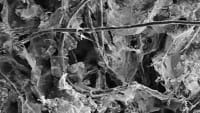

Defense INSIDER
Thin Explosive Films Provide Snapshot of How Detonations Start
Aerospace & Defense Tech Briefs
Thermal Conductivities of Some Polymers and Composites
Top Stories
NewsRF & Microwave Electronics
 Microvision Aquires Luminar, Plans Relationship Restoration, Multi-industry Push
INSIDERAerospace
 A Next Generation Helmet System for Navy Pilots
INSIDERDesign
 New Raytheon and Lockheed Martin Agreements Expand Missile Defense Production
INSIDERMaterials
 How Airbus is Using w-DED to 3D Print Larger Titanium Airplane Parts
NewsPower
 Ford Announces 48-Volt Architecture for Future Electric Truck
ArticlesAR/AI

Webcasts
Electronics & Computers
 Cooling a New Generation of Aerospace and Defense Embedded...
Automotive
 Battery Abuse Testing: Pushing to Failure
Power
 A FREE Two-Day Event Dedicated to Connected Mobility
Unmanned Systems
 Quiet, Please: NVH Improvement Opportunities in the Early Design Cycle
Automotive
 Advantages of Smart Power Distribution Unit Design for Automotive &...
Energy
 Sesame Solar's Nanogrid Tech Promises Major Gains in Drone Endurance