




Precision NASA Thruster Keeps Spacecraft Still
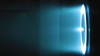
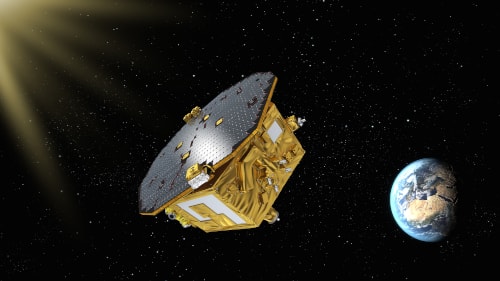 The European Space Agency’s LISA Pathfinder spacecraft is on its way to space with the Disturbance Reduction System (DRS), a thruster technology developed at NASA's Jet Propulsion Laboratory. The DRS uses colloid micronewton thrusters, the first of their kind, to keep the spacecraft as still as possible and compensate for solar pressure. These thrusters electrically charge small liquid droplets and accelerate them through an electric field in order to generate thrust.
The thrusters will deliver 5 to 30 micronewtons of thrust (about the weight of a mosquito) continuously, with exquisite precision, to counteract the force of sunlight. The DRS microthrusters aim to control the spacecraft's position to within a millionth of a millimeter, using software provided by NASA's Goddard Space Flight Center. The DRS may also be used for formation flying. For example, a constellation of small satellites could incorporate the thrusters in order to be perfectly synchronous while flying together.
More From SAE Media Group
Aerospace INSIDER
NASA Tests New Green Propellants for Satellites
Tech Briefs
Miniature Separable Fill and Drain Valve

Aerospace & Defense Tech Briefs
Hybrid Propulsion Systems

NASA Spinoff
Controlled Propulsion for Gentle Landings

Motion Control and Automation Technology INSIDER
NASA’s Green Propellant Spacecraft Moves Toward Launch
Test & Measurement/Sensors INSIDER
NASA Tests 3D-Printed Rocket Fuel Pump

Tech Briefs
A New Way to Launch Rockets: Microwave Power
Aerospace & Defense Tech Briefs
Electric Propulsion for a Nuclear-Powered Spacecraft
Aerospace & Defense Tech Briefs
Thrust in Space - The Nuances of Thruster Valve Design
Tech Briefs INSIDER
The Newest Way to Propel Nanosatellites? Water.
Aerospace INSIDER
Maintenance-Free Engines Power Deep-Space Science
Aerospace INSIDER
Virgin Galactic Reports on Pin Detachment From Recent Spaceflight
NASA Spinoff
Water-Powered Engines Offer Satellite Mobility

Aerospace & Defense Tech Briefs
Apollo Fusion Will Supply NASA JPL with MaSMi Hall Thrusters as Sole Licensed Manufacturer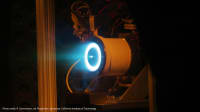
Aerospace & Defense Tech Briefs
Improving Electric Propulsion Thrusters for Future Spacecraft Missions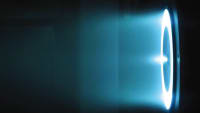
Aerospace & Defense Tech Briefs
First Orion European Space Module Delivered
Motion Control and Automation Technology INSIDER
NASA Tests Revolutionary E-Sail Propulsion Technology
Tech Briefs
CubeSat Form Factor Thermal Control Louvers
NASA Spinoff
A Huge Development for Tiny Satellites

Top Stories
NewsSensors/Data Acquisition
 Microvision Aquires Luminar, Plans Relationship Restoration, Multi-industry Push
INSIDERRF & Microwave Electronics
 A Next Generation Helmet System for Navy Pilots
INSIDERWeapons Systems
 New Raytheon and Lockheed Martin Agreements Expand Missile Defense Production
NewsAutomotive
 Ford Announces 48-Volt Architecture for Future Electric Truck
INSIDERAerospace
 Active Strake System Cuts Cruise Drag, Boosts Flight Efficiency
ArticlesTransportation

Webcasts
Aerospace
 Cooling a New Generation of Aerospace and Defense Embedded...
Energy
 Battery Abuse Testing: Pushing to Failure
Power
 A FREE Two-Day Event Dedicated to Connected Mobility
Automotive
 Quiet, Please: NVH Improvement Opportunities in the Early Design Cycle
Electronics & Computers
 Advantages of Smart Power Distribution Unit Design for Automotive &...
Unmanned Systems
 Sesame Solar's Nanogrid Tech Promises Major Gains in Drone Endurance
Similar Stories
INSIDERPropulsion
 NASA Tests New Green Propellants for Satellites
INSIDERAerospace
 New Transatlantic Partnership Targets Hall Thrusters for Spacecraft Electric...
INSIDERPropulsion
 Maintenance-Free Engines Power Deep-Space Science
BriefsPropulsion
 Improving Electric Propulsion Thrusters for Future Spacecraft Missions