




Heat Pipe Enhanced Card Frames
Advanced Cooling Technologies’ (ACT) (Lancaster, PA) high conductivity (k) VME and VPX frames feature embedded heat pipes to greatly increase heat transfer. This includes a technique to embed heat pipes that allow for thickness as low as 0.072".
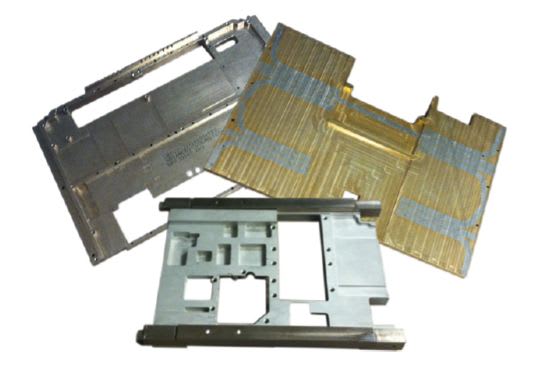 In military embedded computing applications the market trend is to pack more high-power components onto electronics cards without adjusting the volume for cooling within the card chassis. The typical thermal path is to conduct from components to the wedge lock, and through the wedge lock into the chassis for dissipation via natural convection, forced convection, or liquid flow. This creates a large emphasis on getting heat from the components to the wedge lock. With heat pipe enhanced (HiK) frames, the overall thermal conductivity (k) greatly exceeds standard aluminum or copper frames. Thermal conductivity of these HiK VME cards ranges from 500 W/m-K to 1,000 W/m-K depending on geometry. In addition, the heat pipes can be routed along the wedge lock to create uniform distribution at that interface providing additional temperature reduction from card to chassis.
For Free Info Click Here
More From SAE Media Group
Lighting Technology
Heat Pipe Solutions for LED Devices

Medical Design Briefs INSIDER
Soft, Ultrathin Photonic Material Cools Wearable Electronic Devices
Aerospace & Defense Tech Briefs
Acceleration Resistant HiK Heat Spreader
Medical Design Briefs
Passive Thermal Management Options for EMS Devices
Electronics Tech Briefs
Heat Pipes for Temperature Control in Electronics
Software Tech Briefs
Conjugate Heat Transfer
Aerospace & Defense Tech Briefs
Vapor Chambers
Aerospace & Defense Tech Briefs
Thermal Trends and Improvements for Rugged COTS Cards
NASA Spinoff
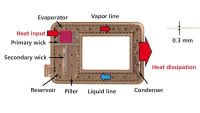
Conducting the Heat
Aerospace & Defense Tech Briefs
Using Heat Pipes to Cool Embedded Computers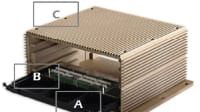
Medical Design Briefs
New Thermal Management Strategies for Medical Devices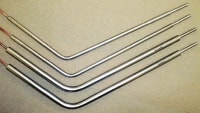

Tech Briefs
Product Spotlight: Master Bond EP39MAOHT

Medical Design Briefs
Thermal Design Considerations for Medical Devices to Improve Patient Safety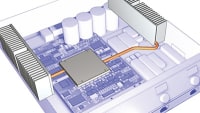
Software Tech Briefs
Multiphysics Analysis of a Burning Candle


Aerospace & Defense Tech Briefs
Loop Thermosyphons
Aerospace & Defense Tech Briefs
UGVs — On the Cutting Edge of Thermal Management

Aerospace & Defense Tech Briefs
Minimizing Thermal Resistance with Direct Attach Heat Spreaders
Tech Briefs
Freeze-Tolerant Condensers

Top Stories
INSIDERDefense
 New Raytheon and Lockheed Martin Agreements Expand Missile Defense Production
NewsAutomotive
 Ford Announces 48-Volt Architecture for Future Electric Truck
INSIDERManufacturing & Prototyping
 Active Strake System Cuts Cruise Drag, Boosts Flight Efficiency
ArticlesTransportation
 Accelerating Down the Road to Autonomy
INSIDERMaterials
 How Airbus is Using w-DED to 3D Print Larger Titanium Airplane Parts
Road ReadyTransportation

Webcasts
Electronics & Computers
 Cooling a New Generation of Aerospace and Defense Embedded...
Power
 Battery Abuse Testing: Pushing to Failure
Connectivity
 A FREE Two-Day Event Dedicated to Connected Mobility
Automotive
 Quiet, Please: NVH Improvement Opportunities in the Early Design Cycle
Transportation
 Advantages of Smart Power Distribution Unit Design for Automotive &...
Aerospace
 Sesame Solar's Nanogrid Tech Promises Major Gains in Drone Endurance