




16-Bit Data Acquisition Board
 Pentek, Inc. (Upper Saddle River, NJ) has added the Model 71662 four-channel, 200 MHz, 16-bit data acquisition board with built-in digital down converters (DDCs) to its popular Cobalt® family of Xilinx Virtex-6 FPGA boards. With an input bandwidth from 300 kHz to 700 MHz, the board is suitable for direct connection to IF or RF ports of communications, unmanned autonomous vehicle (UAV) and radar systems for real-time DSP tasks such as demodulation and decoding. Together with Pentek’s ReadyFlow board support package, with its built-in command line interface and signal viewer, the Model 71662 forms a complete solution for data acquisition, processing and analysis.
The 71662 provides four transformer-isolated input channels that each supply a Texas Instruments ADS5485 16-bit, 200 MHz ADC. The ADC outputs pass to an input multiplexer that supports four Acquisition IP modules factory-installed in the Xilinx Virtex-6 FPGA. Each IP module can receive data from any of the four ADCs, or from a test signal generator, providing highly flexible input and antenna assignments. Four 512 MB DDR3 SDRAM memory banks, one for each IP module, can buffer data in a FIFO mode or store data in a transient capture mode. All memory banks have DMA engines for streaming data at up to 1600 MB/second through the PCIe interface to off-board storage or additional processing.
For Free Info Click Here
More From SAE Media Group
Aerospace & Defense Tech Briefs
FPGAs and HPC
Aerospace & Defense Tech Briefs
New Products
Embedded Technology
PMC/XMC Transceiver Module
Embedded Technology
PCIe XMC Module
Embedded Technology
Oscilloscopes
Embedded Technology INSIDER
XMC Module
Embedded Technology
FPGA-Based Prototyping Platform
RF & Microwave Technology
Digitizer/Signal Generator
Embedded Technology
Designing Software Radio Systems With FPGAs
Aerospace INSIDER
TEWS Introduces First VITA 93 QMC Modules
Embedded Technology
FPGA Processing Engine
Embedded Technology
FPGA-Based Processing Platform
Embedded Technology
FPGA Mezzanine Card Module
Embedded Technology INSIDER
PCI Express
Embedded Technology
Understanding Virtex FPGAs
Aerospace & Defense Tech Briefs
How SpaceVPX is Influencing the Design of Next Generation Spacecraft Avionics
Embedded Technology INSIDER
PCI Express® Digital I/O Module
Embedded Technology
High-Speed Digitizer
Embedded Technology
Single-Board RIO
Embedded Technology
Analog-to-Digital I/O Card Provides Reconfigurable FPGA
Embedded Technology
Data Acquisition Cards
Embedded Technology
VME/VXS Board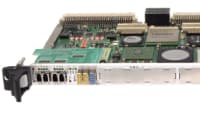
Aerospace & Defense Tech Briefs
EW: New Challenges, Technologies, and Requirements
Embedded Technology
Putting OpenVPX To Work
Embedded Technology
Designing Versatile COTS Data Acquisition Systems
Embedded Technology
Using FPGAs for Automated Design Validation
Embedded Technology
Beamforming System Eases Crowded Wireless Spectrum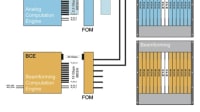
Embedded Technology
Rad-Hard FPGAs
Aerospace & Defense Tech Briefs
A New Approach to Satellite Communications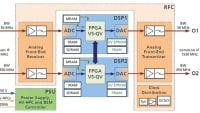
Top Stories
NewsSensors/Data Acquisition
 Microvision Aquires Luminar, Plans Relationship Restoration, Multi-industry Push
INSIDERRF & Microwave Electronics
 A Next Generation Helmet System for Navy Pilots
INSIDERWeapons Systems
 New Raytheon and Lockheed Martin Agreements Expand Missile Defense Production
NewsAutomotive
 Ford Announces 48-Volt Architecture for Future Electric Truck
INSIDERAerospace
 Active Strake System Cuts Cruise Drag, Boosts Flight Efficiency
ArticlesTransportation

Webcasts
Aerospace
 Cooling a New Generation of Aerospace and Defense Embedded...
Energy
 Battery Abuse Testing: Pushing to Failure
Power
 A FREE Two-Day Event Dedicated to Connected Mobility
Automotive
 Quiet, Please: NVH Improvement Opportunities in the Early Design Cycle
Electronics & Computers
 Advantages of Smart Power Distribution Unit Design for Automotive &...
Unmanned Systems
 Sesame Solar's Nanogrid Tech Promises Major Gains in Drone Endurance