




Timing Design & Verification Tool Suite
Symtavision (Braunschweig, Germany) has launched SymTA/S 2.4, a major new version of its tools suite for system-level timing design and timing verification. SymTA/S2.4 incorporates a wealth of new and improved features targeted at the automotive electronics, aerospace, automation and transportation markets including enhanced support for multi-core processors and AUTOSAR.

New features in SymTA/S 2.4 include support for importing and optimizing AUTOSAR electronic control unit (ECU) and network configurations, multi-core ECU performance analysis and partitioning, end-to-end worst-case and statistical timing analysis, multi-dimensional timing dependency and data consistency analysis, enhanced PYTHON scripting and remote control tool automation.
SymTA/S 2.4 significantly improves automotive process integration with the inclusion of a new AUTOSAR XML import interface enabling AUTOSAR ECU and network configuration import and optimization. With SymTA/S 2.4 engineers can easily extract the architecture and related parameterization relevant for system-level timing analysis. It also facilitates tighter coupling with third-party AUTOSAR architecture design and ECU configuration tools equipped with XML export support.
For Free Info Click Here
More From SAE Media Group
Automotive Engineering
Closing Gap to Leverage Enhanced Computational Power for SDV Advancement
Embedded Computing INSIDER
Modeling and Simulation Environment
Embedded Technology
Embedded Software Verification for Early Device Testing

Embedded Technology
Multicores Affect Algorithm Choices
Embedded Technology
Graphical Programming Software

Embedded Computing INSIDER
Device-Level Software Platform
Embedded Technology
Software Verification Tool Suite
Aerospace & Defense Tech Briefs
Deterministic and Modular Architecture for Embedded Vehicle Systems
Embedded Technology
Adopting Aerospace Development and Verification Standards for Software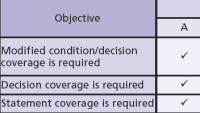
Embedded Technology
Virtual Software Development Platform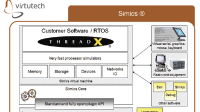
Aerospace INSIDER
TEWS Introduces First VITA 93 QMC Modules
Embedded Technology INSIDER
Universal Emulation Configurator
Embedded Technology
Multi-Core RTOS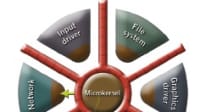
Embedded Technology
Static-Analysis Tool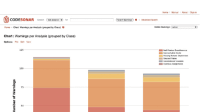
Tech Briefs
Essential Control and Visualization, Combined
Embedded Technology
Software Platform Builder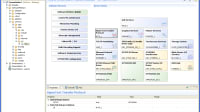
Embedded Technology
Data Review Tool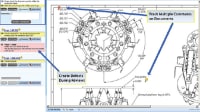
Embedded Technology
Automated Manufacturing Test Software for Wavesat WiMAX Chipsets
Aerospace INSIDER
The Future of Avionics: Machine-Learned and Certified
Aerospace & Defense Tech Briefs
Inside Story: The Role of the SFFs in Rugged HPEC Computing


Tech Briefs
Product of the Month

Tech Briefs
Open Software Options for Automation
Embedded Technology
Software Verification Plug-In
Embedded Technology
Agile Development Framework
Top Stories
NewsRF & Microwave Electronics
 Microvision Aquires Luminar, Plans Relationship Restoration, Multi-industry Push
INSIDERAerospace
 A Next Generation Helmet System for Navy Pilots
INSIDERDesign
 New Raytheon and Lockheed Martin Agreements Expand Missile Defense Production
INSIDERMaterials
 How Airbus is Using w-DED to 3D Print Larger Titanium Airplane Parts
NewsPower
 Ford Announces 48-Volt Architecture for Future Electric Truck
ArticlesAR/AI

Webcasts
Electronics & Computers
 Cooling a New Generation of Aerospace and Defense Embedded...
Automotive
 Battery Abuse Testing: Pushing to Failure
Power
 A FREE Two-Day Event Dedicated to Connected Mobility
Unmanned Systems
 Quiet, Please: NVH Improvement Opportunities in the Early Design Cycle
Automotive
 Advantages of Smart Power Distribution Unit Design for Automotive &...
Energy
 Sesame Solar's Nanogrid Tech Promises Major Gains in Drone Endurance