




Automotive Engineering - October 2023
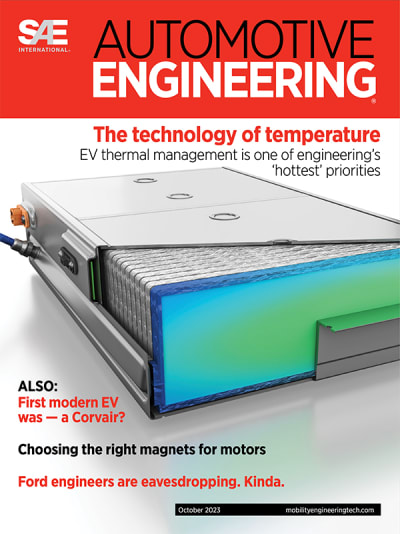
Inside this issue
Overview
The October 2023 issue of Automotive Engineering delves into the latest advancements and innovations in the automotive industry, particularly focusing on electric vehicles (EVs) and their associated technologies. This edition highlights the critical role of thermal management systems, the evolution of battery technology, and the ongoing research and development efforts aimed at enhancing vehicle performance and sustainability.
Thermal Management Systems
A significant portion of the issue is dedicated to the importance of thermal management in EVs. As electric vehicles become more prevalent, managing the heat generated by batteries and power electronics is crucial for maintaining efficiency and performance. The magazine discusses how companies like Bosch are developing modular thermal units that combine heating and cooling elements into compact packages. This innovation not only simplifies installation but also optimizes the routing of coolant lines, reducing weight and improving energy efficiency. The article emphasizes the engineering challenges involved in ensuring that all components of the propulsion system operate at optimal temperatures, especially during demanding conditions such as fast charging in hot climates.
Battery Technology Innovations
The issue also features insights from Our Next Energy, a company focused on developing lithium iron phosphate (LFP) batteries. The founder, Mujeeb Ijaz, discusses the design of their battery cells, which incorporate aluminum heat sinks for efficient heat transfer. This design aims to enhance the performance and longevity of batteries, addressing one of the key challenges in EV technology. The magazine highlights the ongoing research into lightweight materials and battery designs that can improve energy density and reduce costs, which are essential for the widespread adoption of electric vehicles.
Volkswagen's Innovation Hub
Volkswagen's Innovation Hub in Knoxville, Tennessee, is spotlighted for its contributions to automotive research, particularly in materials science and EV charging technologies. The hub is engaged in several transformative projects, including high-power wireless charging systems that could significantly reduce the time required to charge EVs. The magazine reports on their progress in developing a wireless charging pad capable of delivering 300 kW, a substantial improvement over earlier prototypes. Additionally, Volkswagen is exploring lightweight materials for vehicle components, such as a liftgate made from sheet molding compound (SMC), which is over 35% lighter than traditional materials. This innovation not only enhances vehicle efficiency but also aligns with sustainability goals.
Challenges in Battery Manufacturing
The issue addresses the complexities and costs associated with battery manufacturing, which are becoming increasingly critical as the industry scales up production. The U.S. auto industry is facing challenges in establishing battery gigafactories, and the magazine discusses the implications of labor costs and manufacturing efficiency on the overall viability of EV production. The need for skilled labor and advanced manufacturing techniques is underscored as essential for meeting the growing demand for electric vehicles.
Automated Driving Trends
In addition to EV technology, the magazine touches on trends in automated driving systems. Recent data from J.D. Power indicates a slight decline in the usage of advanced driver-assistance systems (ADAS), raising concerns about driver engagement and the effectiveness of these technologies. The editorial discusses the importance of providing a positive customer experience to maintain trust in ADAS features, which are crucial for the future of automated driving.
Industry Leadership and Collaboration
The issue also highlights the role of industry leadership in navigating the seismic shifts occurring within the automotive sector. The United Auto Workers (UAW) leadership is noted for its responsiveness to emerging trends, particularly in the context of labor negotiations and the evolving landscape of EV manufacturing. The collaboration between automakers, research institutions, and technology providers is emphasized as vital for driving innovation and addressing the challenges posed by the transition to electric mobility.
Conclusion
Overall, the October 2023 issue of Automotive Engineering provides a comprehensive overview of the current state of the automotive industry, with a strong focus on electric vehicles and the technologies that support them. From advancements in thermal management and battery technology to the challenges of manufacturing and automated driving, the magazine captures the dynamic nature of the industry as it adapts to new demands and opportunities. The insights shared by industry leaders and researchers underscore the collaborative efforts required to shape the future of mobility, making this issue a valuable resource for professionals and enthusiasts alike.
Features
Regulars
-
Technology Reports
6 VW, Partners Pushing Materials, EV Charging Innovations in Tennessee
7 Our Next Energy’s Gemini Battery Could Bring 600-Mile EVs by 2026
-
Road Ready
Stories
Top Stories
NewsSensors/Data Acquisition
 Microvision Aquires Luminar, Plans Relationship Restoration, Multi-industry Push
INSIDERRF & Microwave Electronics
 A Next Generation Helmet System for Navy Pilots
INSIDERWeapons Systems
 New Raytheon and Lockheed Martin Agreements Expand Missile Defense Production
NewsAutomotive
 Ford Announces 48-Volt Architecture for Future Electric Truck
INSIDERAerospace
 Active Strake System Cuts Cruise Drag, Boosts Flight Efficiency
ArticlesTransportation

Webcasts
Aerospace
 Cooling a New Generation of Aerospace and Defense Embedded...
Energy
 Battery Abuse Testing: Pushing to Failure
Power
 A FREE Two-Day Event Dedicated to Connected Mobility
Automotive
 Quiet, Please: NVH Improvement Opportunities in the Early Design Cycle
Electronics & Computers
 Advantages of Smart Power Distribution Unit Design for Automotive &...
Unmanned Systems
 Sesame Solar's Nanogrid Tech Promises Major Gains in Drone Endurance